
UEFA Champions League Semifinals: PSG vs Bayern Munich
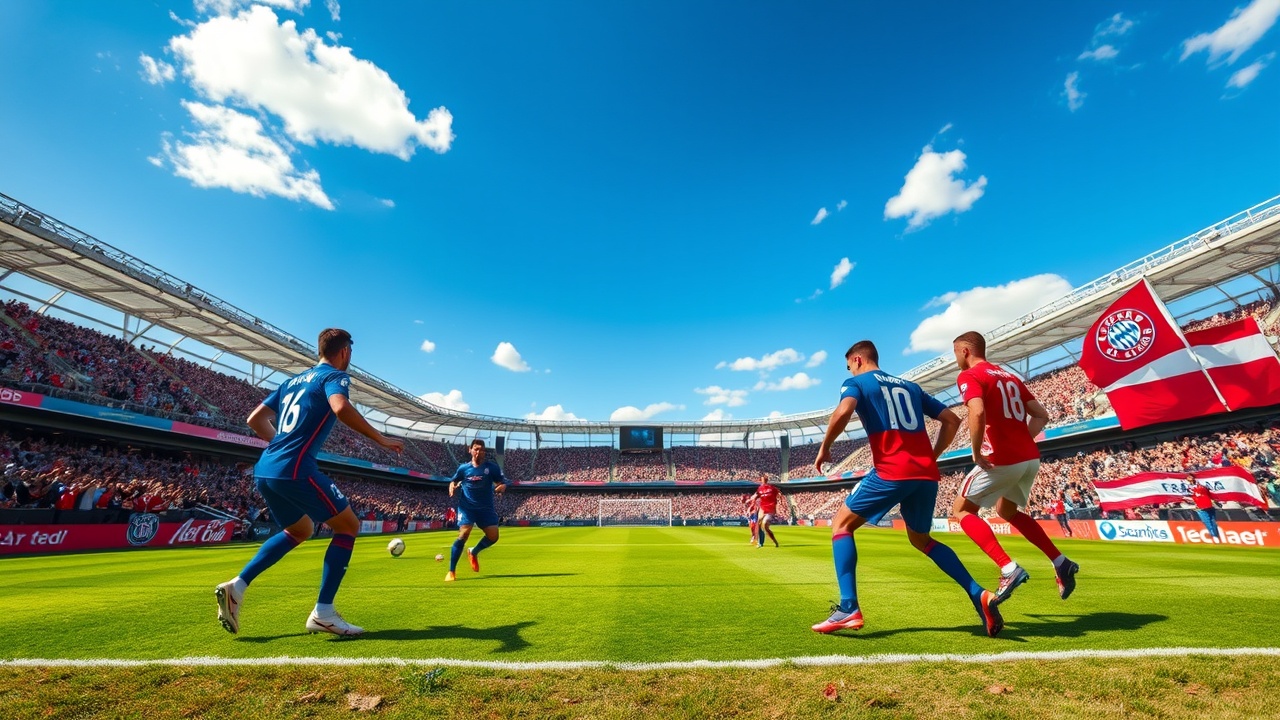
On Tuesday, an electrifying clash unfolded in the UEFA Champions League semifinals as Paris Saint-Germain faced off against Bayern Munich in a thrilling encounter. The match showcased an exhilarating brand of football that pushed the boundaries of creativity and skill, contrasting sharply with Bayern’s previous high-scoring triumph over Real Madrid in the quarterfinals.
Match Highlights
Scoring five goals in just 34 minutes, PSG demonstrated their attacking prowess, yet despite their early lead, the journey to Munich remains uncertain as Bayern netted four times, leaving the tie beautifully poised for the second leg. This match was more than just a display of football; it was a testament to the contemporary approach taken by Bayern’s manager, Vincent Kompany, whose strategy leans heavily on relentless attacking football, paired with a strong reliance on defensive players like Dayot Upamecano to manage the threats posed by rival counterattacks.
Statistical Overview
Statistically, Bayern dominated the match, winning 68% of ground duels and producing a significantly higher expected goals (xG) rate of 3.06 compared to PSG’s 1.9. Their efficient ball movement was evident as they completed almost twice the number of progressive passes and made over double the touches in the attacking box. Despite the inflated figures due to the match’s circumstances—an open game when trailing—Bayern consistently bettered PSG in ball progression metrics, indicating a more proactive approach.
PSG’s Counterattack Strategy
However, playing an aggressive style against a team as gifted as PSG comes with its risks. PSG capitalized on their opportunities remarkably well, with Khvicha Kvaratskhelia scoring twice and Ousmane Dembélé converting a penalty and adding another goal during the match. PSG, typically accustomed to dominating possession with a 69% average in their domestic league, adjusted their game to be effective on counterattacks against Bayern, despite holding only 42% of the ball.
Entertainment Value and Controversies
The overall spectacle of the match was heightened by its classification as one of the most entertaining encounters, evident as both teams had previously ranked high in terms of watchability. A contentious VAR call that resulted in a penalty added an element of controversy to the match, while concerns arose due to an injury sustained by PSG’s key full-back Achraf Hakimi.
Comparative Analysis of Leagues
Comparing across leagues, some observers argue that the Premier League lacks the thrilling scenes witnessed in games like PSG versus Bayern. The intensity and caliber of players in Germany, France, and Spain elevate the level of entertainment as some of the world’s elite talents clash. Premier League teams, despite their competitiveness, average fewer goals per game compared to Champions League matches, indicating a patterned tendency towards more conservative gameplay compared to the open, attacking styles embraced by top clubs from abroad.
Historical Context
In historical context, when leagues have boasted a concentration of top talent—such as during Serie A‘s dominance in the 1990s—defensive football was prevalent, showing that often when talent is abundant, scoring can drop as clubs focus on minimizing risks.
Looking Ahead
Bayern and PSG serve as prime examples of how superior resources and strategic vision lead to thrilling football, leaving fans eager for forthcoming encounters. With another leg on the horizon, the anticipation builds as these titans of club football prepare to battle once more in pursuit of a coveted spot in the finals of the prestigious tournament.
As these teams redefine excitement and artistry in football, one must ponder the possibilities that lie within the Premier League and the global stage: can a broader commitment to attacking play transform the perception and enjoyment of the sport? Time will tell as we wait for the next round in this gripping saga.