

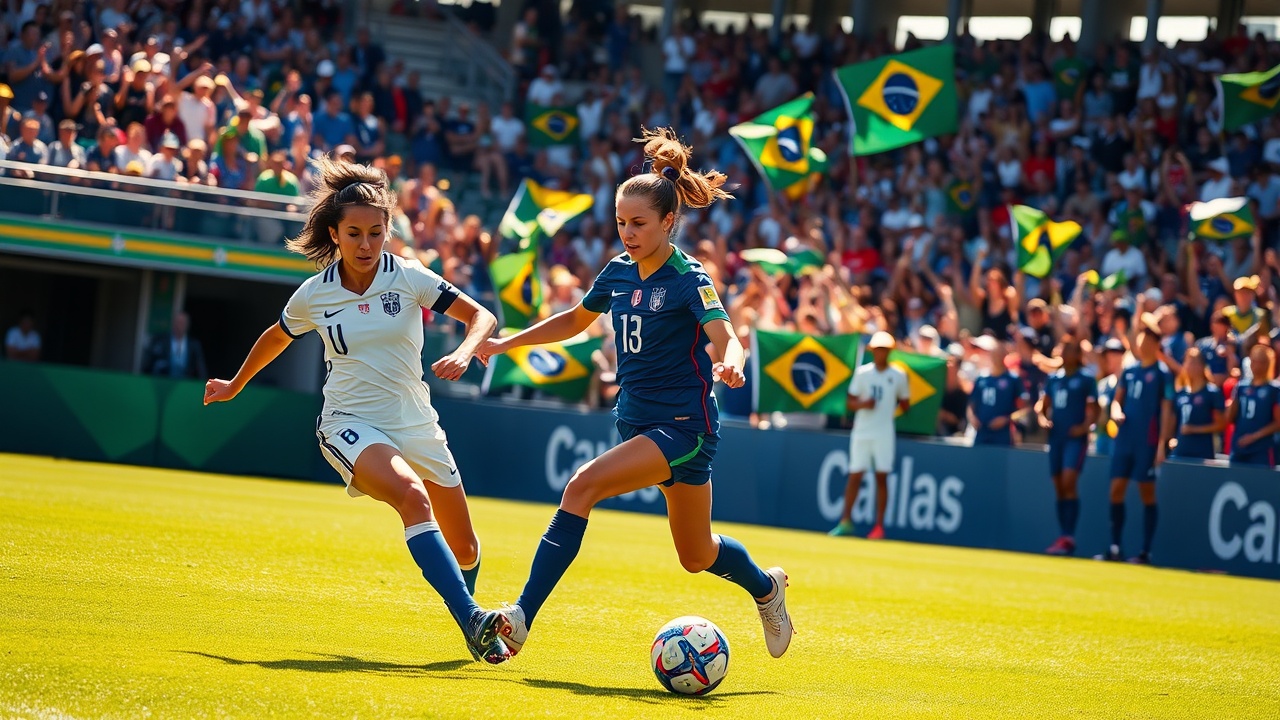
USWNT’s Upcoming Matches and Strategic Preparation
The U.S. women’s national soccer team is gearing up for its upcoming matches against Brazil and, surprisingly, a defeat could prove beneficial for their aspirations leading up to the 2027 World Cup. Historically, the USWNT is synonymous with success, boasting an impressive four World Cup titles and five Olympic medals, coupled with a record of over 600 victories and less than 100 losses. Understandably, the idea of intentionally losing is not something the team embraces, as winning is embedded in their culture. Nonetheless, as former NFL coach Herm Edwards famously noted, “YOU PLAY TO WIN THE GAME,” and while that remains true for competitive play, friendlies provide valuable opportunities to prepare for critical matches ahead.
Learning from Adversity
In the context of the upcoming friendlies against Brazil, USWNT coach Emma Hayes emphasizes the importance of facing challenging conditions to foster player development. Following a loss to Japan earlier this year, she expressed that players must experience adversity to grow, acknowledging that while losses are never pleasant, they are sometimes essential for learning. The losses to formidable opponents like Japan and Brazil have provided Hayes with critical insights to guide her team as they prepare for the World Cup.
Strategic Development Through Competition
Hayes’s strategy involves fielding younger, experimental squads against top-ranked teams, which she believes is key to understanding the strengths and weaknesses of her players. With Japan and Brazil ranked fifth and sixth in the world, respectively, they present the kind of high-caliber competition that is necessary for the USWNT’s development. This allows newcomers to acclimatize to the speed and intensity of play, especially against Brazil, which has showcased a remarkable revival under coach Arthur Elias, bringing a fresh perspective through a new generation of players.
Importance of Engaging with Top-Tier Teams
Reflecting on recent history, the importance of engaging with top-tier teams while preparing for the World Cup cannot be overstated. This marks the seventh consecutive World Cup cycle where the USWNT has traveled to the country hosting the tournament to fine-tune their skills. Notably, previous encounters against host nations like France have yielded valuable learning experiences, even amid tough losses. In 2015 and 2019, competitive matches against France led to World Cup victories shortly thereafter, highlighting the role of rigorous preparation against challenging opponents.
Critical Exposure for Current Roster
The team’s experience during those matches, including adverse environments and competitive atmospheres, echoes the significance of the upcoming friendlies in Brazil. With many players on the current roster lacking prior World Cup experience, these matches will serve as critical exposure for them. The goal is not just about winning but also about gauging the players’ reactions in adverse situations and identifying if they are ready for the intense scrutiny of the World Cup stage.
Conclusion: Embracing Challenges for Future Growth
As the USWNT faces Brazil in two friendlies, Hayes recognizes the crucial learning opportunity presented by these encounters. They are expected to encounter intense crowds and a uniquely high-pressure atmosphere, which reflects the kind of challenges they will face in the World Cup next year. “This is another moment where we get to see how we cope with all of the environment or conditions that come with going to Brazil,” Hayes noted, emphasizing the broader perspectives gained from the journey.
In essence, although it may seem counterintuitive, struggling or even losing in Brazil may contribute significantly to the USWNT’s long-term growth as they build towards the World Cup in 2027. Discovering how to cope with tough situations now can pave the way for better performance in future competitive contexts, reaffirming that developing resilience and gathering insights from defeats is a fundamental part of their preparation journey.