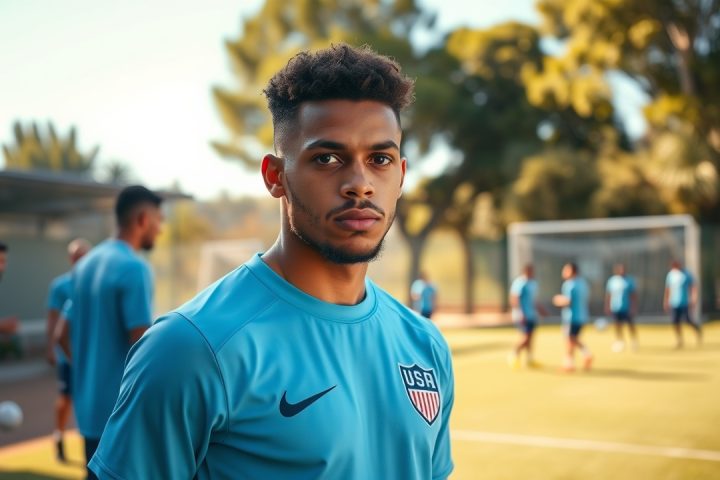


Security Challenges Ahead of the World Cup
As the summer approaches, the upcoming World Cup is set to present an extraordinary set of security challenges, given its vast scale. Andrew Giuliani, the executive director of the White House FIFA World Cup 2026 Task Force, emphasized to ESPN that the nation’s law enforcement is deeply committed to tackling the situation.
“Every police force in this country is gearing up for what is an incredible logistical hurdle during this 40-day period. We’ve never seen anything like this, and our aim is to ensure everything goes smoothly without incidents,” he stated in an interview.
Collaboration and Coordination
With a monumental 48 teams participating in 78 matches across 11 U.S. cities—plus an additional 26 games staged in Mexico and Canada—over 400 law enforcement entities are collaborating with federal bodies and private security organizations. This is in stark contrast to the previous World Cup in Qatar that featured just 32 teams in a smaller geographical area.
Giuliani underscored that due to the extended nature of this tournament, typical federal emergency measures seen during events like presidential inaugurations or the Olympics aren’t feasible. Instead, coordination with local and state police is vital, facilitating communication about potential security trends across different locations.
Understanding Fan Behavior
The complexities of planning have been compounded by a partial government shutdown at the Department of Homeland Security earlier this year, making secure preparations even more critical. Despite these challenges, Giuliani is optimistic about the progress that has been made.
Understanding the diverse behaviors of the different soccer fan bases is crucial for security measures, according to Giuliani. Often, what might appear disruptive to local law enforcement could merely be customary behavior for fans from various cultures. It is vital that local police understand these dynamics to effectively manage crowds without overreacting.
FIFA’s collaboration includes sharing specific intelligence about potential threats associated with the distinct cultures represented in the tournament. Philadelphia’s police chief inspector Przepiorka noted, for example, that it’s important to have officers familiar with the languages of the teams to aid communication during events. Officers will be armed with state-of-the-art translation tools to enhance interactions with the diverse range of fans expected.
Preventing Security Breaches
Preventing incidents similar to those at the 2024 Copa America final in Miami, where security breaches led to injuries, is a top priority. New security protocols, including stringent access policies and preemptive crowd control measures, aim to create a secure environment surrounding venues.
The FBI’s deputy director, Christopher Raia, expressed concern over the potential for attacks from homegrown extremists as well as foreign threats. According to Raia, smaller scale attacks often go unnoticed until too late, representing an additional layer of difficulty in the security planning.
Funding and Resource Challenges
While host cities anticipate receiving $625 million in federal grants for enhanced security, there are fears that smaller suburbs may struggle with funding and manpower. Concerns about the ability to maintain adequate staffing levels have been compounded by police departments seeing dwindling personnel numbers post-pandemic.
Transportation systems also present potential vulnerabilities; authorities are preparing for various threats, including those posed by drones. New grants are being allocated for counter-drone technology following past incidents with unauthorized drone activity during large-scale events.
Cybersecurity Concerns
Cybersecurity remains a significant concern too, as Giuliani highlighted the real threats of cyberattacks alongside physical security risks. Recent warnings from federal agencies indicated a persistent danger posed by foreign groups potentially targeting critical infrastructure. Experts stress the need for preparedness against these multifaceted threats.
Conclusion
As match days approach, local police departments are gearing up for sustained pressure over the 39-day tournament. Philadelphia’s police department, for instance, plans to mobilize workforce necessary to ensure safety, having experienced major staffing challenges.
In summary, Giuliani articulated a pragmatic outlook, stating that the success of the World Cup will be measured not merely by the excitement of the event itself but also by its safety.
“If on July 20, the headlines are about an exhilarating World Cup final, then we will have succeeded. Otherwise, it means we missed the mark.”