
Brian Boucher’s Reflections on Goaltending
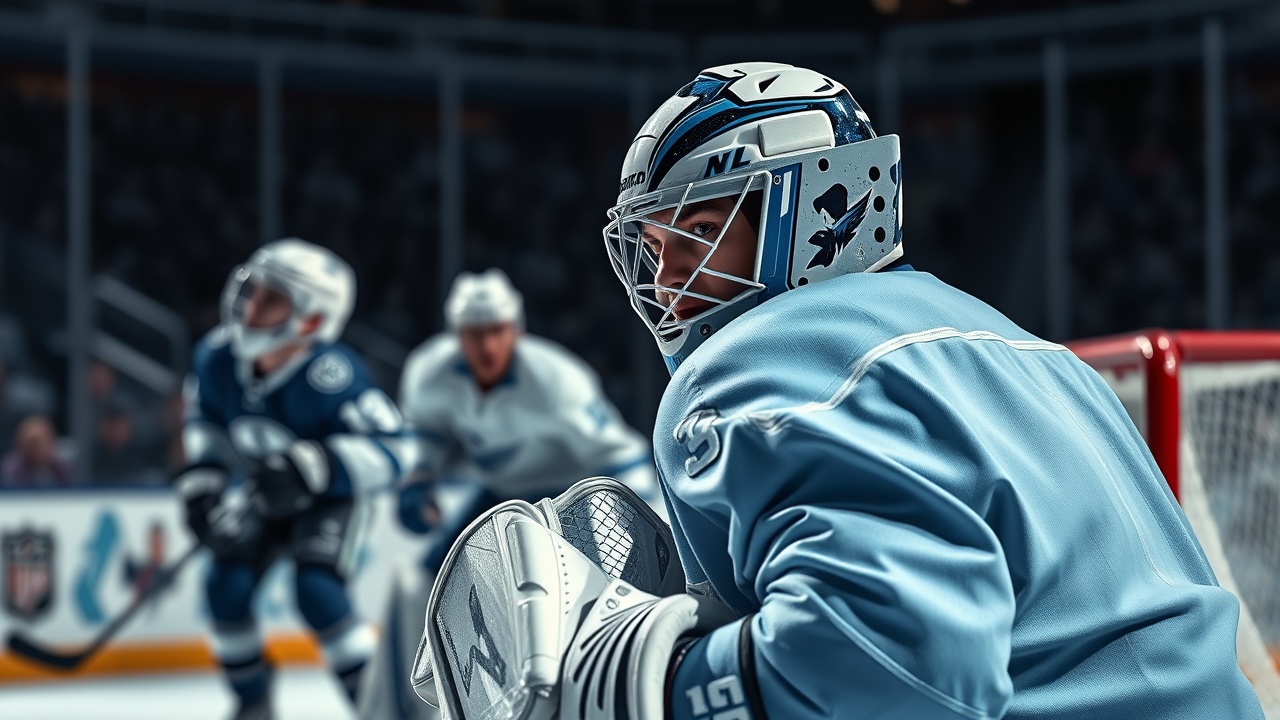
Brian Boucher, a former NHL goaltender, remembers how he would often watch the shot counter during games, mentally tracking how many stops he needed to achieve a satisfactory performance. This introspective measure provided him with a sense of validation in his role. However, he expresses concern that current goalies might still engage in these self-checks amid troubling trends in the league’s performance metrics.
Declining Save Percentages
This season, for the first time in over 30 years, the average save percentage among NHL goaltenders has fallen below .900, with a troubling figure of .896—on pace to be the lowest since 1994. The landscape of hockey has dramatically evolved, with forwards and offensive defensemen displaying increasingly refined skills, all while the pace of play accelerates, shifting expectations for goaltender success.
Logan Thompson’s Insights
Logan Thompson of the Washington Capitals emphasizes how the game has transformed, with players becoming more adept at shooting. His .912 save percentage currently ranks him as one of the top goalies in the league, yet he acknowledges the rising caliber of shooters:
“Their sticks get better. Their shots get harder.”
This adaptation has contributed to a notable decline in total shots on goal, averaging just 27.8 per game—the least since the infamous ‘dead puck era’ of the late 90s and early 2000s, which prompted drastic rule changes to enhance scoring opportunities.
Jake Oettinger’s Experience
Dallas Stars goaltender Jake Oettinger, who has experienced a dip in form with a .900 save percentage—the lowest of his six-year career—also noticed the shift in offensive strategies. Players now tend to prioritize passing over taking shots even when in prime scoring positions, moving away from the prevalent approach of getting any shot on net.
Martin Biron’s Perspective
Former goaltender Martin Biron reflects on how the goaltending landscape has changed since his day, when the average save percentage reached as high as .911. He notes that most shots were straightforward—“straight on”—whereas today’s game demands relentless adaptability from netminders facing complex offensive plays.
The Impact of Sports Gambling
Adding to the complexity is the impact of legalized sports gambling in the U.S. and Canada, which has intensified scrutiny over game statistics, including shots on goal. Oettinger and backup goalie Casey DeSmith express frustrations over discrepancies in recorded shots that could affect goalies’ save records. This intensive focus on data stems from the gambling industry, seeking accuracy in stats to ensure fair play and betting outcomes.
Changes in Goaltending Gear
In an effort to foster more scoring, the NHL has progressively reduced the size of goaltenders’ gear, leading to an increase in goals as players find new openings to exploit. Thompson finds that the shrinking equipment often results in scenarios where previously blocked shots now slip through, highlighting how physical limitations have evolved alongside player strategies. He believes the traditional goaltending style focused on blocking is being eclipsed by a need for agility and quick reactions in the net.
Adapting to Offensive Play
The changing dynamics of offensive play now often see teams prioritizing scoring opportunities over defensive solidity, which means goaltenders must adjust their strategies accordingly. Biron identifies contemporary stars like Andrei Vasilevskiy and Ilya Sorokin as leading examples in lateral movement, a skill proving essential in today’s fluid gameplay.
Future of Goaltending
With the drastic shifts in hockey strategy and increased emphasis on offense, Boucher ponders whether the historical benchmark of a .900 save percentage may ever return. During a recent game, Thompson observed the challenging environment for goalies as Oettinger was replaced after allowing four goals on just eight shots, underscoring the rising difficulties netminders face in this fast-evolving landscape of professional hockey.