

The Detroit Red Wings’ Season Overview
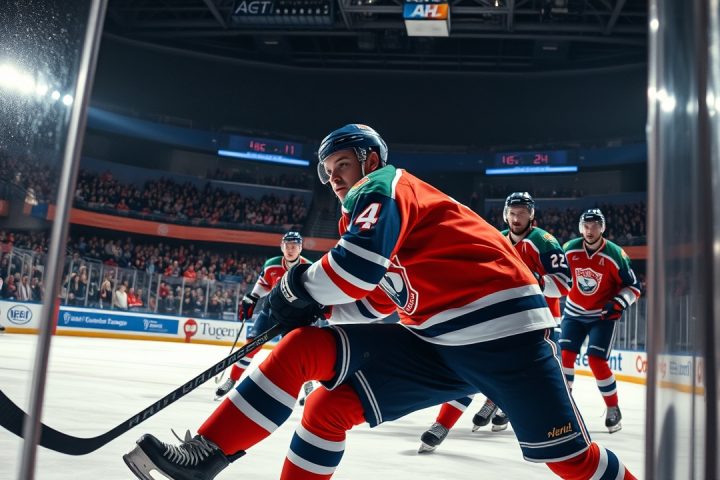
The Detroit Red Wings faced a challenging season as they hoped to end their prolonged absence from the playoffs, but in the end, they once again found themselves spectators during the postseason. Their journey saw an encouraging start, where they even topped the Atlantic Division briefly, but things quickly spiraled downward. A combination of inconsistent performances, defensive shortcomings, and an inability to convert scoring chances left them heartbroken and out of playoff contention.
Offensive Performance Analysis
For the disappointed fanbase seeking clarity, analysis from NHL EDGE data sheds light on the successes and failures throughout the season. In terms of offensive output, the Red Wings indeed had the capability for more victories, generating a total of 2,316 shots on goal, placing them 11th in the NHL. Additionally, their 685 high-danger scoring opportunities matched that 11th-place ranking. Their possession statistics showed promise, with a shot-attempt differential of plus-0.5, ranking them 14th, and a shots-on-goal differential of plus-0.1, good for seventh overall. This indicates that Detroit often managed to control play, creating numerous quality scoring chances.
However, the team’s ability to convert these opportunities into goals was severely lacking. Despite their offensive generation, the Red Wings found the back of the net only 239 times during the season, positioning them 22nd in league rankings. Their shooting percentage of 10.3% was dismal, ranking 26th and exposing their struggles in capitalizing on scoring chances when they mattered most. Far too frequently, Detroit would outplay their rivals for segments of the game, only to falter in finishing.
Puck Possession and Defensive Struggles
Digging deeper into the puck possession figures reveals an even more troubling trend: the Red Wings spent 42.5% of their total ice time defending rather than attacking, while they could only claim 40% of the time in the offensive zone, a ranking that put them at 26th overall. Additionally, their neutral-zone possession time stood at just 17.4%, placing them 29th. For a team looking to build a defensive system that emphasizes puck control, these numbers highlight a glaring deficiency, often finding themselves unable to apply pressure on the offensive end for extended periods.
Speed and Special Teams Performance
In terms of speed, while Detroit wasn’t necessarily the slowest team, they ranked last in maximum skating speed at 22.84 MPH and had only 45 instances of reaching speeds above 22 MPH, marking them as among the bottom three in the league. As the NHL increasingly leans toward transition play and dynamic skating, the Red Wings seemed outpaced by their competitors. On the penalty kill, Detroit’s performance also fell short, with the team skating a total distance of 159.32 miles—ranking last in the league in this category—and averaging 7.15 miles skated per 60 minutes, the second-worst in the NHL. Their lackluster penalty kill performance saw them struggle to apply pressure, supporting the notion of a passive defense that failed to effectively disrupt opposing plays.
On a more positive note, the Red Wings’ power play showed commendable performance, ranking seventh in total distance skated during such scenarios and second for miles skated within a single power-play period. This success was bolstered by a total of 248 power-play opportunities this season, tied with the Dallas Stars for seventh most in the league. At even strength, they performed reasonably well, ranking ninth in total distance skated and tenth on average distance skated per 60 minutes. While their top-end speed might lag behind other premier teams, their total work effort remained competitive.
Conclusion
Ultimately, the Red Wings demonstrated their capability to create offensive chances, maintain territorial advantage at times, and run an effective power play. However, their failure to finish scoring opportunities consistently and inability to assert sustained pressure in the offensive zone proved to be their downfall as the playoff hunt intensified.