
Warm Weather Challenges at the Milan Cortina Paralympics
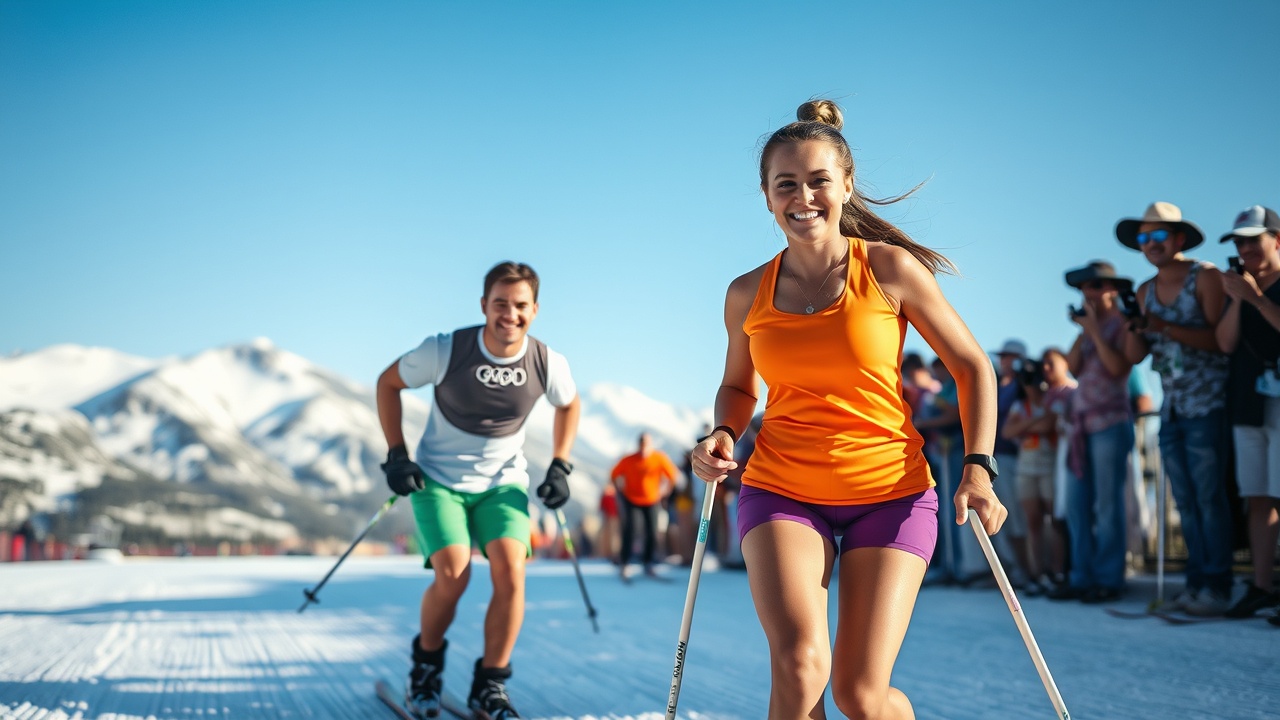
CORTINA D’AMPEZZO, Italy — As the Milan Cortina Paralympics unfold, athletes have been competing in unusually warm temperatures, with some opting for shorts, tank tops, and T-shirts due to the heat. A prominent concern for competitors, including three-time Paralympic gold medalist Brenna Huckaby from the U.S., revolves around safety in these less-than-ideal conditions.
“I want to represent the disability community to the best of my ability while snowboarding, but I won’t risk my life for it,”
Huckaby expressed, emphasizing her responsibilities as both an athlete and a parent.
Mixed Reactions from Athletes
The ongoing warm weather, which raises questions about the scheduling of the Paralympics, has garnered mixed reactions from the athletes. American Para snowboarder Zach Miller, inspired by the debut of men’s Para snowboard cross at the 2014 Sochi Paralympics, articulated his frustration with the current racing conditions, stating,
“It’s frustrating to compete in soft, slow snow that doesn’t truly represent the sport.”
With the snow conditions impacting his performance—he finished sixth in the snowboard cross finals—Miller suggested a need for the Games to be held earlier when the weather is typically colder.
Similarly, German Para biathlete Marco Maier adapted to the mushy course by wearing minimal clothing to avoid overheating, humorously noting,
“We have the Summer Games now,”
yet still managing to secure a bronze medal in his recent sprint race. The unusually warm weather can largely be attributed to climate change, according to Shel Winkley, a meteorologist from Climate Central, adding that these conditions may become increasingly common, shrinking the viability of locations suitable for winter sports.
Future Considerations for the Paralympics
Given that the Paralympics occur shortly after the Winter Olympics, the International Olympic Committee (IOC) is exploring the possibility of changing the timing of these events to better ensure suitable weather. Craig Spence, the chief brand and communications officer for the International Paralympic Committee (IPC), acknowledged the impact of climate change on winter sports and the ongoing discussions about competition scheduling, stating,
“We’ve seen temperatures rising at Paralympic Winter Games for the last few editions now.”
Safety Risks and Athlete Adaptation
The challenges posed by warming conditions extend beyond mere discomfort; they also heighten safety risks. Dr. Jaap Stomphorst, a sports physician in the Netherlands, highlighted that poor snow quality significantly increases the likelihood of injuries among athletes, particularly for Para racers who face unique challenges. For instance, visually impaired skiers cannot adjust their balance as easily as able-bodied athletes, putting them at greater risk.
As the situation evolves, many athletes are coping with the fluctuating weather and adapting their strategies to navigate the softer snow. Organizers have made adjustments to practice schedules and race timings to maintain safety on the slopes. While some competitors like Markus Salcher acknowledged that soft snow contributed to his fall in the super-G race, others, such as Canadian Para snowboarder Sandrine Hamel, noted the advantage of cooler morning competitions for women’s events compared to warmer later heats for men.
Despite various challenges, athletes exhibit resilience. Canadian Para snowboarder Tyler Turner remarked,
“We’re a bunch of amputees and injured people; we can adapt on the fly. For me, I just have to ride and stay aware of what’s happening on the track.”
As the Paralympics continue this week, many athletes are committed to showcasing their skills, even amid unprecedented warm weather. Organizations are exploring solutions to ensure optimal conditions for future events, highlighting the ongoing impact of climate change on sports from winter to summer.