
U.S. Men’s National Soccer Team Goalkeeping Evolution
For many years, the U.S. men’s national soccer team (USMNT) enjoyed an impressive lineup of goalkeepers, producing top-tier talent on a consistent basis. During the 1990s, Tony Meola set the bar, quickly followed by notable figures like Kasey Keller and Brad Friedel in the late ’90s and early 2000s, and then Tim Howard dominating the position through the 2010s. Each of these players not only had long and successful careers but also made their mark in elite European leagues.
Concerns Over Current Goalkeeping Talent
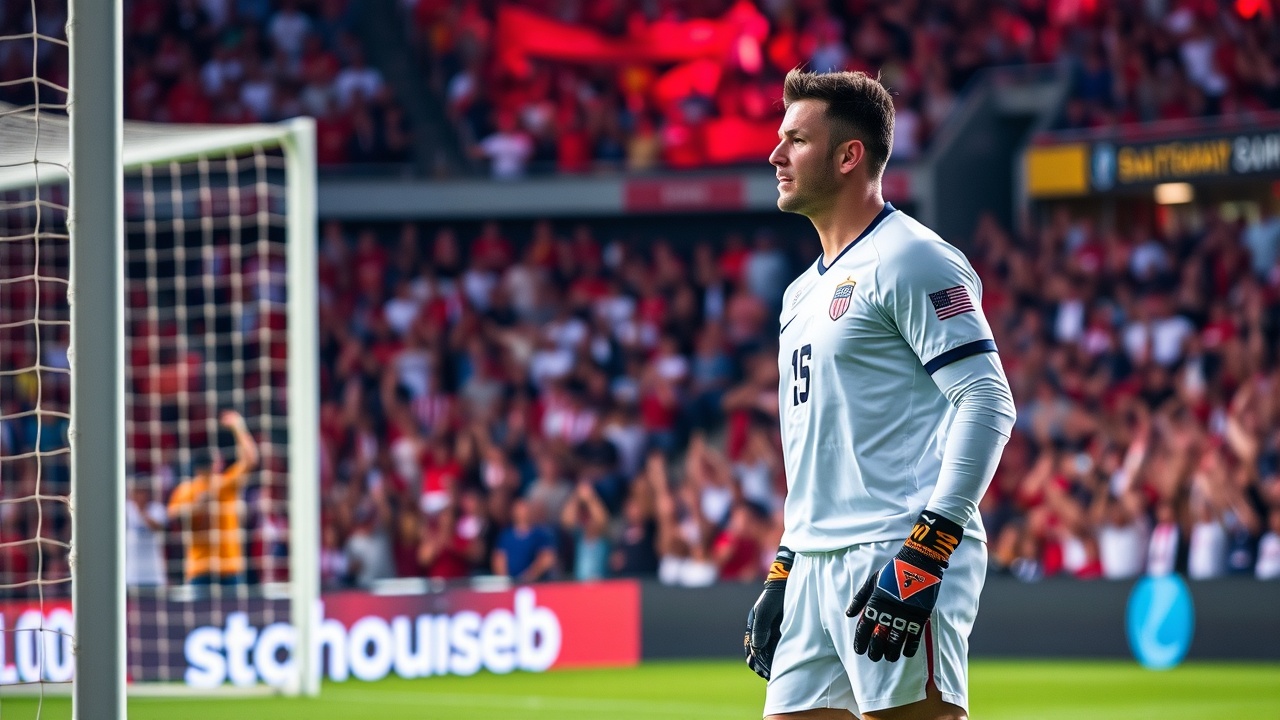
However, as the USMNT prepares for the upcoming World Cup this summer, the reliance on a new crop of goalkeepers raises concerns about their capabilities. The current roster includes:
- Matt Freese from New York City FC
- Matt Turner of the New England Revolution
- Chris Brady representing the Chicago Fire
- Roman Celentano from FC Cincinnati
- Patrick Schulte from Columbus Crew
Unlike their predecessors—who boasted prestigious international experience and club histories—this new group primarily plays in Major League Soccer (MLS), which suggests a decline in the program’s goalkeeper quality over the years.
Trends and Challenges in Goalkeeping
The absence of players successfully competing at top clubs in Europe indicates a troubling trend, whether due to scouts overlooking them, or the players themselves proving unable to secure consistent playing time abroad. While the USMNT has always excelled in athleticism, the leap from being merely competent to becoming elite is often determined by psychological factors—decision-making, positioning, and resilience in overcoming mistakes—all of which come from experience.
Notably, many of the current goalkeepers, such as Brady, Celentano, and Schulte, are under the age of 25, potentially heralding better days ahead, with Brady being especially touted for his promise. Yet, the World Cup timeline does not align with their developmental trajectories. Turner, who participated in the last World Cup for the U.S. team, currently finds himself back in MLS on loan from Olympique Lyon due to a lack of consistent playing opportunities in Europe. Freese, aged 27 and a contender for the starting position, has delivered solid performances but hasn’t yet made a significant impact that attracts attention.
Expert Opinions on Goalkeeping Depth
“There’s no second tier of goalkeepers who you’d consider a reliable backup,”
Criticism has emerged from past US international goalkeepers as well, notably Kasey Keller, who expressed astonishment at the current situation, highlighting a lack of interest from European clubs in players like Freese. Tim Hanley, a long-time goalkeeping coach in MLS, holds a skeptical view of the goalkeeping depth in the USMNT, labeling it as not a strength while acknowledging that Freese is likely to be their main choice by default.
Statistical Analysis and Historical Context
Analyses comparing the USMNT’s goalkeeping statistics from the 2022 World Cup cycle to the current buildup for 2026 indicate a worrying trend. During the 2022 qualifying phase, the U.S. prevented 5.42 goals over 32 games, averaging 0.17 goals prevented per game. In stark contrast, the present cycle has yielded only 2.25 goals prevented over 28 games, translating to 0.08 goals prevented per game.
Some analysts posit that the U.S. historically experiences cycles of talent at various positions, with the focus shifting back and forth between different specialties, often resulting in periods where quality seems to vanish out of existence. Just as Argentina searched for replacements for Diego Maradona until Lionel Messi emerged, the pattern seems to have repeated for U.S. goalkeepers.
Training Paradigms and Future Prospects
Hanley emphasizes that current goalkeepers often lack experience due to a shift in training paradigms that have prioritized foot skills over essential shot-stopping abilities. Brad Friedel echoes these sentiments, relaying that for nearly a decade between 2007 and 2017, the emphasis on training led the U.S. to neglect the critical requirements of goalkeeping.
“If you’re not athletic and brave, you can’t be a top goalkeeper. We’ve lost time on what matters the most,”
While training methods are purportedly shifting back to incorporate better goalkeeping fundamentals, the effect won’t be felt for the 2026 World Cup. Keller believes that the current crop of goalkeepers leans more toward being outfield players with a bit of goalkeeping—“not providing that decisive save when it is most needed.”
Looking Ahead to the World Cup
Despite lacking experience compared to previous generations, notable figures in goalkeeping continue to emerge in MLS. However, both Friedel and Keller assert that it is crucial for U.S. goalkeepers to seek opportunities to play at higher levels, especially in the European leagues, where they can gain invaluable experience against tougher competition.
As the tournament approaches, Matt Freese remains the frontrunner, having been in goal for most recent matches under coach Mauricio Pochettino. Yet, Turner is making a push for a potential starting role. His performance in MLS is noteworthy—ranking second in goals prevented while boasting a higher save percentage than Freese. In tournaments like the World Cup, even a modestly skilled goalkeeper can rise to stardom, and such potential remains for Freese or anyone taken by surprise at this pivotal juncture in their careers. The USMNT hopes that one of these keepers will rise to the challenge and become a significant figure in American soccer.