

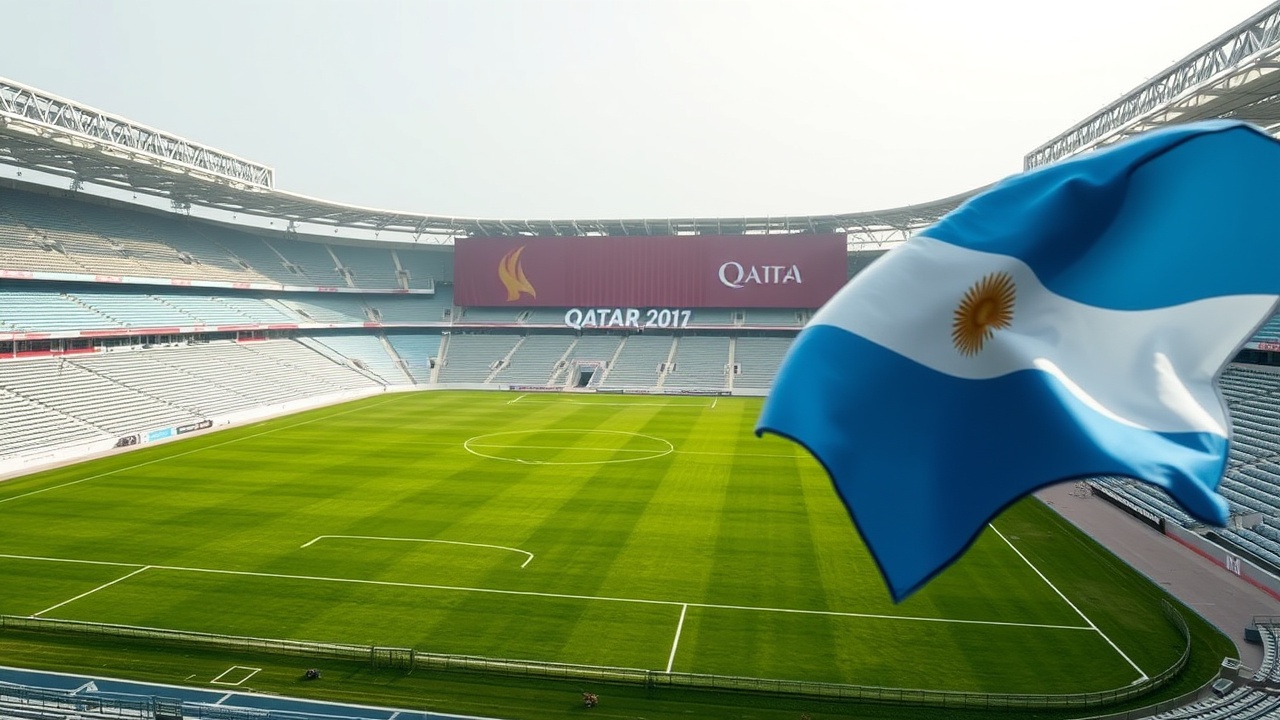
Cancellation of Finalissima Match
In light of the escalating conflict in the Middle East, UEFA announced on Sunday that the much-anticipated Finalissima match, featuring Argentina and Spain, has been canceled. Originally scheduled to take place in Doha, Qatar, on March 27, the clash was set to showcase two of football’s powerhouses, with Lionel Messi leading the Argentinian team and rising star Lamine Yamal at the helm for Spain. The match was expected to serve as a warm-up ahead of the forthcoming World Cup in North America this summer.
Reasons for Cancellation
The decision to scrap the match stemmed from the concerning security situation following intensified assaults by Iran on neighboring regions, which are in retaliation to ongoing military actions by the United States and Israel. In a statement, UEFA revealed that after extensive consultations with Qatari officials, it was concluded that the backdrop of the ongoing conflict made it impossible to proceed with the event as planned.
Alternative Arrangements Explored
Originally set to unfold at the Lusail Stadium—renowned for hosting the thrilling 2022 World Cup final where Argentina triumphed over France—alternative arrangements were explored. Among these, the possibility of holding the game at Madrid’s iconic Santiago Bernabeu was proposed, allowing both teams to share the stadium facilities. However, this suggestion was flatly rejected by the Argentine Football Association due to concerns over fan safety and acceptance.
Additionally, UEFA suggested hosting the match across two legs: one in Spain and the other in Argentina ahead of the Euros and Copa America scheduled for 2028. Unfortunately, these efforts didn’t yield a solution, as no dates were available for Spain. The last Finalissima held in 2022 saw Argentina defeat Italy 3-0 at Wembley, further raising expectations for this year’s showdown.
Wider Impact of the Conflict
Beyond football, the upheaval in the region has led to significant disruptions, impacting travel, causing fluctuations in economic markets, and soaring oil prices. The war has also cast a shadow over other sporting events, prompting the cancellation of Formula 1 races in Bahrain and Saudi Arabia slated for April. Discussions around the upcoming World Cup co-hosted by the U.S. have surfaced, with suggestions that Iran should be excluded from participation due to its recent actions.