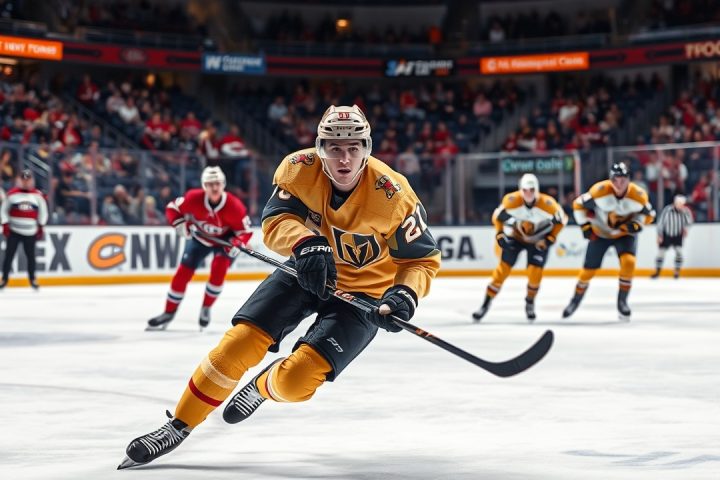


Trevor Zegras Joins the Flyers
On March 29, 2026, at the Xfinity Mobile Arena in Philadelphia, NHL player Trevor Zegras, now wearing number 46 for the Flyers, displayed his skills as he maneuvered the puck against the Dallas Stars during a key second-period play. Zegras’s journey to the Flyers came after two tumultuous years filled with trade speculation and stagnation while he was with the Anaheim Ducks.
During the offseason, the Ducks opted to trade the young forward to Philadelphia. In the swap, they received a second-round pick, a fourth-round pick, and Ryan Poehling, a seasoned forward formerly with the Pittsburgh Penguins. From the standpoint of the Flyers, acquiring Zegras appeared to be a strategic move with the potential for significant upside. For the Ducks, however, relinquishing a talented player who could flourish elsewhere was a gamble.
While frustration had developed between Zegras and the Ducks, his young age of 24 still hinted at unrealized potential and promise as a productive scorer in the NHL. The low cost of the trade—consisting of mid-round draft choices and a player easily replaceable by the Ducks—made the deal a worthwhile risk for a team looking to enhance its offensive lineup.
Zegras’s Impact on the Flyers
Since joining the Flyers, Zegras has showcased his talent, achieving career-best numbers with 26 goals and 67 points, positioning himself just shy of leading his team in these categories. However, perhaps even more vital to the Flyers’ recent playoff push are statistics that do not appear in conventional metrics.
Philadelphia’s 27 regulation victories marked the lowest among all Eastern Conference teams vying for playoff positions; indeed, they are the only squad to have failed to secure at least 33 wins in regulation. Comparatively, in the Western Conference, only a few teams, including the Ducks and the Los Angeles Kings, fell below the 30-win mark. The Flyers relied significantly on games exceeding regulation: they excelled in overtime, securing six victories in 3-on-3 matches and an impressive ten in shootouts—leading the NHL in that department.
Zegras proved instrumental in securing these extra points, topping the league with seven shootout goals and adding an overtime winner to his tally. Without his contributions, it’s uncertain if the Flyers would have succeeded in 10 shootout encounters, and they likely would not have amassed enough points to outpace the Washington Capitals.
Challenges Ahead
Nevertheless, potential pitfalls remain for Philadelphia, particularly his ongoing defensive inconsistencies. As the playoffs approach, the Flyers must recognize that overtime and shootouts are no longer available strategies; they will need to secure wins in standard 5-on-5 play.
While the Flyers improved their late-season performance, with only 10 of their 19 wins since February 1 occurring in regulation play, Zegras’s impact during traditional gameplay cannot be dismissed. His 0.72 goals per 60 minutes ranks him 178th among 384 forwards who played at least 500 minutes, but he shines with a 0.92 primary assists per 60 minutes, placing him 36th, underscoring his playmaking capabilities. Overall, he averaged 1.94 total points per 60 minutes, indicating he can serve as a first or second line asset on offense.
Looking Forward
As the playoffs unfold, Zegras’s ability to influence games will be crucial for the Flyers, and fans eagerly anticipate how he will perform on this elevated stage after contributing significantly in both traditional and nontraditional formats. He is undoubtedly a key figure in their playoff journey, and now the spotlight is on Zegras as they advance to the postseason.