
Oklahoma City Thunder’s Recent Struggles
Just a few weeks ago, the Oklahoma City Thunder were making headlines as they seemed poised to shatter the NBA record for most wins in a single season and stunted the ambitions of rival teams eyeing a championship. It feels like merely yesterday that observers were speculating if this defending title-holders’ impressive dominance could intimidate potential challengers into abandoning their playoff aspirations. Alas, that timeline has since morphed into a different narrative—one that originated three weeks ago, a period which has been notably less favorable for the Thunder.
Five-Game Losing Streak
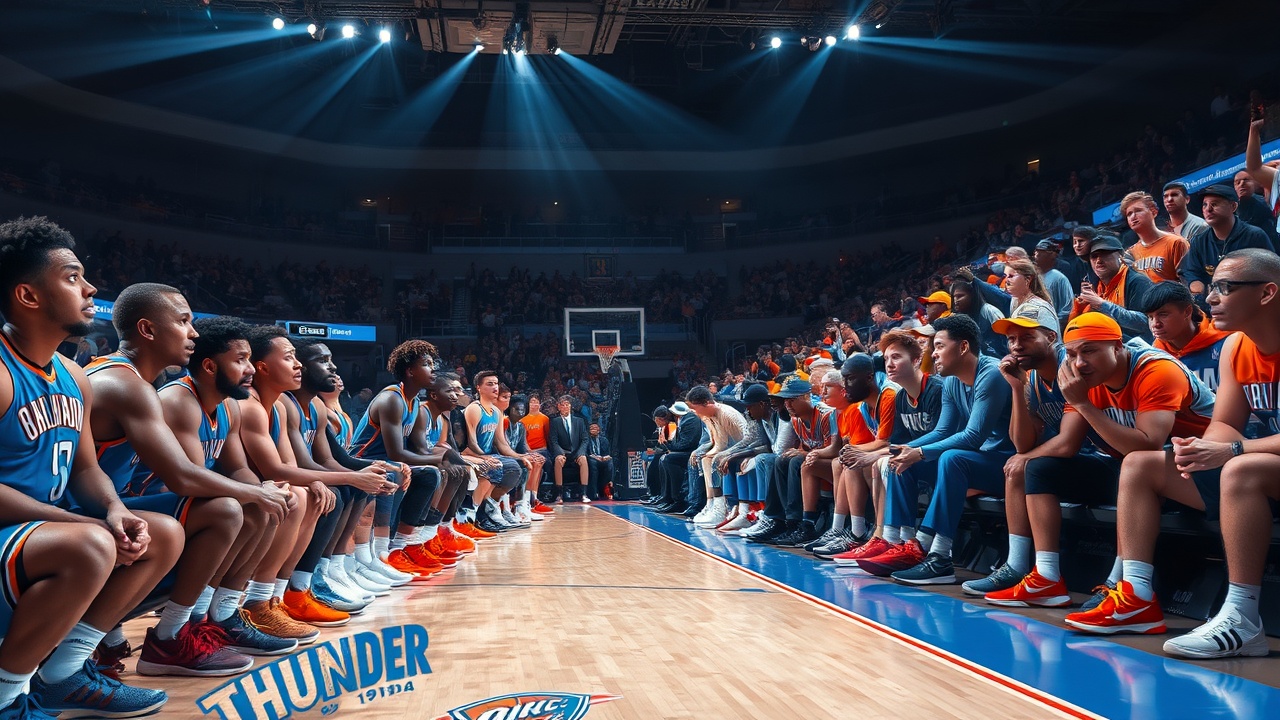
The team that was once on track to exceed 73 wins has faced the harsh reality of a five-game losing streak, punctuated by an unexpected defeat to the Charlotte Hornets—a loss many have marked as one of the worst blowouts in decades. As the Thunder grapple with their unexpectedly mediocre form, Shai Gilgeous-Alexander and his teammates have begun searching for answers. Their recent performance has left them teetering on the edge of mediocrity, escaping a potential setback against the Utah Jazz, who possess one of the worst records in the league. Although they secured a victory, the lackluster nature of their performance has raised eyebrows and concerns about their competitiveness.
Team Reflections and Cultural Adjustments
“This might sound a bit arrogant, but we’ve been winning so often these last few years that when we experience a typical losing stretch, people react as if it’s the end of the world,”
Following this struggle, swingman Jalen Williams reflected on the team’s challenges, suggesting that a cultural adjustment may be at play. Williams highlighted that human fatigue, both mental and physical, contributes largely to their recent underwhelming displays, pointing out that players are not immune to fatigue over the course of a long season.
Increased Expectations and Performance Issues
While the Thunder remain atop the league in terms of total wins and winning percentage since the season’s start, their current struggles mirror those faced by high-achieving teams. With a competitive edge comes increased expectations, and for the Thunder, the reality of .500 performance suddenly feels like a crisis point when they’ve been accustomed to dominance.
Questions have emerged regarding whether fatigue from their extensive schedule, especially following their semifinal run in the NBA Cup, has played a role. From the end of that tournament to the present, they have crammed 12 games into just 21 days, with several back-to-back matchups that may have taken a toll on their performance. While they initially thrived offensively, they have since struggled with their shooting, particularly from beyond the arc, seeing their percentage decrease significantly since the tournament. Meanwhile, injuries have compounded the Thunder’s woes, with starting center Isaiah Hartenstein sidelined, leading to a sharp drop in their offensive rebounding capabilities.
Key Players and Future Outlook
Adding to the tension, key players like Williams are encountering shooting slumps that detract from their offensive potency. Williams, who recently returned from injury, has failed to regain his previous form, impacting team efficiency. As the Thunder attempt to recalibrate, their historical performance seems overshadowed by recent deficits and missed opportunities, especially in clutch situations where they previously excelled.
“Tougher games are necessary for growth,”
With these challenges laid out, Thunder head coach Mark Daigneault acknowledged the significance of assessments during this tough stretch. Williams echoed this sentiment, remarking on the importance of minimizing setbacks throughout an arduous season.
Conclusion
Despite these challenges, the potential for regaining momentum remains; once they return to full health, and if they manage to rediscover their shooting touch, the Thunder could very well resume their journey toward a dominant campaign. The reality, however, is clear: even the mightiest teams are susceptible to shortcomings when faced with relentless competition, rapid scheduling, and the unpredictable nature of the sport.