

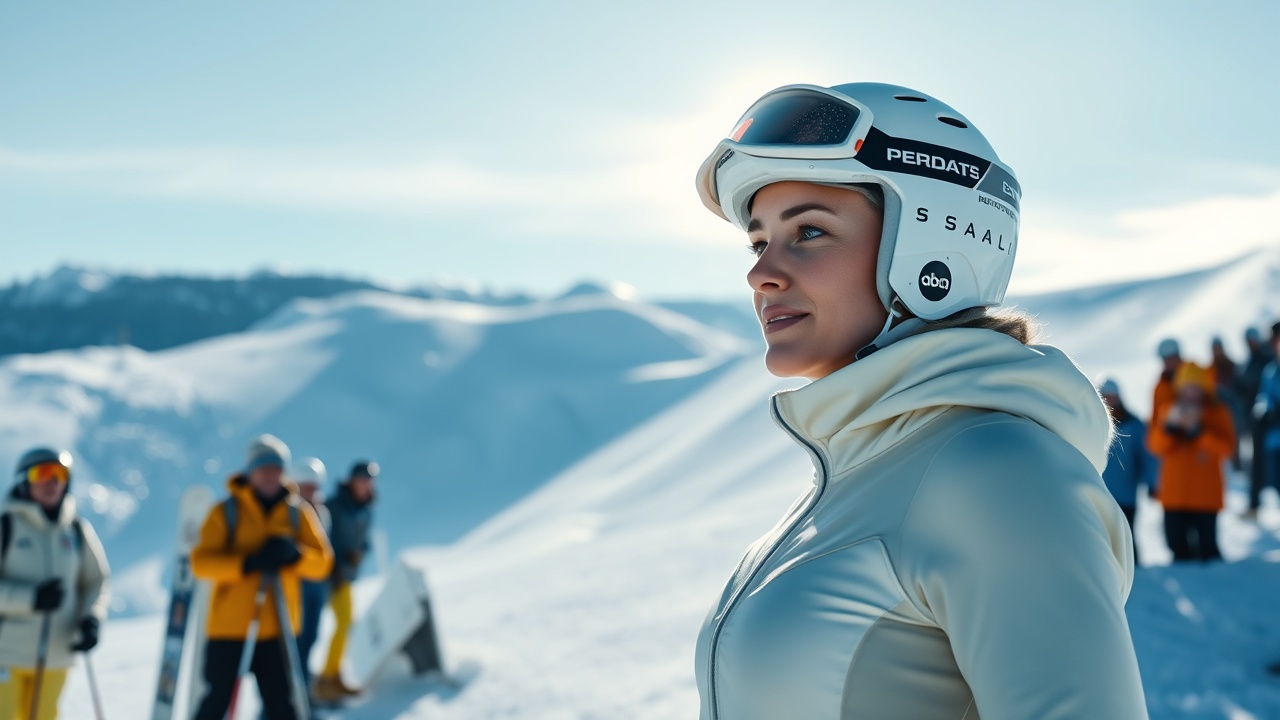
Annika Malacinski: A Crossroads in Nordic Combined
In the picturesque landscape of Milan Cortina, Italy, Annika Malacinski stands at a crossroads in her athletic career. As a dedicated member of the Nordic combined community, she has felt firsthand the sting of exclusion from one of the most prestigious sports in the Winter Olympics.
Heartbreak and Determination
Just over a year ago, during a flight from Munich to Denver, Malacinski believed she was participating in a groundbreaking moment for female athletes when she connected to the International Olympic Committee via in-flight Wi-Fi. After a heartfelt anticipation, those hopes were dashed when the committee announced there would be no inclusion of women in Nordic combined events, leaving her devastated.
“I cried for eight hours straight on that flight. When I arrived in Denver, my eyes were swollen shut. It felt like my world had crashed,”
she shared with The Associated Press from her training camp in Norway.
Gender Disparity in Sports
At 24, Malacinski has already made a name for herself in a sport that combines ski jumping and cross-country skiing, consistently ranking in the top 10. While she prepares to support her brother Niklas, who will represent the United States in the men’s Nordic combined event, she is acutely aware of the bittersweet nature of his success.
“I know how hard he works, and he absolutely deserves it,”
she noted, adding that the only obstacle standing in her way is her gender.
The Fight for Inclusion
This gender disparity is magnified against the backdrop of the upcoming Winter Games, which will boast the largest participation of female athletes ever recorded, hitting 47%. Despite this progress, Nordic combined remains the last event to exclude women, a point highlighted by protests from female competitors, who recently formed a large X with their ski poles to symbolize exclusion. Since its introduction in 1924, the Nordic combined has seen only male competitors, and with the 2030 Olympics looming, the sport faces potential removal due to low participation rates and a limited audience.
A Historical Struggle
The historical struggle for women’s inclusion can be traced back to 1896, when they were altogether barred from the modern Olympics. Their fight for recognition has involved complex battles for rights and equality in sports, with many events remaining inaccessible for decades, such as the women’s marathon, which only made its Olympic debut in 1984. This ongoing journey has witnessed some progress, but significant discrepancies remain. For instance, women compete in seven events in the heptathlon, while men engage in ten in the decathlon.
Looking Ahead
Although strides have been made at the Winter Olympics—most notably the introduction of women in ski jumping in 2014 after being barred from competing as recently as the Vancouver Games—there is a palpable sense of frustration in the Nordic combined community. The recent changes at Milan Cortina, which will allow men and women to race the same distances in cross-country skiing, offer a glimmer of hope, yet Malacinski remains unwavering in her resolve to advocate for inclusion. Looking ahead, she is focused on ensuring that women are represented in the 2030 Olympics in France.
“If I put my mind to something, I know I can do it. We deserve to be there, and I’ll fight until 2030 because that’s our rightful place,”
said Malacinski, whose determination serves as an inspiration for many.