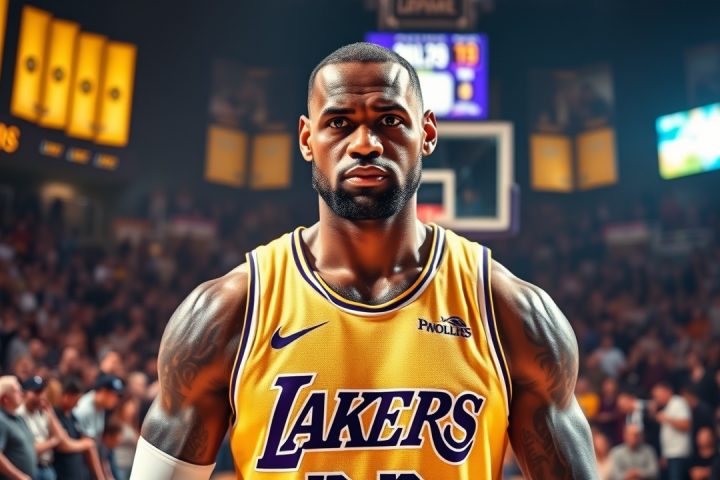


Rashard Lewis and the Oklahoma City Thunder
Rashard Lewis may not have suited up for the Oklahoma City Thunder, but his NBA journey has inadvertently intertwined with the franchise’s present success. The two-time All-Star, who spent a significant part of his career with the Seattle SuperSonics—OKC’s predecessor—has become a talking point among fans and analysts reflecting on the team’s evolution into champions, especially after Oklahoma City secured the title in 2025.
The Connection to Championship Success
As the Thunder chase another championship this season, fans often remind Lewis of the peculiar connection between him and the team’s roster. This relationship traces back to 2007 when a sign-and-trade deal sent him from the Sonics to the Orlando Magic, setting off a series of strategic moves masterminded by former general manager Sam Presti that would ultimately shape the core of OKC’s championship-winning squad.
Lewis himself has acknowledged the significance of these connections, commenting on how Presti’s foresight and management style have impacted the franchise’s success.
“It just shows you what type of general manager Sam Presti is,”
Lewis reflected.
The Beginning of a New Era
The events that commenced this journey started on May 22, 2007, when Tony Dutt, Lewis’s agent, observed the NBA draft lottery. The Seattle SuperSonics ended up with the second pick, which was widely expected to allow them to draft Kevin Durant, a potential star similar to Lewis. This scenario led Lewis to contemplate his future with the franchise, especially as the Sonics had struggled in recent seasons, and he was eager for a more competitive opportunity.
On the brink of free agency after opting out of his contract, the direction of the Sonics was unclear. Following the acquisition of the team by a group led by Clay Bennett, the hunt for a new general manager had begun. Bennett sought counsel from San Antonio Spurs GM R.C. Buford, who recommended Presti, then a young yet accomplished member of the Spurs organization. Presti earned the role just weeks after the lottery, and at his introduction, he affirmed his dedication to building a competitive team without replicating the Spurs’ model in Seattle.
Strategic Moves and Long-Term Impact
A few weeks later, Presti made the pivotal decision to trade star shooter Ray Allen, marking the start of a significant retooling phase for the franchise. With Lewis entering the free agency pool, Dutt arranged for a meeting with Presti, where the general manager expressed interest in retaining him but also hinted at the financial limitations the Sonics faced.
Ultimately, the Orlando Magic offered Lewis a lucrative six-year contract, which the Sonics could not match. Instead, Presti orchestrated a sign-and-trade that brought Seattle a second-round draft pick and a $9 million trade exception, which Presti efficiently utilized shortly thereafter to bolster the team’s future with additional draft assets.
This initial trade laid the groundwork for the Thunder’s acquisition of key prospects like Serge Ibaka. Over the years, as the franchise transitioned to Oklahoma City, Lewis’s legacy from the deal reverberated as the organization accumulated talent including future MVPs and pivotal players like Russell Westbrook and James Harden. Although the Thunder faced setbacks, including a Finals loss and the subsequent trades that followed, Presti’s asset management has been lauded by executives and analysts alike.
Continuing Legacy
Currently, as the Thunder prepare for another playoff run, the organization still holds one first-round pick originating from the massive trade that sent Paul George to the Clippers in 2019, showcasing the long-term impact of those early dealings.
For Lewis, who’s now with the Spurs as a player development coach, the story serves as a reminder of how interconnected decisions in the NBA can shape franchises long after the original trades have concluded. His acknowledgment of the Thunder’s success and the ongoing influence of that 2007 trade is a testament to the complex nature of sports transactions and their far-reaching consequences.