
Miami RedHawks Basketball: A Journey of Transformation
Over his desk at Miami University in Oxford, Ohio, head coach Travis Steele has a three-by-five index card pinned prominently, just above a cherished photo of his young dog, Ryder. The card, marked with the words “Be obsessed with your trajectory, not your current results,” encapsulates the philosophy Steele aims to uphold as he navigates his fourth season leading the RedHawks men’s basketball team. While the balance of wins and losses is certainly important in the competitive landscape of college basketball, Steele emphasizes the continual growth of his players and the program above all else.
Historic Success and Recognition
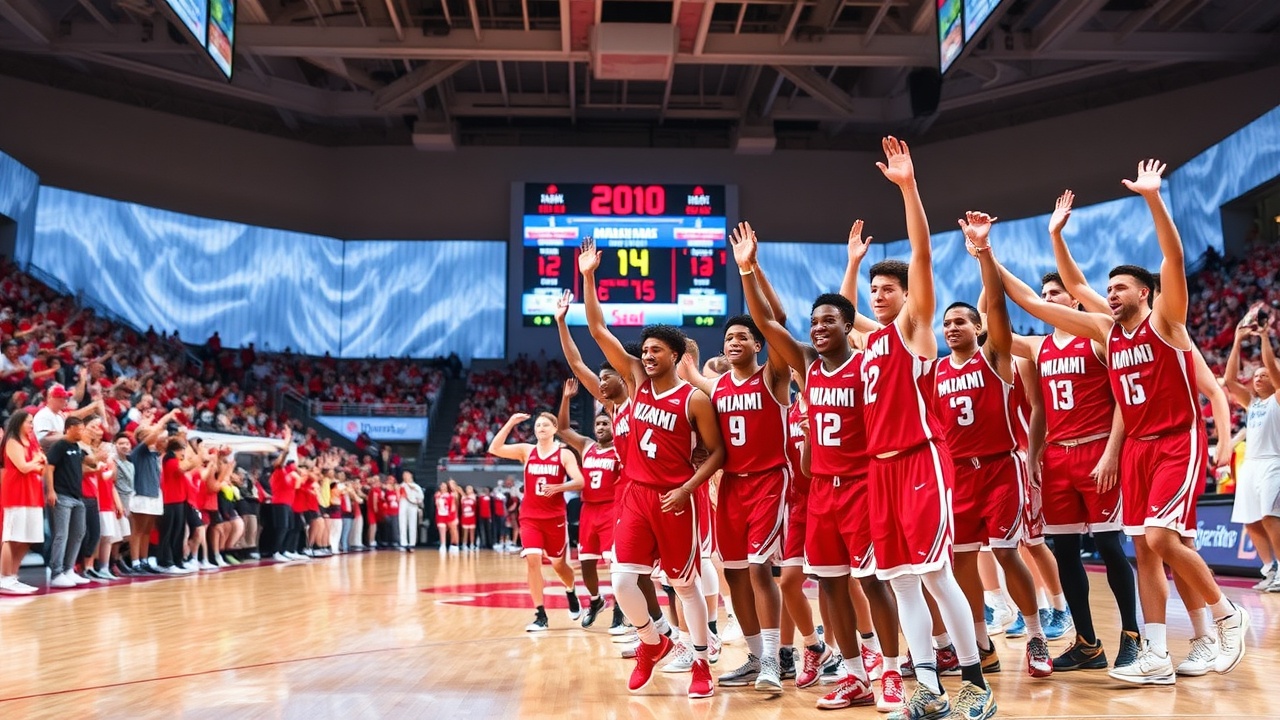
As the NCAA Tournament approaches and February unfolds, Miami’s success on the court cannot be ignored. The RedHawks currently boast a stunning record of 21-0, marking their best start in Mid-American Conference history and their first time in the national rankings in nearly three decades. This dramatic turnaround has attracted significant attention, reminiscent of the team’s glory days which saw them led by former NBA star Wally Szczerbiak to the Sweet 16 in 1999.
“It’s really changed the narrative around here,” Steele remarked to USA TODAY Sports. “It just proves that with commitment and a clear vision, anything is achievable, no matter where you are located.”
Miami’s current performance, while impressive, did not emerge from obscurity; last season, the RedHawks laid the foundation for their success by accumulating a record 25 wins. Nonetheless, the momentum generated this season has significantly elevated the team’s profile and reconnects the school with a once loyal fanbase. Szczerbiak, now a college basketball analyst, expressed pride in seeing his alma mater making headlines once again.
Challenges and Growth
Historically, Miami has experienced both peaks and valleys. The RedHawks were a formidable mid-major for decades, advancing to the NCAA regional semifinals multiple times from 1958 until 1999. However, over the last two decades, the program has struggled to maintain that success, making only one NCAA Tournament appearance following their 1999 breakthrough and consistently finishing below .500.
Steele’s appointment followed seasons of disappointment and was seen as a necessary step towards revitalization. He faced a daunting task: rebuilding the team’s talent pool while cultivating a supportive culture among players and alumni. Reflecting on his first months at Miami, Steele noted the challenges of bridging gaps left by years of disconnectedness.
Before arriving at Miami, he had been at Xavier, where despite some successes, he faced obstacles that prevented him from realizing greater achievements. After parting ways with Xavier, Steele took a calculated approach, accepting Miami’s head coaching position just a fortnight later, eager to apply lessons learned from his previous stint.
Building a Winning Culture
His initial seasons were obstacles to overcome; with records of 12-20 and 15-17 in his first two years, the groundwork was slow to establish. However, in his third season, the program bore fruit with a 25-9 record, showcasing a renewed commitment among players to resurrect the team’s former glory.
This season, Miami came into the campaign with realistic aspirations but has exceeded even the most optimistic expectations, solidifying itself as a contender in the MAC. Currently the seventh non-Gonzaga mid-major to start a season 20-0 since 1990, the RedHawks have grabbed the spotlight with their high-paced and efficient style of play.
Notably, Steele has transformed Miami’s offensive scheme, favoring a more dynamic pace compared to his prior, slower style at Xavier. His roster features numerous players averaging double digits in scoring, relying heavily on teamwork and cohesion. Incredibly, this success has been achieved while facing challenges, such as the loss of team captain and starting point guard Evan Ipsaro to injury.
Fan Engagement and Future Aspirations
Despite the well-earned victories, there have been nail-biting moments. Miami’s last few games have showcased their tenacity, with close wins over Buffalo and UMass evidenced by thrilling buzzer-beaters and come-from-behind finishes.
The RedHawks’ undefeated journey hasn’t come without criticism regarding their schedule—largely considered one of the weaker non-conference slates in the nation. Still, their performance assures that they cannot be dismissed as merely fortunate. Miami’s status is bolstered by their solid strength of record, demonstrating the legitimacy of their accomplishments.
As fans flock to support their revitalized team, attendance has surged. After highlighting disappointing figures last season, recent games have seen crowds surge into the thousands, rekindling the passionate following that had long waned. The enthusiasm surrounding Miami’s basketball renaissance has begun bridging generational gaps, with former supporters, including Szczerbiak himself, reengaging with a program poised for greatness.
The RedHawks’ effective roster management cannot be understated either, as Steele has prioritized player retention while judiciously utilizing the transfer portal to bolster their lineup. This careful approach to building a cohesive team, along with fostering a sense of community, has been pivotal during a time when college basketball is notorious for its roster upheavals.
Heading into the remaining season, Miami is one of the favorites in their conference, aiming not just for an undefeated record but a return to the NCAA tournament, an objective it has passionately pursued after a heartbreaking finish last season. As Steele emphasizes, the focus is simply on winning; the process will dictate the results.
“We feel no pressure; our guys are enjoying this journey,” he concluded.
This article was originally published by USA TODAY: Miami RedHawks defy expectations to stand undefeated in college basketball.