

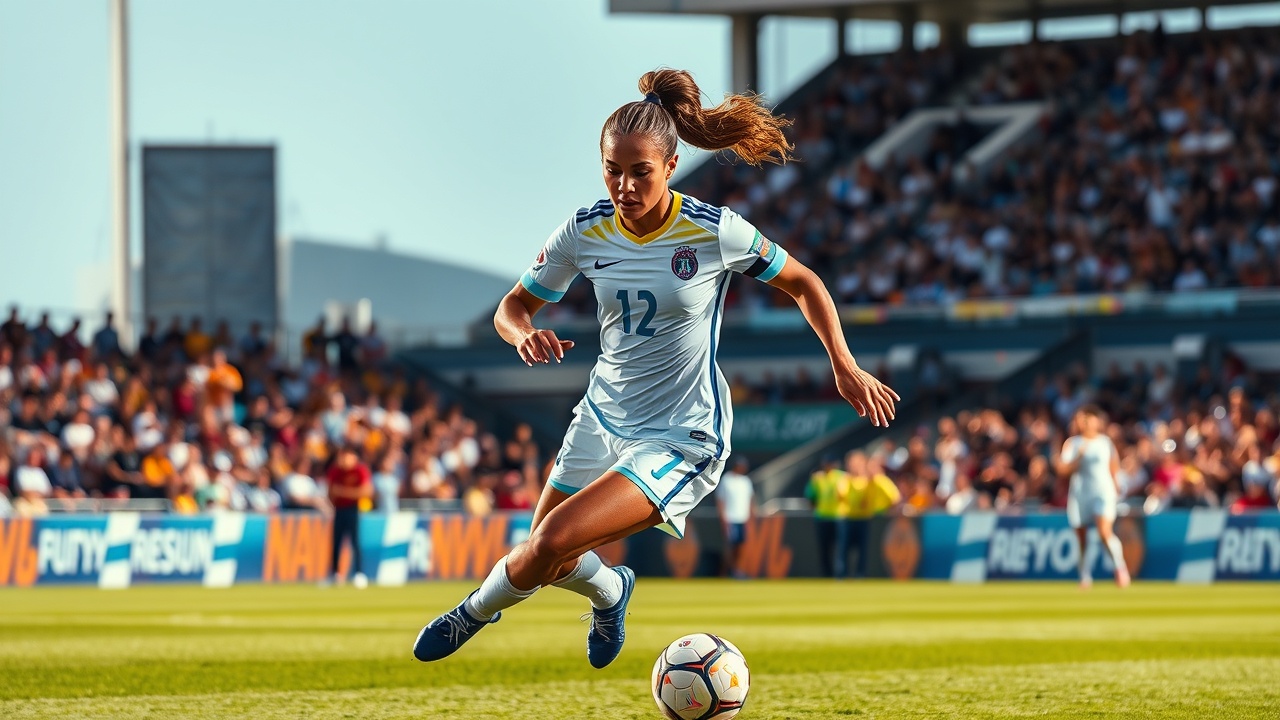
The Importance of Trinity Rodman to the NWSL
The upcoming NWSL Championship on Saturday may mark a pivotal moment for the Washington Spirit’s forward, Trinity Rodman, as she is expected to depart for international opportunities after her contract ends. Her exit would undoubtedly be a significant loss for the league, raising an essential question: What makes Rodman so vital to the NWSL? To grasp her importance, we must first understand who she is.
Rodman’s Unique Talent and Personality
Rodman stands out as a premier player, not only among her peers in the NWSL but also within the U.S. women’s national team. At just 23 years old, her skills continue to evolve, showcasing her as a world-class talent. Observing her on the pitch reveals a joyful athlete whose playful spirit reflects a love for the game reminiscent of children playing their first match, despite the immense global expectations she faces. Her exciting style — from her signature “Trin Spin” move to her long-range volleys — consistently electrifies the stadium and keeps fans engaged.
Beyond her athletic prowess, Rodman’s charm extends to her vibrant personality, evident in her social media presence and her candid reactions following game-winning goals that come after injury struggles. She embodies a refreshing blend of humor and authenticity, whether joking about her abilities in front of the camera or engaging with fans as she prepares for major events like the NWSL Awards.
Rodman’s Impact on Women’s Soccer
Long associated with trailblazers like Mia Hamm and Alex Morgan, Rodman is rapidly becoming a prominent symbol of women’s soccer — a recognizable figure even for those who may not typically follow the sport. With her distinct style and approachable demeanor, she possesses the qualities that make her marketable beyond the soccer field. Unlike any player before her in the NWSL, Rodman has the potential to bridge the gap between sports and mainstream fame, a sentiment echoed by general managers who note that she is not just famous in the world of soccer, but is becoming a public figure in its own right.
The Financial Challenges Facing the NWSL
Her potential departure highlights a critical moment for the NWSL, which aspires to compete with the popularity of male leagues. Drawing in casual fans is essential for the league’s growth, and while attempts to innovate fan experiences are underway, the real draw remains the stellar athletes like Rodman who inspire audiences to attend games. Players of Rodman’s caliber, who captivate fans and energize the league, are vital to its sustainability.
Rodman’s situation also emphasizes the broader financial challenges facing the NWSL. The league operates under a salary cap of $3.5 million, which has come under scrutiny. Questions arise about whether this cap should be lifted or if special exemptions for high-profile players should be implemented, similar to Major League Soccer’s designated player rule. The NWSL has initiated measures like allocation money in the past, but as high-caliber talent opts for opportunities abroad, creating a more flexible financial structure has become critical.
The Future of the NWSL
This moment poses a significant dilemma; Rodman’s potential departure may signify a turning point not only for her career but for the NWSL’s future recruitment of exceptional talent. If a player of Rodman’s caliber cannot instigate reform within the league, then the question remains: who can? Rodman’s importance stretches beyond her individual talent; she represents the aspirations of future stars in women’s soccer, like Aitana Bonmatí and Khadija “Bunny” Shaw, who may follow in her footsteps.
Historically, the league has prided itself on parity among teams — a philosophy championed by NWSL Commissioner Jessica Berman, who describes this equality as the league’s superpower. In response to the prospect of losing Rodman, officials emphasized their commitment to retaining her while underscoring the significance of the salary cap as a foundation for competition within the league. While league leaders maintain that each athlete makes personal decisions regarding their careers, including whether to play overseas, the reality remains that financial competition is not aligned with international counterparts.
As the NWSL grapples with these realities, Rodman’s situation begs the larger question of how the league will position itself in a competitive global landscape. Addressing the financial disparities in order to retain stars like Rodman will not only affect her, but also set the tone for the future of the league in attracting elite talent.