
Legal Developments in College Basketball
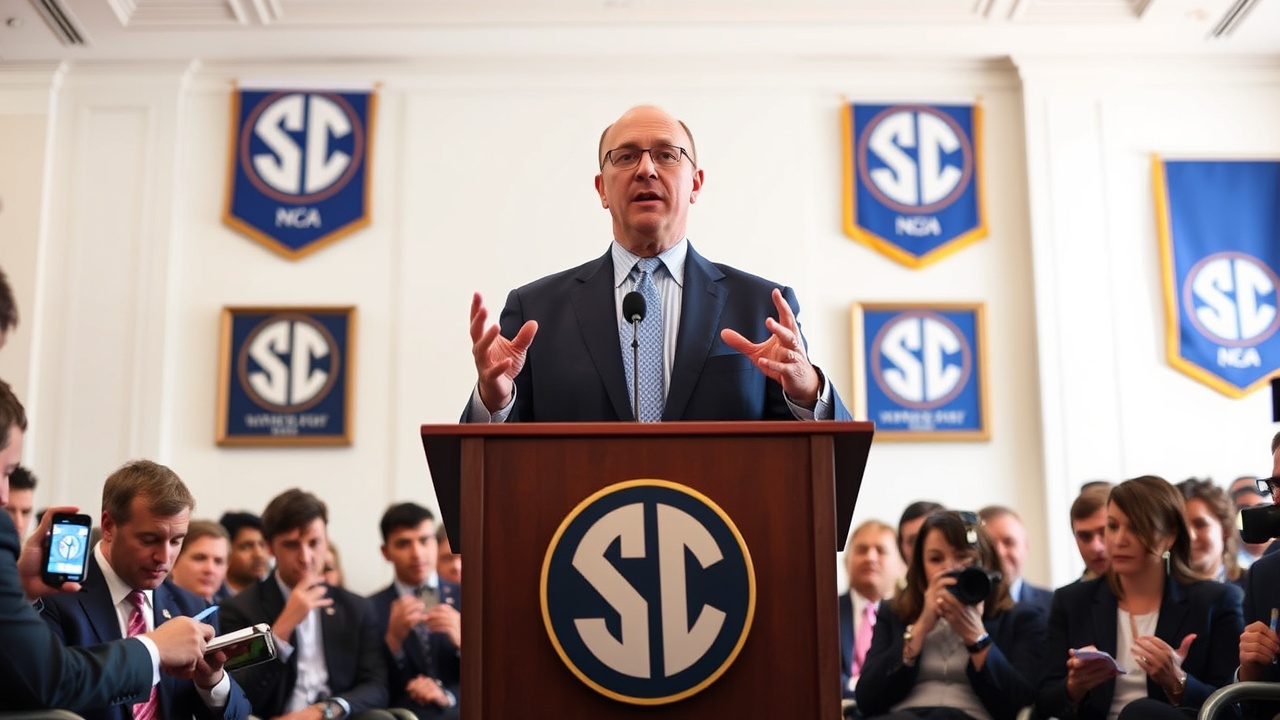
In a significant legal development concerning college basketball, Greg Sankey, the Commissioner of the Southeastern Conference (SEC), has publicly expressed support for the NCAA amid its ongoing eligibility dispute regarding Alabama basketball player Charles Bediako. The controversy arises after Bediako signed a two-way contract with the NBA but did not play any games in the league, opting instead to return to the college scene with the Crimson Tide over two years later.
NCAA Eligibility Guidelines
In his affidavit, Sankey urged the court to uphold the NCAA’s eligibility guidelines, emphasizing their critical role in maintaining the integrity of college athletics and the educational values they embody. He articulated a strong stance that affirms the rules are vital not just for the current cohort of student-athletes, but for future generations as well.
“Permitting former professional athletes to return to competition creates a competitive disadvantage and fundamental unfairness for current student-athletes,”
Sankey argued. Bediako had filed a lawsuit after the NCAA rejected the University of Alabama’s appeal, which sought to allow him to participate in the team’s season.
Bediako’s Collegiate Career
Despite the setback with the professional league, Bediako’s collegiate career spanned from 2021 to 2023 and included time in the G League. Following a temporary restraining order granted by the Tuscaloosa Circuit Court, he has played four games for Alabama, averaging 9.5 points and 5.0 rebounds per outing. A court hearing to review the injunction related to his eligibility is scheduled for Friday.
Controversy and Legal Implications
Meanwhile, the legal decision has garnered controversy, particularly as the judge initially overseeing the case, James Roberts, has recused himself after the NCAA cited potential biases due to his donations to the University of Alabama. Bediako stands out as the first player with previous collegiate experience to sign an NBA contract and return to compete in college basketball, potentially opening the door for a new trend among athletes.
Criticism of NCAA Enforcement
Lawyer Darren Heitner, representing Bediako, has pointed out apparent inconsistencies in how the NCAA enforces its eligibility rules against former professional athletes. He noted examples such as James Nnaji from Baylor, who was allowed to compete after having played professionally in Europe. He argues that these cases indicate selective enforcement and contradict Sankey’s claims of a need for uniformity in college sports regulations.
Heitner also criticized the reliance on traditional views of amateurism in the evolving landscape of college athletics, where NIL (Name, Image, Likeness) deals have become prevalent. He contends that Sankey’s perspective may reflect personal biases and conflicts of interest, raising questions about the principles guiding the NCAA’s decisions.
Future Implications
As the case unfolds, its implications for the future of college sports could reshape the opportunities available for athletes navigating the transition between collegiate and professional levels.