
Sabrina Wittmann: A Trailblazer in Men’s Soccer
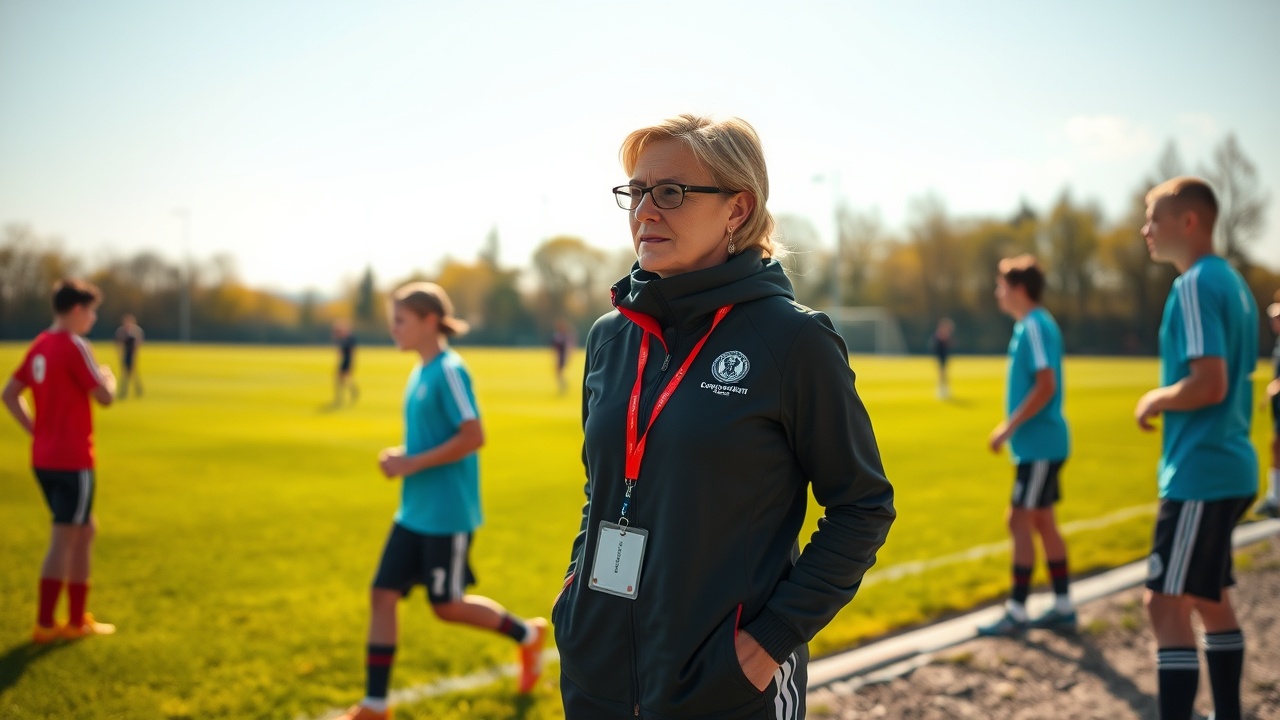
In a remarkable stride toward gender equity in sports, Sabrina Wittmann has made history as the first and only female head coach of a men’s professional soccer team in Germany. Since stepping into the role with Ingolstadt, a club in the third division, in May 2024, she has faced a unique blend of high expectations and public scrutiny. The pressure has intensified for Wittmann, especially given the historical significance of her appointment. Under her leadership, Ingolstadt not only finished the last four games of the season without a defeat but also clinched the Bavarian Cup. By June of the same year, her success allowed her to secure a permanent coaching position, a landmark achievement in a traditionally male-dominated arena.
Overcoming Challenges and Embracing Authenticity
Wittmann, now 34, reflects on the challenges she initially encountered.
“I opened the door a little for women. And at the beginning I was honestly afraid of closing the door as quickly (again),”
she noted in a recent online press conference. As calls for her acceptance grew, she remarked on how the questions have shifted from skepticism to a genuine interest in her strategies and decisions on the pitch.
While she embraces her role, Wittmann emphasizes that the fundamental nature of effective coaching lies in interacting with players rather than conforming to any single mold. She stated,
“I wanted to be the best because of me, not because of everybody else… that makes it really natural for me, and authentic.”
This approach forms the backbone of her philosophy, focusing on empathy and strong relationship-building, particularly when tough decisions are necessary.
Despite the acceptance she has extended to her colleagues at Ingolstadt, she has not escaped the darker side of the public eye, facing negative online comments as well as some hostility in stadiums. Yet, she remains focused on the positives, often citing the overwhelming support she receives from the majority.
A Late Start and a Transformative Journey
Wittmann’s journey in soccer began rather late, as she didn’t start playing until her mid-teens. A pivotal moment came during her exchange year in Kentucky, where a connection with her host mother led to her first experience in a coaching role. This exposure was transformative; it initiated her love for the sport and facilitated her return to Germany where she balanced her playing and coaching aspirations. Notably, she discovered that soccer in the U.S. entailed a more physical approach, with daily gym routines, a contrast to her previous experiences in Germany.
Looking Ahead: Building for the Future
Recently, Ingolstadt announced a contract extension for Wittmann, highlighting her growing influence in the club. Heading into a crucial match against Verl, her team sat in the mid-tiers of a 20-team division, emphasizing the need for ongoing development rather than immediate promotion. She reflects on the club’s past, especially noting how the rapid promotion after their Bundesliga relegation in 2017 had potentially disadvantageous implications.
“I think building something takes time,”
she emphasized, as she noted the substantial player turnover last summer, where numerous talents were elevated to higher leagues.
Hope for Future Generations
Wittmann’s ascent comes at a time when female representation in men’s soccer remains limited in Germany, despite some notable milestones such as Marie-Louise Eta’s role as the Bundesliga’s first female assistant coach. She recognizes the challenges ahead, including the difficulty of changing long-standing perceptions within the footballing hierarchies. Still, she is hopeful.
“I do believe that’s going to be hard… but I hope that things will change, not only for me but for every other woman who wants to be a coach,”
she concluded.
Sabrina Wittmann’s commitment and pioneering spirit illuminate the path for future generations of female coaches breaking into the competitive landscape of men’s soccer in Germany.