
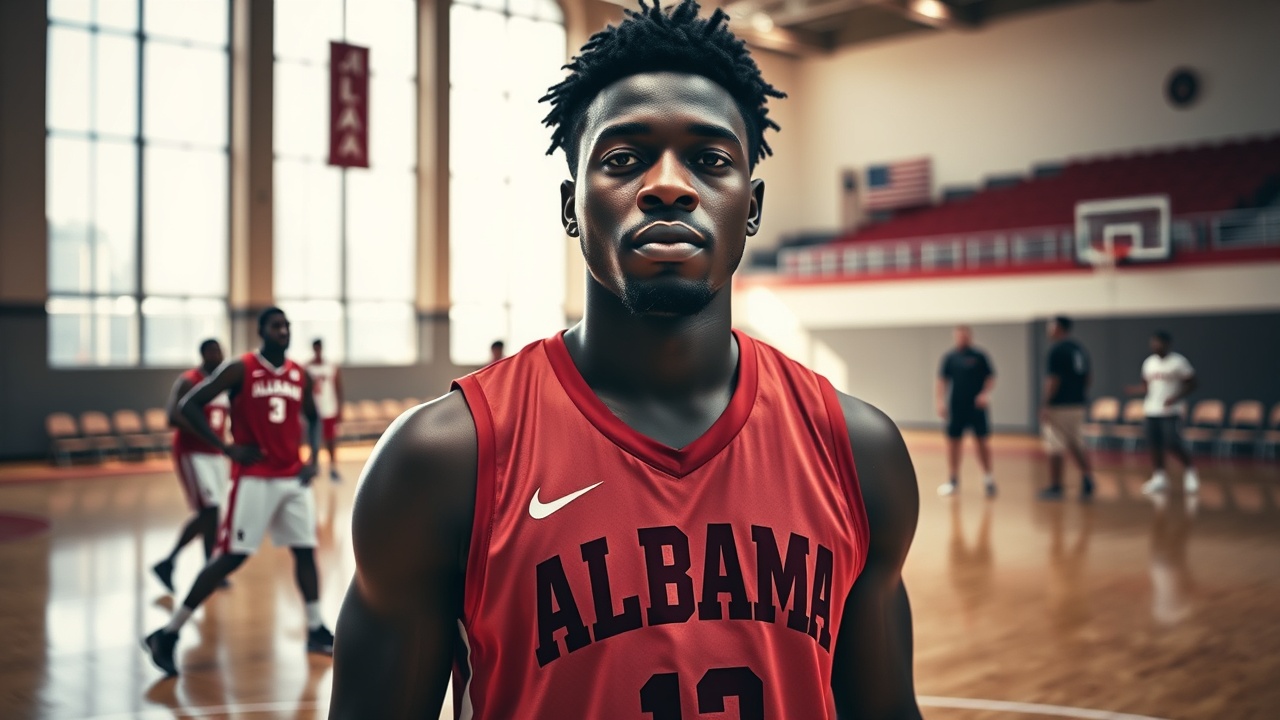
Setback for Charles Bediako and Alabama Basketball
In a significant setback for Charles Bediako and the Alabama men’s basketball program, a ruling has been made that could effectively end his hopes of returning to college basketball. On February 9, Judge Daniel Pruet denied a motion for a temporary injunction that Bediako sought in order to regain his eligibility to compete. This decision reverses a prior temporary restraining order granted by Judge James Roberts Jr. on January 21, which had briefly allowed for Bediako’s participation in college sports after previously declaring him immediately eligible.
Bediako’s Career and Recent Performance
Bediako, a 7-foot center, initially played for the Crimson Tide from 2021 to 2023, participating in 82 games over three seasons before transitioning to the G League. His recent return to Alabama saw him play five games, during which he averaged 10 points, 4.6 rebounds, and 1.2 blocks across roughly 21 minutes per game, including a noteworthy 12-point performance against Alabama on February 7.
Controversy and NCAA Regulations
Controversy arose as the NCAA contended that Bediako’s multiple professional contracts, signed following his departure from Alabama, disqualified him under the organization’s eligibility regulations. In a recent affidavit, SEC commissioner Greg Sankey expressed his support for maintaining NCAA rules, underscoring their importance to the integrity of collegiate athletics and the opportunities they provide for student-athletes.
Broader Implications and Reactions
The ruling took place amidst a backdrop of shifting eligibility standards for players transitioning from professional leagues back to college, which has sparked debate within the sports community. Bediako’s struggle with eligibility comes at a time when various former G League players are rejoining college rosters.
NCAA President Charlie Baker weighed in on the matter, stating,
“Common sense won a round today. The court saw this for what it is: an attempt by professionals to pivot back to college and crowd out the next generation of students.”
He reiterated the need for Congress to address the ongoing challenges posed by state laws to create more stability within the collegiate sports framework.
Conclusion
This judicial decision not only puts a halt to Bediako’s aspirations for a second stint in college basketball but also reflects larger conversations about the future of eligibility and the role of collegiate athletics in the lives of student-athletes.