

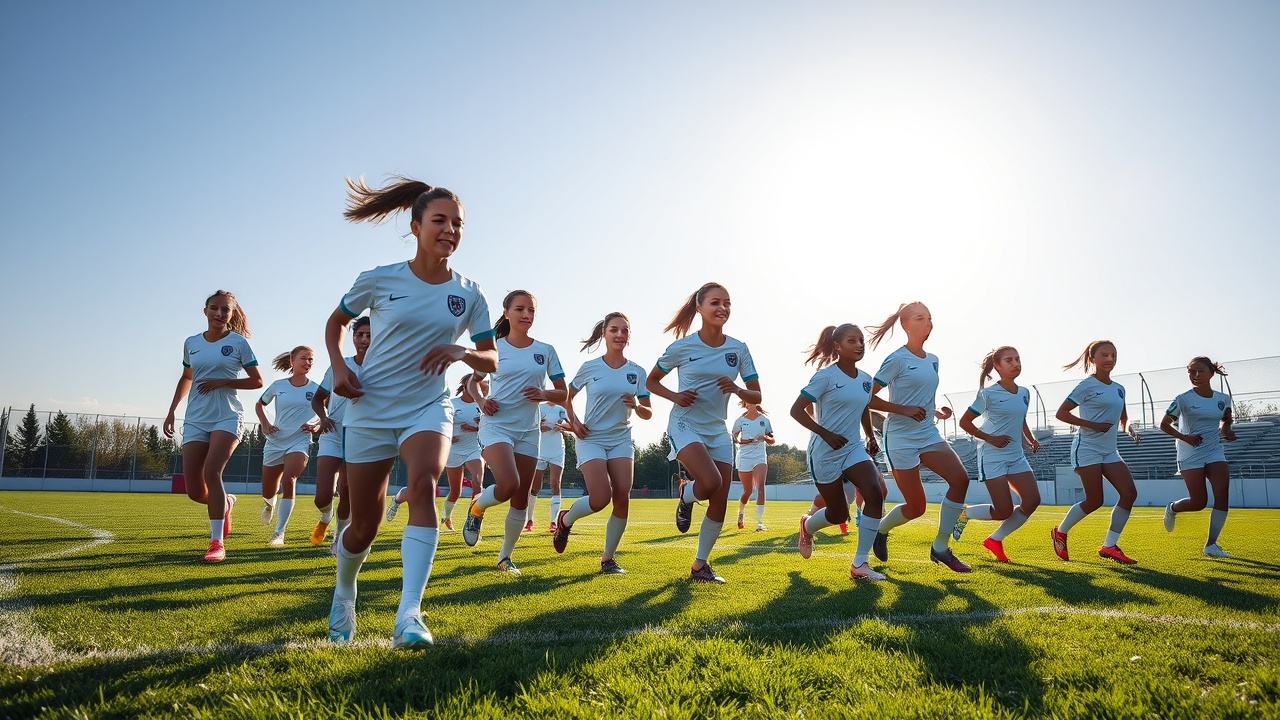
Concerns Over U23 Developmental Squad
In a recent assessment, Emma Hayes, the head coach of the United States women’s national soccer team, expressed concern over the current state of the U23 developmental squad, labeling it as a “lost generation” lacking in competitive opportunities. However, strides are being made to rejuvenate this crucial age group, with the U.S. showcasing its potential for the 2027 World Cup.
Recent Success Against England
A decisive 4-2 victory against England’s U23 team underlined their progress, featuring standout performances from National Women’s Soccer League (NWSL) talents like Emeri Adames, Maddie Dahlien, Sarah Weber, and Ally Sentnor, who is a familiar face in the senior team.
“It was a tough challenge, but I am proud of how we united and overcame setbacks. Playing at this level is a true honor,”
Ally Sentnor reflected on the team’s resilience.
This win illustrates the positive impact of Hayes’s initiatives since her appointment as head coach, where she has aimed to reintegrate a robust U23 structure that was previously neglected.
Challenges and Initiatives
Hayes’s concerns stem from a lack of exposure and opportunities for players transitioning from youth to senior soccer, a problem she notes is not found in the developmental programs of other top soccer nations.
“There are fewer U23 players gaining domestic and international experience here compared to many global counterparts,”
she mentioned during an interview on ESPN’s Futbol W show.
Taking inspiration from England’s successful youth framework under manager Sarina Wiegman, Hayes initiated the U23 program back in April.
The contrast is stark; under Wiegman’s tenure, England’s U23 set-up has flourished, with joint camps between the U23s and senior teams facilitating player testing in various tactical frameworks, thereby creating a rotational player pool. Hayes recognized the necessity of developing a coherent strategy to bring U.S. soccer up to par with these established youth systems.
Historical Struggles and Recent Developments
Historically, the U.S. U23 program has struggled, particularly since its reintroduction in 2008, leading to limited competitive matches. Over the last few years, the program’s activity dwindled, with only a handful of matches played. Seeing the recent success of its Olympic squad, Hayes created a secondary “B team” to close the developmental gap. Since her arrival, the U23s have played four matches in 2025, marking a resurgence in player development initiatives aimed at the forthcoming World Cup.
“This effort goes beyond mere discussions,”
Heather Dyche, the U23 manager, noted. “The federation’s tangible investment in our program is creating space for players to experiment and bolster their confidence.”
Shifting Landscape and Future Prospects
Among the promising talent, Sentnor has made her mark in the senior team while embracing her U23 responsibilities. Her experience with the national team enriches her leadership role within the U23 squad, contributing not only to her development but to the collective growth of her peers.
As the U.S. soccer landscape evolves, notably with players increasingly skipping college to join professional ranks, the U23 setup is shifting towards a composition dominated by professional players, all but three of whom currently compete in the NWSL. The development of a potential second-tier league similar to England’s is also anticipated, offering alternative pathways for young players.
A European U23 league has emerged, featuring several strong national teams that have fostered effective youth infrastructures. Active participation in such initiatives could greatly enhance the U.S. U23 program’s competitiveness on the international stage. Currently, increased match exposure, especially against established teams like England and Germany, is recognized as essential for growth.
Looking Ahead
With the next 18 months being crucial for setting up the U.S. for World Cup success in 2027, Hayes is optimistic about cultivating a deep player pool drawn from the vast potential within and surrounding the U23s. Useful training sessions, routine evaluation processes, and exposure to competitive play will all contribute to developing a generation of players ready to compete at the highest level.
In conclusion, while the journey to rebuilding the U23 framework for women’s soccer in the U.S. is ongoing, recent successes signal that the future of American soccer remains promising as they prepare for the task of reclaiming their place in the world on the pitch.