
Revival of Spring Football Games
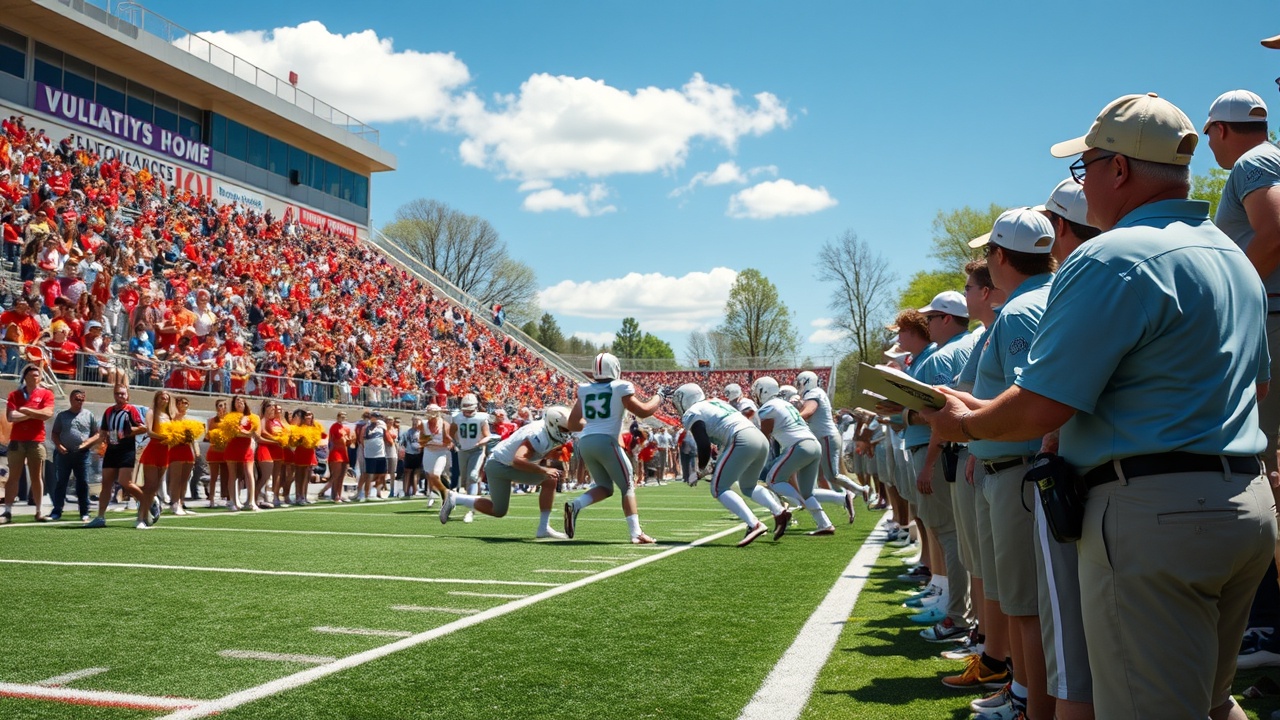
The recent removal of the April transfer portal window has opened the door for the revival of traditional spring football games across American college campuses. This shift is welcomed by many, including Nebraska’s head coach Matt Rhule, who previously eliminated spring games due to concerns about rival teams potentially scouting players through televised events. With fears diminished, Nebraska is reinstating its spring game, with Rhule noting,
“We missed it… It’s a great thing for the fans.”
Changes in Spring Practice Schedules
In contrast to many schools that won’t kick off their spring practices until mid-April, Nebraska began its workouts in late February, scheduling its spring game for March 28. The shift in policy has prompted several Football Bowl Subdivision teams to embrace the age-old tradition once again, following a year where less than half of responding schools continued to host conventional spring games. Notable programs like Auburn, UConn, North Texas, and San Diego State have opted to reintroduce these games in light of coaching changes and a return to traditional methods.
Historical Context and Recent Changes
Historically, spring games served as festive occasions where teams would wrap up their spring practice in front of thousands of fans, often pitting offensive players against defensive counterparts or forming teams through a draft. However, the introduction of an additional transfer window last April altered this custom, leading teams to substitute traditional games with skill competitions or limited scrimmages. For instance, Nebraska replaced its spring game last year with various drills, while San Diego State adopted a skills event similar to Pro Bowl performances, before committing to a conventional game this year.
Challenges Ahead
Moreover, with the NCAA’s recent announcement to only allow players to enter the portal in early January, teams may face a tighter roster situation post-spring practice. Wisconsin’s coach Luke Fickell pointed out that this alteration may leave teams vulnerable if they suffer injuries during their spring workouts, as fewer players will be available for recruitment post-practice. He acknowledged the challenge of maintaining a balance between intensive training and player safety, stating,
“We’re trying to find what that balance looks like… while also being smart and making sure our highest-end guys… are going to get through the summer and into the start of the fall.”
Conclusion
As college football continues to adapt to these regulatory changes, many view the reinstatement of spring games as a chance to reengage with fans and restore an important tradition in the sport.
This article references contributions from AP College Football Writer Eric Olson and includes various updates for the upcoming season. For continuous updates and poll alerts, check out the AP News mobile app or sign up for notifications.