
Norway’s Historic World Cup Qualification
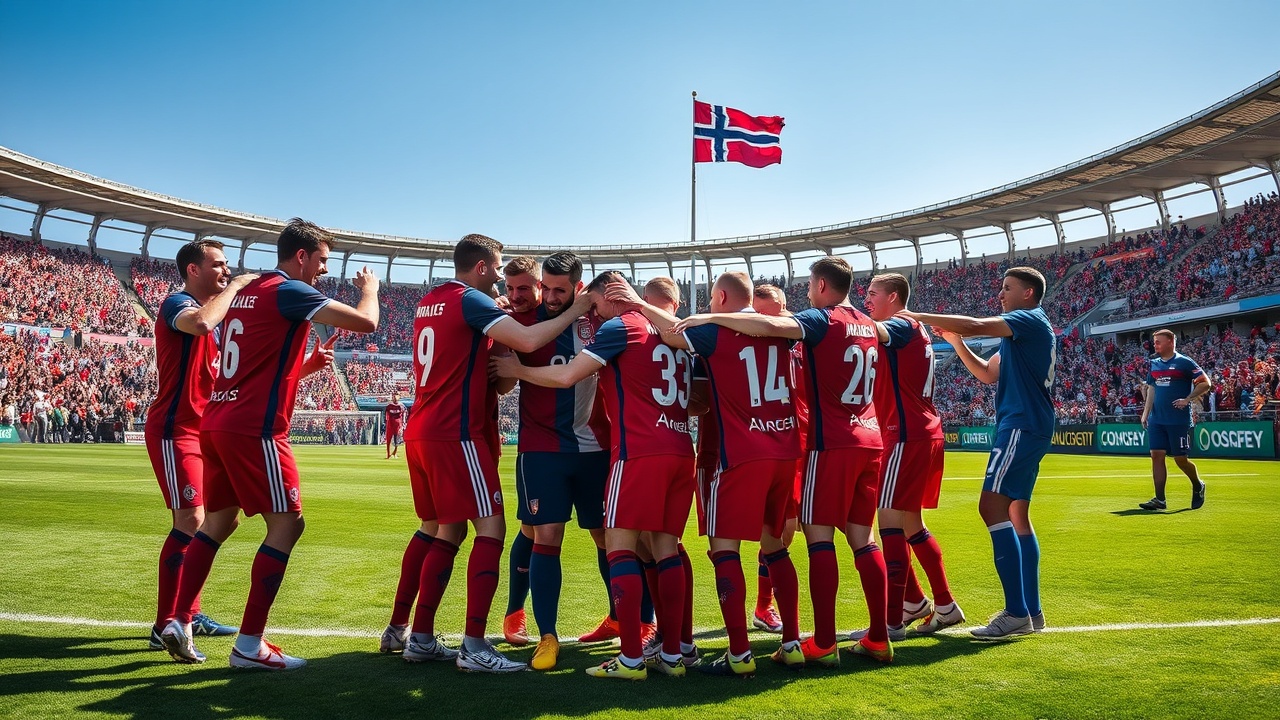
Norway’s national football team has accomplished a remarkable feat by securing qualification for the FIFA World Cup for the first time in 27 years. Their journey to this historic moment included convincing victories over Estonia and Italy, each won with a score of 4-1. This achievement is particularly noteworthy given the presence of elite players such as Erling Haaland and Martin Ødegaard, raising the question of why it has taken so long for Norway to return to the World Cup stage.
Reflections from the Coach
Reflecting on this, head coach Ståle Solbakken, who was part of the squad that last represented Norway at the 1998 World Cup in France, emphasized the evolution of football since his playing days.
“This current generation shares the same passion and unity we had back then,”
Solbakken remarked in an interview, highlighting the necessity of team spirit in their success.
A Turning Point
After years of struggle following their last major tournament appearance, a turning point came during the UEFA Nations League last autumn. Despite a tough initial 5-1 defeat against Austria, Norway’s resilience shone through as they finished the tournament strongly, ultimately earning promotion to League A. Solbakken’s approach, which some had previously criticized, began to gain recognition as players started to grasp his vision for the team.
Remarkable Performances
This newfound belief catalyzed a startling series of performances, where under the leadership of captain Ødegaard, Norway won a staggering 11 consecutive competitive matches. Among these were significant wins, including a 3-0 triumph against Italy and a remarkable 11-1 routing of Moldova. Former goalkeeper Erik Thorstvedt praised the team’s evolution, noting their response to earlier criticisms had only strengthened their resolve and unity.
Tactical Maturity
Norway’s tactical maturity was particularly evident in their match against Italy. Rather than cave to pressure, the team demonstrated composure by controlling possession effectively. This shift has crystallized Solbakken’s vision of a more structured and strategic playstyle. Statistics reflect this progress, with Norway leading European qualifiers not just in offensive statistics but also achieving a significant defensive record by conceding only five goals in eight matches.
Collective Strategy and Future Prospects
The balance between attacking prowess and defensive solidity is a testament to Solbakken’s methodical approach. Players like Sander Berge have found their roles within the system, providing essential support to the key creative forces like Ødegaard. This collective strategy fosters a sense of shared responsibility and enhances individual performances.
As Norway prepares for the World Cup in the United States, Canada, and Mexico, the team’s blend of physical strength, technical skill, and an invigorated team culture under Solbakken’s guidance marks a promising new chapter in Norwegian football history. As the nation looks forward to this pivotal moment, Solbakken’s quiet pride reflects the hard work that has gone into this journey, culminating in a long-anticipated return to the world stage. It appears that after years of waiting, the Norwegian side is ready to write a new narrative on the international stage.