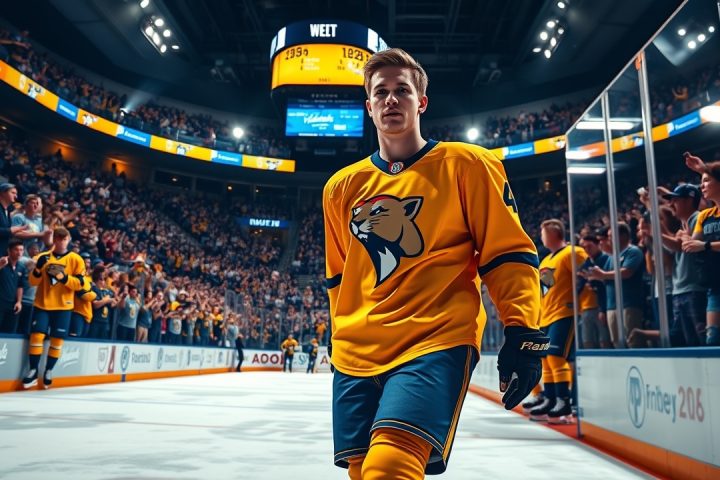


NHL Regular Season Resumes
The National Hockey League’s (NHL) regular season has resumed following the Olympic break, and some rules about how games are decided when tied after regulation have come into focus. If teams find themselves even after three periods, they will engage in a 3-on-3 overtime, eventually leading to a shootout, mirroring the Olympic format. However, this will change during the NHL playoffs, where a traditional 5-on-5 overtime will take its place, a distinct contrast to the Olympic structure.
Overtime Formats: NHL vs. Olympics
In Olympic hockey, the preliminary rounds utilize a brief 3-on-3 overtime, which extends to 10 minutes during knockout stages, potentially culminating in shootouts up to the bronze medal matches. The gold medal game, however, can stretch indefinitely with 3-on-3 play until a goal is scored.
NHL deputy commissioner Bill Daly expressed respect for the established rules of tournaments like the Olympics, stating, “It’s not a format we would have chosen,” after Team USA achieved victory over Canada in the gold medal game thanks to Jack Hughes’s overtime goal.
Coaches Weigh In
Following the conclusion of that match, Canadian coach Jon Cooper voiced his disapproval of the 3-on-3 format, arguing that it diminishes the essence of hockey by removing players from the ice.
“When you take four players off the ice, hockey’s not hockey anymore,”
he remarked. He later clarified that all participating teams were aware of the overtime rules entering the tournament.
History of 3-on-3 Overtime
The adoption of 3-on-3 overtime by the NHL started in the 2015-2016 season to reduce the frequency of shootouts in regular-season games. This modification helps to keep games within a manageable timeframe, allowing arenas to host multiple games in a single day during the Olympics. The International Ice Hockey Federation (IIHF) had maintained a shootout format historically but shifted to unify all overtime formats around the 3-on-3 rule for the Olympics.
The introduction of 3-on-3 overtime began during the 2022 Olympics, where no shootouts were utilized for the gold medal game. The NHL initially planned to send players to Beijing; however, this was scrapped to accommodate postponed league games due to COVID-19. Despite the implementation of the new format, some men’s games still proceeded to full overtime before requiring a shootout, as evident in the USA’s quarterfinal exit against Slovakia.
Looking Ahead
Looking ahead to the 2026 Olympics, the 3-on-3 format will remain under scrutiny, particularly as NHL players participate for the first time since 2014. During this tournament, five games went to overtime without any resulting in shootouts, showcasing the competitive nature of the format. Additional context includes plans for international tournaments such as the 2025 4 Nations Face-Off, which featured a standard 5-on-5 overtime format, contrasting the Olympics’ rules.
As discussions continue, the IIHF remains open to adjusting the overtime format based on evaluations of game dynamics and the feedback they receive on the current setup. With the potential for changes in future international events, the landscape of hockey overtime may evolve significantly over the next few years.