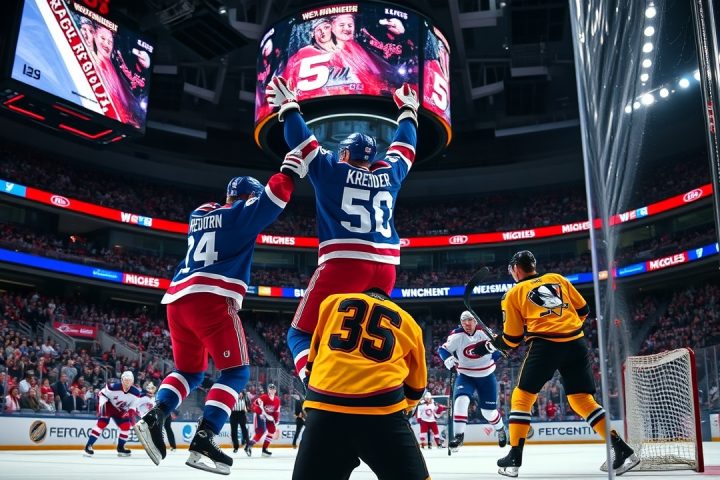


NHL Trade Deadline Overview
The recent NHL trade deadline has come and gone, and while the Los Angeles Kings may not have made headlines with their activities on the final day, General Manager Ken Holland made some strategic moves that could benefit the team in the long run.
Key Trades and Acquisitions
On February 4, Holland pulled off a significant trade, acquiring star left winger Artemi Panarin, giving up only Liam Greentree, a developing prospect, along with a few conditional draft picks that avoid first-round commitments.
On the eve of the deadline, the Kings traded left winger Warren Foegele to the Ottawa Senators in exchange for a second-round pick in 2026, belonging to the Buffalo Sabres, while also exchanging third-round picks with conditions.
Deadline day saw Holland make two additional trades. He sent right winger Corey Perry to the Tampa Bay Lightning, gaining another second-round pick for 2026. Holland noted in his press conference that Perry expressed a desire to join Tampa, which facilitated the trade.
Focus on Youth and Future Assets
In the backdrop of these trades, Holland also acknowledged his need to acquire assets and continue replenishing the team’s youth through the draft, highlighting the importance of scouting and drafting young talent. With the recent activity, the Kings have secured six second-round draft picks across the next three drafts, including three slated for 2026.
Additional Moves and Player Signings
As the deadline approached, Holland sought to fill voids left by the departures of Foegele and Perry. Shortly before the cutoff, the Kings acquired Scott Laughton from the Toronto Maple Leafs. The trade will cost Los Angeles a conditional third-round pick in 2026, which can escalate to a second-rounder pending playoffs participation. Holland praised Laughton’s versatility, noting his experience as a center, penalty killer, and a competitive player who provides depth for the team.
In addition to trades, the Kings signed right winger Mathieu Joseph to a one-year contract for the current season at a $900,000 cap hit, following his waiver placement by the St. Louis Blues, which aimed to terminate his contract. Holland drew attention to Joseph’s previous productive seasons under coach D.J. Smith with the Senators, indicating the potential value of this addition even if it seems uneventful at first glance.
Joseph, who is one year younger than Foegele, has managed a higher point total this season—with 11 points in 39 games compared to Foegele’s 9 points in 47 appearances. Furthermore, Joseph’s lower salary presents a financial advantage, especially considering the second-round pick acquired from trading Foegele.
Conclusion
In conclusion, Holland demonstrated a skillful approach at the trade deadline, effectively enhancing the Kings’ roster while accumulating valuable future assets. The trades resulted not only in draft picks for the team’s future but also in slight enhancements in the player lineup with Laughton and Joseph replacing the underperforming Foegele and the aging Perry. The depth and strategy behind these movements will be closely analyzed as the Kings progress through the remainder of the season and beyond.