
Messi’s Surprising Visit to the White House
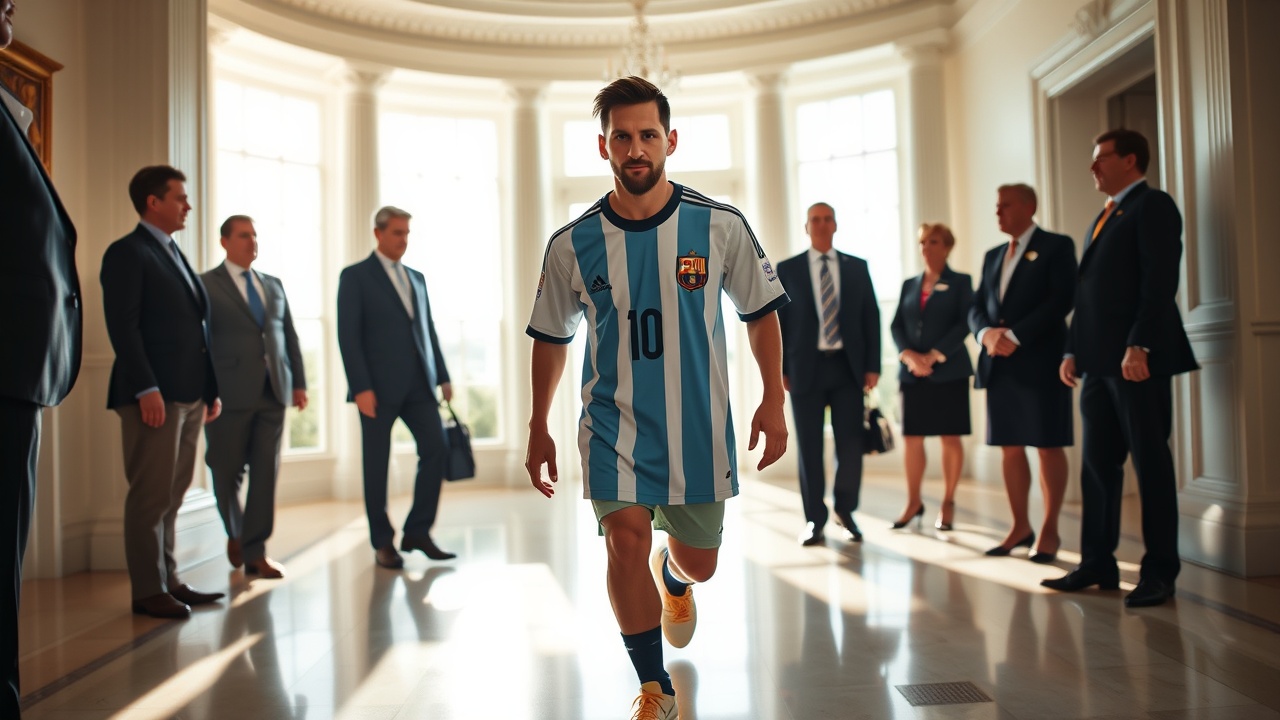
BUENOS AIRES, Argentina (AP) — Lionel Messi, the illustrious soccer icon, recently made headlines with a surprising visit to the White House, a moment marked by his presentation of a sparkling pink soccer ball to President Donald Trump. Up until now, Messi has excelled not only in avoiding defenders on the field but also in evading political entanglements, particularly in his native Argentina.
Political Neutrality and Mixed Reactions
Despite speculation regarding his attendance with Inter Miami to commemorate their MLS Cup victory, Messi made a notable entrance, arriving alongside Trump and team owner Jorge Mas Santos, rather than joining his teammates in the main group photo. His silent presence, however, spoke volumes, especially given his history of remaining politically neutral. After leading Argentina to a World Cup triumph in 2022, he notably declined an invitation to celebrate at the Casa Rosada, the official presidential residence, under then-President Alberto Fernández. This year, current Argentine President Javier Milei, an ally of Trump, has openly praised Messi but has not succeeded in arranging a public photo-op with the superstar.
Reactions in Argentina have been mixed, with some individuals expressing disappointment that Messi, who had previously maintained a distance from political discourse—unlike Diego Maradona, another Argentine football legend known for his political engagements—chose to engage with Trump. Kirk Bowman, a professor specializing in soccer and politics at Georgia Tech, commented that Messi’s long-term investment mentality, including his stake in Inter Miami, suggests that he is not as aloof toward political connections as some may believe.
“Messi is deeply integrated into the Miami community, which has a more conservative soccer culture compared to other parts of the U.S.,”
Bowman remarked.
Messi’s Role During the Visit
During the White House visit, Messi remained mostly in the background while Trump discussed various geopolitical issues, providing support through applause at the conclusion of the remarks. Messi’s supporters have noted his limited English proficiency as a reason for his reserved demeanor, which Bowman suggests may inadvertently shield him from political controversies.
Inter Miami’s head coach, Javier Mascherano, reflected on the visit, noting that it followed the tradition of championship teams visiting the White House. He downplayed any significant engagement between Messi and Trump, stating that the interactions were as seen on television.
Comparisons to Maradona and Future Political Engagement
Messi’s choice to appear with Trump has prompted comparisons to Maradona, who was known for his vocal support of figures like Fidel Castro and Hugo Chávez. While Messi has mostly refrained from expressing political views regardless of the numerous countries he’s resided in, he has occasionally shown glimpses of political thought, such as expressing admiration for Ernesto “Che” Guevara in interviews with La Garganta Poderosa, a left-leaning Argentine publication. Nonetheless, given his history of navigating the soccer landscape without diving into political fray, experts believe that Messi will continue to tread carefully around political matters.
Bowman emphasized this notion, stating,
“Messi is not likely to become more politically active, as long as he perceives that such involvement does not detrimentally impact his brand.”
He cited Messi’s commercial ties to Saudi Arabia’s tourism sector, where similar “sportswashing” controversies have arisen. Despite the complexities surrounding Messi’s relationship with political entities, it seems his approach will remain focused on protecting his image as a global sports icon.
This article has been supplemented by contributions from Associated Press reporters Joseph Wilson in Barcelona, Anne M. Peterson in Portland, Davidde Corran in New York, and Carlos Rodriguez in Mexico City.