
Revitalizing the Knicks
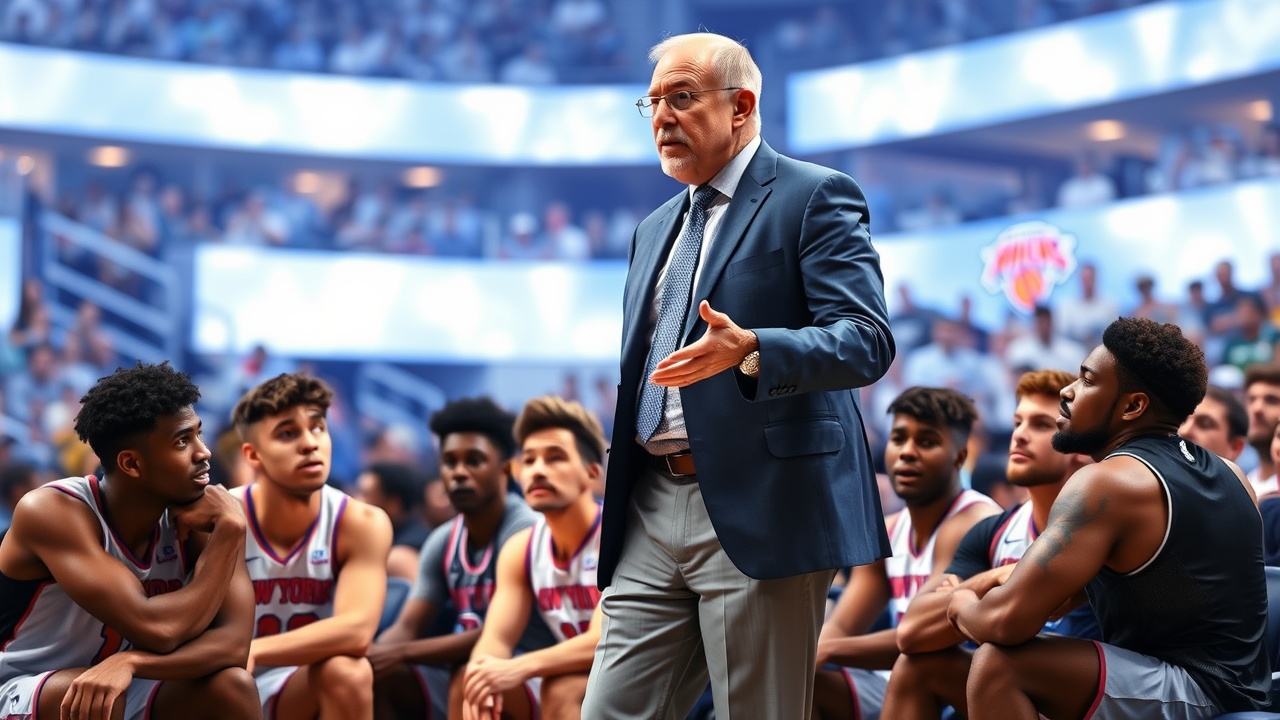
In a move to revitalize the Knicks, Mike Brown was appointed as head coach this offseason, primarily to tackle the team’s previous shortcomings. Two areas that required urgent attention were the ineffective use of bench players and a lack of innovative strategies during the regular season. For Knicks fans, the ultimate assessment of Brown’s success hinges on whether he can lead the team to an NBA championship. However, in the immediate term, he has already led the Knickerbockers to secure an NBA Cup title, tapping into strategies previously neglected by the organization.
Turning the Tide Against the Spurs
Facing the San Antonio Spurs, recently victorious over the formidable Oklahoma City Thunder, proved to be a challenge. The Knicks found themselves behind for most of the opening three quarters until an inspiring effort from bench guards Tyler Kolek and Jordan Clarkson shifted the momentum.
Both players energized the team towards the end of the third quarter, prompting Brown to strategically keep them on the floor alongside Jalen Brunson as they shifted into the final period. The Knicks dominated the fourth quarter, outscoring the Spurs 35-19, with Clarkson contributing 15 points and Kolek adding 14 points along with five rebounds and five assists.
Strategic Innovations
While some might dismiss Brown’s tactical changes as merely following in Tom Thibodeau’s footsteps, the key distinction lies in Brown’s foundation of prior experimentation. Unlike the previous coach, who often resorted to last-minute adjustments without extensive testing, Brown had already integrated these lineups during earlier games. The three-guard formation incorporating Brunson, Kolek, and Clarkson was not improvised; it was the result of cumulative experiences from their gameplay in three previous outings along with nearly ten games experimenting with a McBride-Kolek-Clarkson trio.
Thibodeau had made a similar tactical shift during the previous year’s playoffs, using a McBride-Landry Shamet-Delon Wright unit effectively, but this bench setup had seen only limited action prior to the playoffs. In contrast, Brown’s varied defensive tactics and rotations kept the Spurs guessing, indicating a readiness honed through thorough preparation.
Empowering the Bench
Crucially, Brown demonstrated an empowering level of confidence in his bench, with players who spent much of their time on the sidelines being thrust into impactful roles during critical moments. For instance, Kolek had largely remained on the bench last season, getting scant opportunities, but this year, he was afforded the chance to prove his worth. Although it didn’t translate to instant results, his contributions during the championship game showcased the fruits of Brown’s trust in his roster.
This willingness to engage his bench even in high-pressure situations contrasted sharply with past strategies where starters would typically re-enter during decisive phases. Despite some initial struggles, as fans voiced their frustrations when the Knicks stumbled to a 2-3 start, Brown’s vision continues to gradually take shape.
Looking Ahead
With signs of progress evident in recent games—like Shamet emerging as a reliable asset and Kolek stepping up in Shamet’s absence—the team’s chemistry is noticeably improving. Looking forward to April and May, one can speculate how this foundational work could manifest, with glimpses of promising rotations featuring players like Mohamed Diawara and dynamic combinations involving Karl-Anthony Towns and Mitchell Robinson sparking optimism for future performance.
While the desire for a championship remains a driving force for fans, the Knicks’ achievements in Las Vegas highlight a developmental journey that Brown is guiding, suggesting a pathway toward greater success—whether or not it culminates in a title.