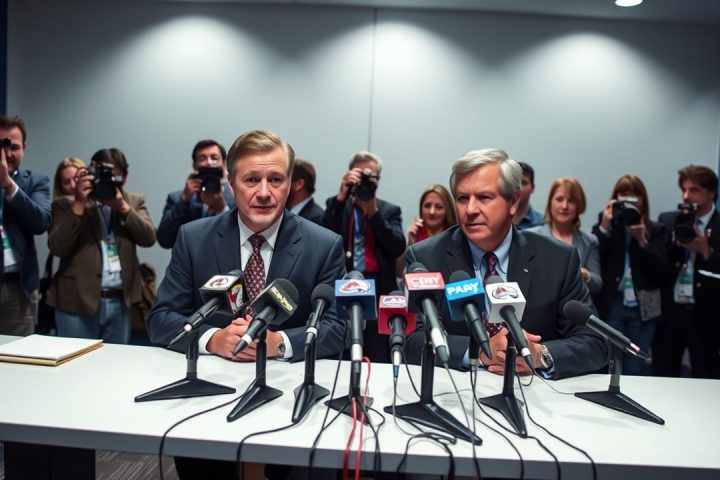


LOS ANGELES KINGS: A New Era Begins
LOS ANGELES, CA — The Los Angeles Kings have reached the conclusion of an era marked by both triumph and disillusionment. Recently, Anze Kopitar, a central figure of the franchise and its all-time points leader, played his final NHL game in a disappointing four-game sweep against the Colorado Avalanche. This disappointing exit encapsulates the struggle the Kings have faced in recent seasons, characterized by a claimed retooling that has yet to produce tangible success on the ice. The team’s journey towards a new direction has been fraught with challenges and frustrations.
Looking Toward the Future
As the Kings now look toward the future, this offseason represents not just the beginning of preparations for the next competitive season but also a critical juncture for the franchise. The management is acutely aware of the significance of these upcoming months, especially following revealing exit interviews with players. Since the Kings celebrated back-to-back Stanley Cup victories, the path forward has been riddled with setbacks. Rob Blake’s leadership oversaw missed opportunities, enduring poor playoff performances that saw the team exiting early on several occasions, including a recent sweep by the Vegas Golden Knights and consecutive first-round eliminations at the hands of the Edmonton Oilers.
Despite pressure from management to shift gears, there has been a reluctance to confront the aging core that has held onto its playoff aspirations amid unfavorable results. After Blake vacated his position, the arrival of Ken Holland was anticipated to shake things up; however, it has become clear that the issues plaguing the organization run deeper than a change in personnel alone.
During his initial offseason, Holland’s moves yielded mixed results. Among his acquisitions, Corey Perry was notably traded mid-season, indicating a lost opportunity that was more blunder than boon. While Joel Armia filled a depth role effectively, his lack of play in crucial moments raised eyebrows. Moreover, the signings of Cody Ceci and Brian Dumoulin, who are not prolific contributors on the offensive end, highlighted one of the front office’s ongoing structural problems. Conversely, Holland managed to snag Artemi Panarin, albeit under circumstances that make attributing their success solely to Holland questionable; Panarin had reportedly expressed strong interest in joining LA prior to the trade.
Ultimately, the Kings scraped into the postseason, benefiting from a lackluster division. However, the result—a sweep by the Avalanche—left lingering doubts as Kopitar took his final lap off the ice. Holland now faces the daunting task of overseeing roster changes in what many see as a make-or-break summer for the franchise.
The Promise of Quinton Byfield
This past season has marked a significant turning point for Quinton Byfield, with many now seeing him as the definitive centerpiece for the Kings moving forward. Interim head coach DJ Smith emphasized Byfield’s exceptional performance during the playoffs despite the team’s struggles, with many analysts drawing comparisons to elite talents across the league. Byfield’s trajectory appears promising, especially as he enters a pivotal year at just 24 years old, poised to inherit leadership roles on the power play and the first line.
Nevertheless, Byfield’s growth has been hampered by issues like inconsistent line partners and the team’s broader struggles to provide adequate support. With the prospect of playing alongside seasoned players like Panarin, Kevin Fiala, and Adrian Kempe in the next season, expectations for his development are reaching new heights.
However, the depth chart remains a concern, especially if the Kings lose Scott Laughton in free agency. Losing Laughton could leave glaring gaps in the center position, leading to a dire situation if faced with inadequate replacements. The same applies to Byfield, who needs dependable support to truly thrive in his new role.
A Fragile Defense and Goaltending Concerns
The Kings’ defensive lineup poses another significant obstacle for the organization, with aging contracts weighing heavily on their future flexibility. The struggles of their blueline—consisting of players like Drew Doughty and Mikey Anderson—have exacerbated the team’s troubles, particularly in effectively transitioning the puck. This has led to a sharp decline in performance metrics and a pattern of low-scoring losses.
Contractual obligations further complicate matters, with Doughty’s hefty salary becoming a point of contention as the team looks to reshape its defense. The addition of more mobile players like Brandt Clarke is critical as the outdated model struggles to adapt to the fast-paced, skill-driven game of modern hockey.
In goal, the aging tandem of Darcy Kuemper and Anton Forsberg raises questions about sustainability. While Kuemper had an impressive season in 2024-25, he performed inconsistently this year due to injuries. With promising young goaltenders waiting in the wings, Holland must decide the best course of action to safeguard the team’s future in net.
The Road Ahead
As the offseason unfolds, the Kings must address critical gaps and establish a coherent strategy to capitalize on the strengths of their forward group while remedying the glaring weaknesses on defense. Securing a solid center beneath Byfield and reconsidering the use of their contracts will be paramount during this pivotal summer. Furthermore, the organization should look towards its prospects to rejuvenate its goaltending position, rather than relying on aging veterans.
The time has come for the Kings to choose a clear path forward; they can either embark on a meaningful rebuild or risk enduring further years of mediocrity. With Kopitar’s departure signaling a new chapter, the Kings are faced with a challenging yet hopeful horizon, one that demands thoughtful decisions for a sustainable future.