

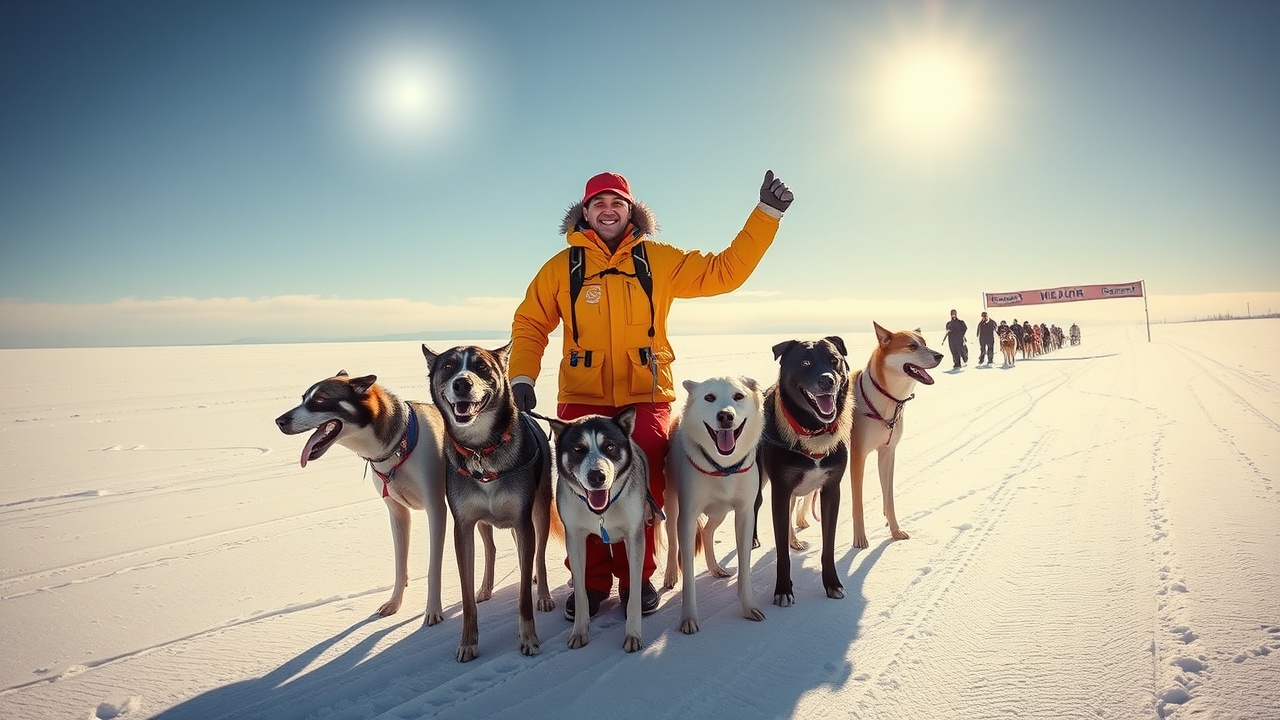
Jessie Holmes Wins Iditarod for Second Consecutive Year
Jessie Holmes, a previously featured personality from a reality television show, has achieved a remarkable feat by winning the Iditarod sled dog race for the second consecutive year. This challenging event, extending approximately 1,000 miles (1,609 kilometers), concluded in Nome, Alaska, a historic Gold Rush area located along the coast of the Bering Sea. The race, which kicked off on March 8 from Willow following a ceremonial start in Anchorage, involves traversing two mountain ranges, navigating the frozen Yukon River, and dealing with the often unpredictable ice of the Bering Sea.
Historic Achievement
Holmes, who gained fame on National Geographic’s “Life Below Zero”, is now among a select group of individuals who have managed to win the Iditarod back-to-back. Only Susan Butcher and Lance Mackey have previously accomplished this in the race’s 54-year history. Holmes expressed the significance of this particular race ahead of the event, acknowledging the weight of expectation he placed on himself:
“That’s hard to put that on yourself because you got to live with that pressure every day… If I do not make it, it is going to absolutely crush me.”
Prize Money and Contributions
With his victory this year, Holmes is set to receive approximately $80,000, an increase from the over $57,000 he earned last year. This year’s prize pool saw an infusion of funds from Norwegian billionaire Kjell Rokke, who also took part in a new noncompetitive category of the race and reached Nome under special provisions allowing him various supports that competitive mushers are not afforded.
Holmes first entered the Iditarod in 2018 and made an impressive mark by winning the Rookie of the Year title after finishing seventh. He has since participated in nine Iditarod races, consistently placing in the top ten, and has achieved a top-five finish in each of the last five events. The financial gains from his television career have allowed him to enhance his dog team and equipment, as well as acquire land near Denali National Park, where he has built a homestead away from civilization.
Kjell Rokke’s involvement also included a substantial donation of $100,000 in additional winnings and $170,000 directed to Alaska Native villages that host Iditarod checkpoints. Other figures, such as Canadian businessman Steve Curtis, have also joined in philanthropy, pledging funds for youth sports programs, despite not finishing the race themselves.
Concerns and Participation Trends
Amid the celebrations, the race has faced scrutiny from animal rights organizations, notably People for the Ethical Treatment of Animals (PETA), which has raised concerns over the number of dog fatalities throughout the race’s history, claiming over 150 dogs have lost their lives during the competition. In this year’s race, there was one reported dog death—a 4-year-old female named Charly, part of Mille Porsild’s team, and a necropsy is scheduled.
This year’s Iditarod saw 34 competitive mushers starting the race, a total that matches the second lowest participation since its inception in 1973. The decreasing number of entrants has been attributed to the retirement of veteran racers and the soaring costs associated with dog care, including food and supplies, complicating participation in the demanding event.