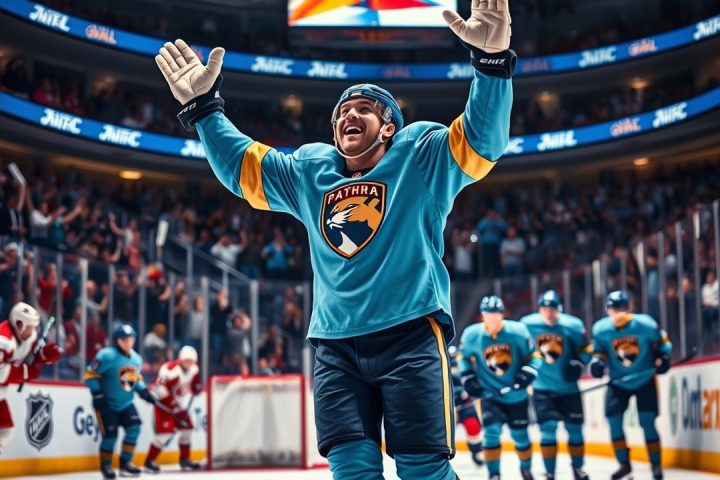


Heated Rivalry: A Transformative Series
The television series “Heated Rivalry,” which explores the romantic relationship between two male ice hockey players, has rapidly gained popularity, marking its status as the first viral hit of 2026. While many audiences view it as just another captivating show to discuss at work or on social media, for Jesse Kortuem, this drama resonated on a much deeper level.
Jesse Kortuem’s Journey
Hailing from Minneapolis, where he was raised among skating rinks and hockey enthusiasm, Kortuem’s journey with the sport took a significant turn at the age of 17. Confronted with fears of rejection due to his sexuality, he reluctantly withdrew from hockey. Fast forward more than twenty years, and his experience watching “Heated Rivalry” prompted a transformative decision: he felt compelled to come out publicly as gay, believing this series illustrated a remarkable shift towards acceptance within the sport.
“I’m incredibly thankful for how my life has unfolded,” he shared with BBC Sport. “Finally feeling that relief and being able to bring my authentic self into the locker room is transformative. The show struck a chord with me, and I knew I had to express my truth.”
In the initial days following his revelation, he faced overwhelming shock; however, as time passed, he experienced a humbling wave of encouragement from others, inspiring them to engage in similar discussions with their families.
Re-engagement with Hockey
Throughout his teenage years, Kortuem participated in local hockey leagues and occasionally returned to the amateur level as an adult. His re-engagement with the sport became more meaningful when he joined Cutting Edges, a team that embraces LGBTQ+ players, back in 2017. For the first time, he felt a sense of belonging, yet it wasn’t until this year that he found the courage to acknowledge his sexuality within the broader hockey community.
“I had to conform—edit myself—to fit in within both hockey and life. The show awakened suppressed emotions. Acknowledging my true self was long overdue.”
However, like many LGBTQ+ athletes, Kortuem has grappled with feelings that hiding his identity hindered his performance and possibly limited his athletic opportunities. Nevertheless, the support he’s received from former teammates has reassured him throughout this process.
“I was anxious about how my revelation would affect the camaraderie in the locker room. Would I become a target of ridicule?” he recalled. “Now, I’ve found peace. While I can’t predict where my hockey career could’ve led me, embracing my identity on the ice feels incredibly rewarding.”
The Impact of “Heated Rivalry” on Hockey Culture
Interestingly, despite the overt themes of queerness depicted in “Heated Rivalry,” the response from the broader hockey universe has been surprisingly welcoming. While the show is more an escape than an accurate reflection of real-life experiences for gay players in the National Hockey League (NHL), Kortuem believes that its influence could have a positive impact on perceptions within the sport.
“Many gay athletes have lived under the impression that being true to ourselves is unacceptable. Witnessing an affirmative response from both LGBTQ+ individuals and straight fans ignites hope,” he explained. “People are rallying behind these fictional characters who portray their own uplifting narratives, which feels like a significant achievement for someone my age. It’s not a tale of tragedy but an inspiring love story instead.”
Currently, there are no openly gay players in the NHL, though representation for LGBTQ+ individuals is gradually improving. The league took a step forward in 2021 when Luke Prokop became the first actively contracted player to come out as gay and, soon after, Zach Sullivan, a player in the UK, publicly identified as bisexual. On the women’s side, figures such as Julie Chu and Caroline Ouellette have paved the way, showcasing strong LGBTQ+ representation in hockey.
Challenges and Hopes for the Future
As the NHL capitalizes on the show’s newfound popularity—NHL Commissioner Gary Bettman reportedly binge-watched it—all eyes are on the league’s actions. However, Kortuem expresses skepticism towards the NHL’s commitment to inclusion, especially in light of decisions made during the 2022-2023 season that eliminated Pride jerseys after some players opted not to wear them.
“The removal felt exclusionary; it’s crucial for the NHL to communicate that all players, regardless of sexual orientation, are welcome.”
The delays in affirming LGBTQ+ support have raised concerns within the community, prompting Kortuem to assert, “I hope to see the NHL acknowledge when they’ve made mistakes. Words must match actions.”
Although “Heated Rivalry” itself faced critique around its portrayal of LGBTQ+ life, particularly regarding explicit scenes, Kortuem remains hopeful that it could foster greater acceptance.
“Of course, a few scenes might be intense, but it’s worth it for the representation of a powerful love story without the confines of traditional narratives of suffering or hardship.”
He concluded with optimism, wishing that such a storyline would inspire open-mindedness, even while recognizing that it may not be suitable for younger viewers.
Conclusion
Ultimately, Jesse Kortuem’s journey illustrates the potential for media to affect real change and the importance of authenticity within sports culture.