
Introduction
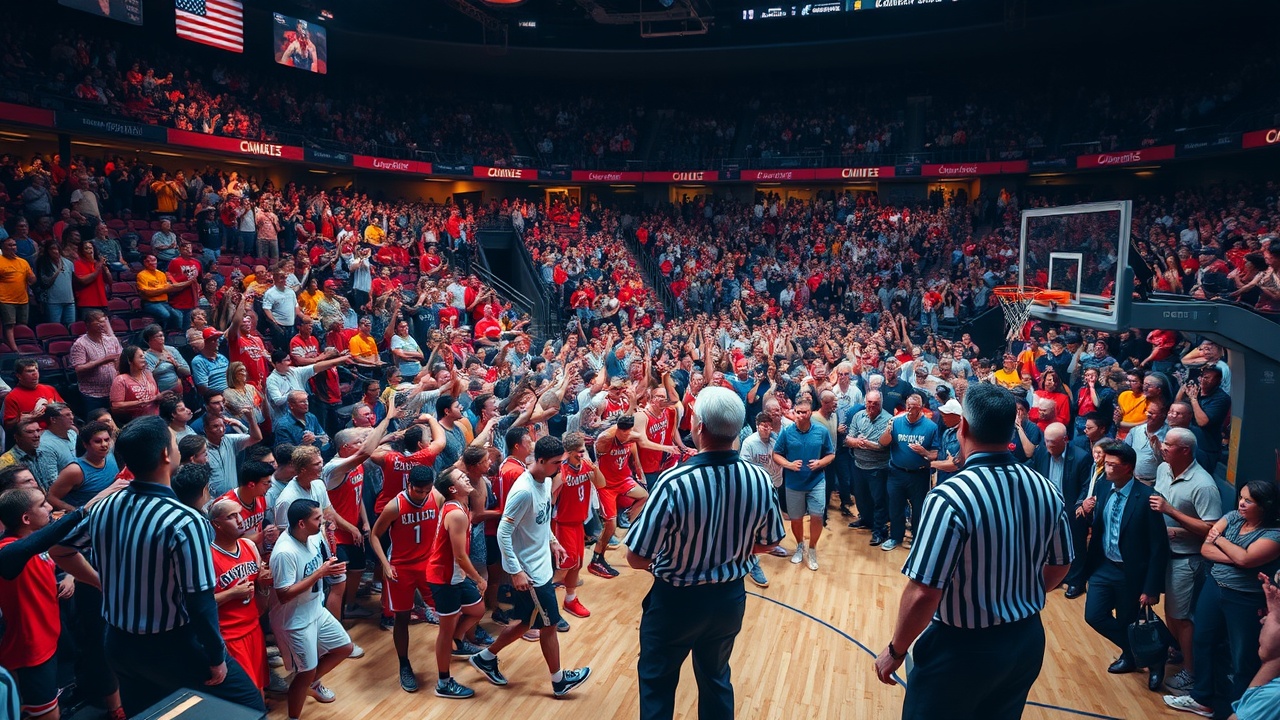
In recent weeks, the phenomenon of sports fans storming the court or field after significant games has reignited discussions about safety and regulation in college athletics. This fervor can often transform moments of celebration into potentially dangerous confrontations, as seen with Nebraska coach Fred Hoiberg.
Incident Overview
Following a heated defeat against Iowa, Hoiberg encountered an overzealous fan who intrusively captured his reaction on a mobile device, resulting in a chaotic moment when the coach attempted to push the phone away and inadvertently hit an Iowa staff member during the post-game handshake.
Questions of Accountability
Such incidents beg the question: why is there no decisive action to mitigate these instances? Rather than instituting robust measures that directly penalize unruly fans, university officials have resorted to fining the institutions themselves. For example, earlier this month, North Carolina was fined $50,000 for its supporters overrunning the court after a win against rival Duke. Meanwhile, it’s expected that the Big Ten will levy similar financial penalties on Iowa for the latest disruption.
This approach raises eyebrows, especially considering that some schools are allocating millions to bolster their football programs while addressing fan-related chaos with mere monetary fines.
Comparative Analysis with Professional Sports
Unlike the NFL, where strict rules and a strong police presence effectively deter field invasions, colleges appear to lack the same level of enforcement. In the professional realm, fans who rush onto the field face immediate consequences — from arrest to physical confrontation from players. However, the college landscape has opted to penalize institutions instead of targeting the actual offenders in these disruptive scenarios.
The Role of Social Media
With the rise of social media culture, where fans are often preoccupied with capturing viral moments rather than respecting the athletes’ personal space, the risk of harm continues to escalate. While the tradition of storming the field or court could be viewed as an intrinsic part of college sports, the emphasis should shift towards ensuring safety.
Proposed Solutions
A viable solution could involve implementing a short waiting period after a game concludes, allowing players and officials to exit before fans flood the area. This simple change could significantly enhance safety without diminishing the excitement surrounding college sports.
Conclusion
The urgency of this issue cannot be overstated. With previous flashpoints, such as Alabama football player Jermaine Burton striking a fan after a tense overtime game against Tennessee, it seems inevitable that a more serious incident could occur if preemptive measures are not established. As the landscape of college athletics evolves, particularly with the introduction of NIL deals impacting how players view their competition, it’s crucial for institutions to uphold the integrity of the game by ensuring safety and respect for both players and fans.