

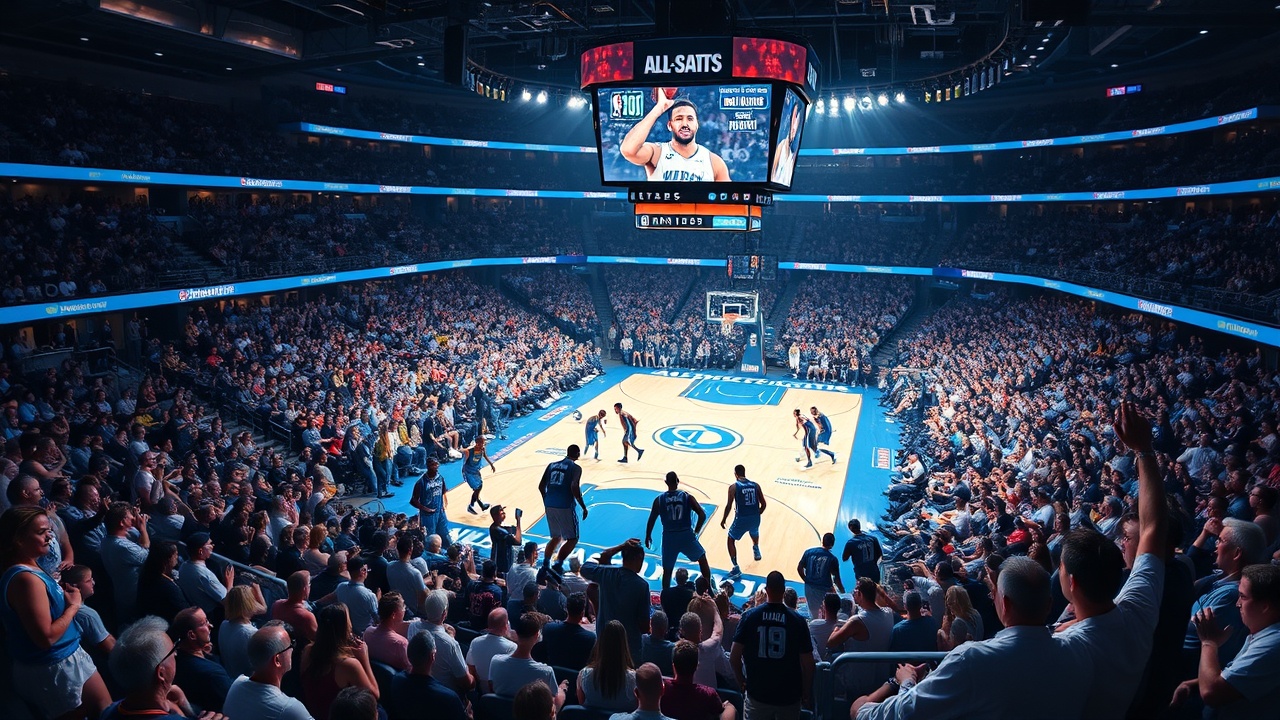
The NBA’s New All-Star Game Format
The NBA has unveiled its latest overhaul of the All-Star Game format, introducing a complex configuration that many fans may find bewildering. Officially declared on Tuesday, the new structure consists of a round-robin tournament featuring three teams, with each team composed of a minimum of eight players. Intriguingly, two of the teams will represent U.S. players, while the third will be an international team, presenting a USA vs. The World dynamic, albeit in a format that raises more questions than it answers.
Declining Enthusiasm and Competitive Spirit
Despite these changes, the reality remains that the enthusiasm and competitive spirit once witnessed in the All-Star matchups have significantly diminished. Players seem detached from the event’s significance, often prioritizing festivities and corporate engagements over the upcoming games. It’s a stark contrast to the previous era when East and West rivalries thrived and players genuinely vied to outdo one another.
Historical Prestige vs. Recent Trends
Historically, the All-Star Game held considerable prestige; however, recent trends indicate that players are increasingly indifferent, evidenced by last year’s tournament which failed to resonate with either players or fans. The attempt to adopt a more engaging pickup-style format was undermined by irrelevant side events, leading to a game that felt disjointed, even featuring YouTube sensation Mr. Beast in a role that felt out of sync with traditional basketball values.
Criticism from Players
Draymond Green, a seasoned All-Star, vocally criticized the new format before its implementation, dubbing it “ridiculous” and a “zero”.
Such sentiments reflect the broader skepticism regarding whether players will genuinely engage with this new structure. The complications are also prevalent in player selection: there are uncertainties regarding nominations for international players, and in the event of ties in tournament play, a point-differential tiebreaker will dictate the finalists. These convoluted rules take away from the enjoyment that should accompany such an exhibition.
The Future of the All-Star Game
Perhaps it was unrealistic to expect players—many of whom earn upwards of $60 million annually—to jeopardize their careers in an exhibition game. However, this continuous quest for a formula to motivate players has overshadowed the game’s essence. It might be prudent for the NBA to revert to simplicity, revisiting the classic East vs. West format to provide fans with a clearer and more engaging experience.
As it stands, the NBA’s latest iteration appears destined to complicate rather than enhance the All-Star experience. Until players re-invest emotionally in the spectacle, all adjustments—including this latest attempt—may ultimately be futile. With the growing distance between the game and its once-vibrant identity, one has to wonder if a future without the All-Star Game may not be so far-fetched after all.