

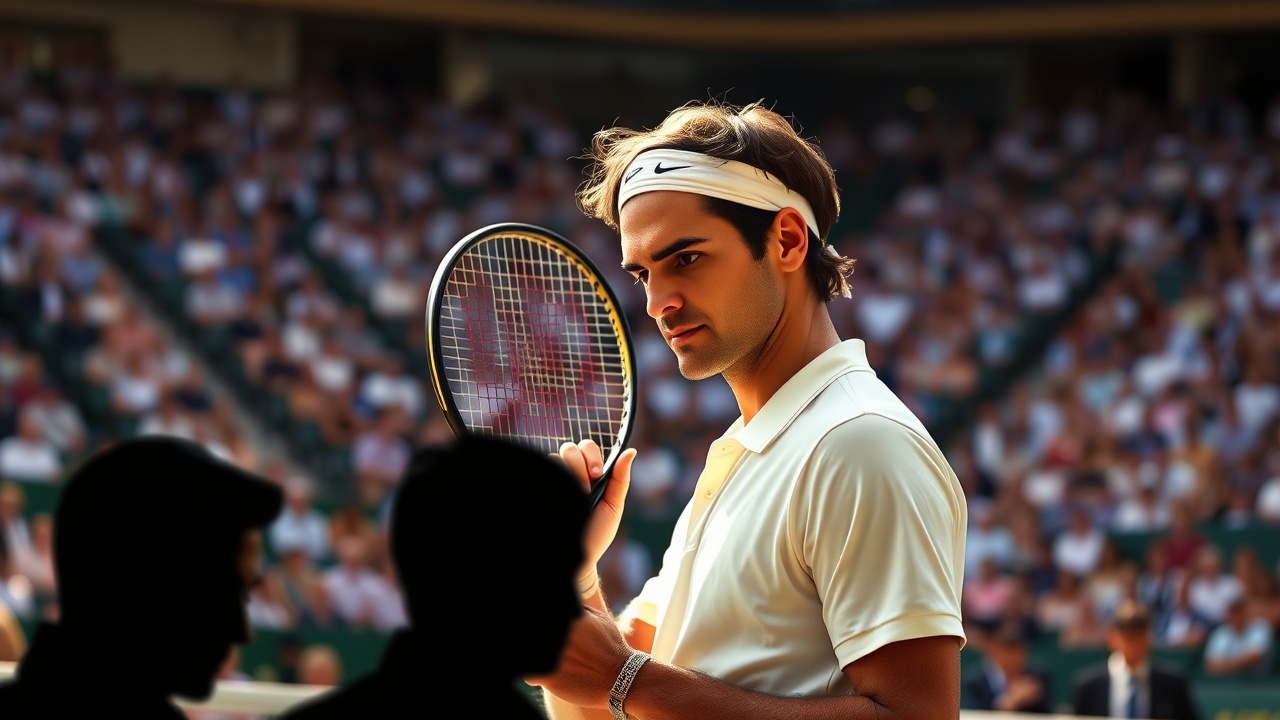
Insights from Andy Murray on Roger Federer’s Training Habits
In a recent interview, former tennis star Andy Murray revealed intriguing insights about his rival Roger Federer’s training habits, particularly regarding why Federer chose not to practice with his biggest competitors, including Novak Djokovic and Rafael Nadal. Federer, often hailed as one of the greatest players in the history of tennis and a 20-time Grand Slam winner, captivated audiences worldwide with his remarkable ability to outplay opponents with apparent ease.
Federer’s Unique Approach to Practice
Murray, appearing on the Stephen Hendry Cue Tips YouTube channel, reflected on the competitive environment of tennis and how it influences practice dynamics among elite players. While some athletes, like the rising stars Carlos Alcaraz and Jannik Sinner, readily engage in practice sessions with their fierce rivals, Federer took a noticeably different stance. According to Murray,
“After a year or two [of practicing together], he stopped… he never practiced with Djokovic or Nadal, I think because he considered them to be a competitor.”
This strategy raises questions about its effectiveness, especially in light of Federer’s head-to-head records: he has lost 27 of 50 matches against Djokovic and won only 16 out of 40 matches against Nadal.
Murray’s Perspective on Rivalry and Practice
Murray, on the other hand, embraced practicing with rivals as an opportunity to gauge his own performance. He stated,
“I’d practice with them; it gave me the chance to see where my game was at.”
He made it clear that he would strategically practice with his competitors weeks in advance of major tournaments, but avoided doing so right before pivotal matches.
Personal Relationships and Vulnerability
The 38-year-old British player expressed that during his competitive years, he maintained a strict boundary between his professional and personal relationships, revealing,
“I was never going for dinner with them.”
However, reflecting on his career now, he expressed a desire to connect socially with former foes, stating he would love to spend time with them as friends.
Murray articulated the difficulty of confiding in rivals about personal struggles, highlighting the inherent competition that made it challenging to share vulnerabilities with those one is actively trying to beat. He noted,
“If I’m socializing with friends and family, you want to feel like you can tell them if you’re struggling with something. But if you’re competing against them, you wouldn’t do it.”
These insights not only shed light on Federer’s unique approach to rivalry but also demonstrate the complex interpersonal dynamics among top players in the highly competitive world of professional tennis.