

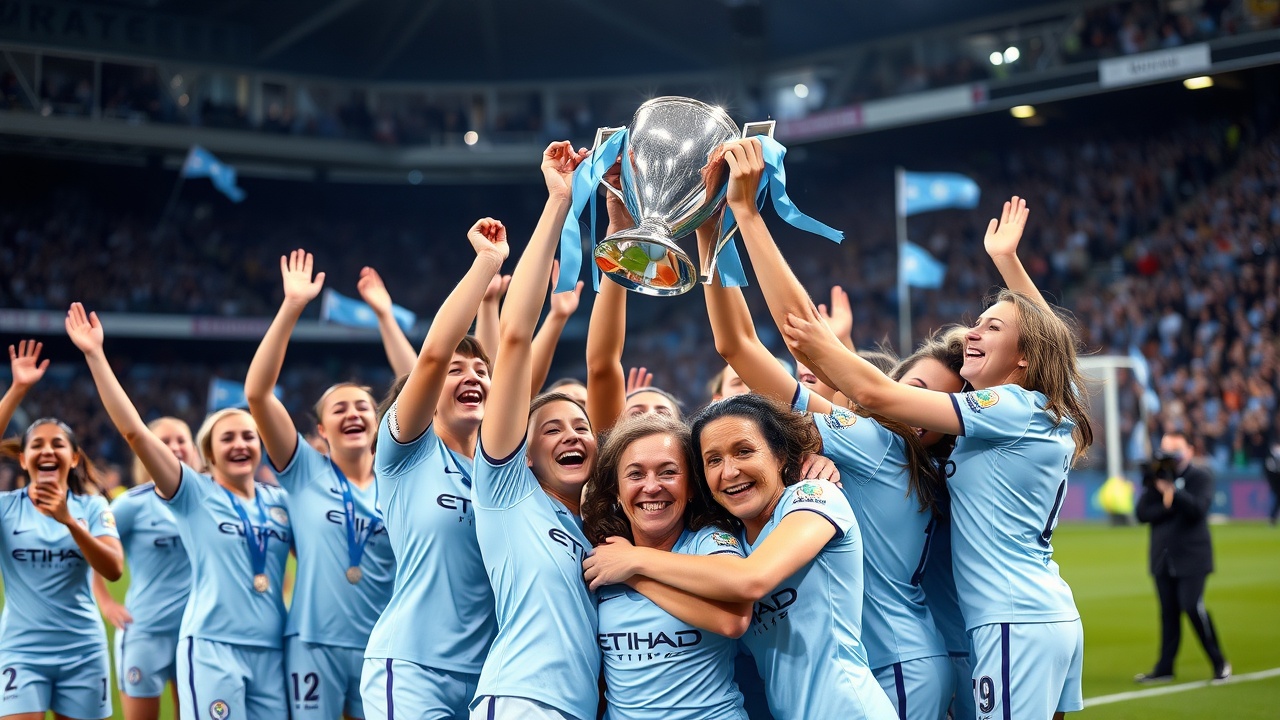
Manchester City Claims Women’s Super League Title
After a season marked by impressive consistency, Manchester City has rightfully claimed the Women’s Super League (WSL) title, ending Chelsea’s six-year reign as champions. This victory represents City’s first league triumph in ten years and caps off a significant turnaround for the team, which had endured a tumultuous previous season that saw them finish fourth and miss out on European competition.
Leadership Changes and Tactical Evolution
The departure of manager Gareth Taylor marked the beginning of this transformation, paving the way for Andrée Jeglertz, former Denmark head coach, to take charge. Under Jeglertz’s leadership, City surged to the top of the table, showcasing an aggressive style of play that saw them lead the league in numerous statistical categories, including goals scored, shots on target, and possession won in the final third.
Challenges and Key Victories
City’s journey to the title was not without its setbacks. They began the season strong but suffered a shock loss to Brighton, raising doubts as they faced pressure from Arsenal. However, a thrilling last-minute victory against Liverpool proved crucial, allowing them to remain at the forefront of the title race. The championship was ultimately secured when Arsenal’s failure to win against Brighton ensured City would finish atop the standings.
Building a Stronger Team
The groundwork for this victory was laid following last year’s heartbreak when they narrowly lost the title to Chelsea on goal difference. Determined to avoid a repeat, City invested in both their squad and their management structure. New players were strategically signed to bolster the team, including versatile talent like Iman Beney and experienced midfielder Sam Coffey. This influx of fresh faces allowed Jeglertz to refine the team’s tactics, creating a more adaptable and compositional style of play.
Cultural and Health Innovations
One of the most significant changes was the cultural shift introduced by Jeglertz, who emphasizes open communication and direct interaction with players—a stark contrast to the previous regime. His management style has fostered an environment where players feel empowered to take initiative and collaborate on game plans, enhancing on-field performance and team cohesion.
The squad’s dynamics have also benefitted from an innovative approach to injury management and player health, with targeted care for female athletes becoming a priority. City’s investment in medical research and individualized care has been seen as a benchmark for best practices in women’s football, contributing to a healthier and more resilient squad that performed consistently this season.
Looking Ahead
Yet, despite their success, challenges remain. City is acutely aware that depth will be crucial for competing in multiple tournaments, especially with UEFA Women’s Champions League football returning next season. As they look to build on this year’s success, addressing potential gaps will be key to avoiding last season’s pitfalls. Future signings may be necessary, especially with key players like Khadija Shaw facing contract deliberations and interest from rival clubs.
The club’s ambition is clear: not only to celebrate this well-deserved title but to establish dominance in both domestic and European competitions in the years to come, solidifying their status as a powerhouse in women’s football.