

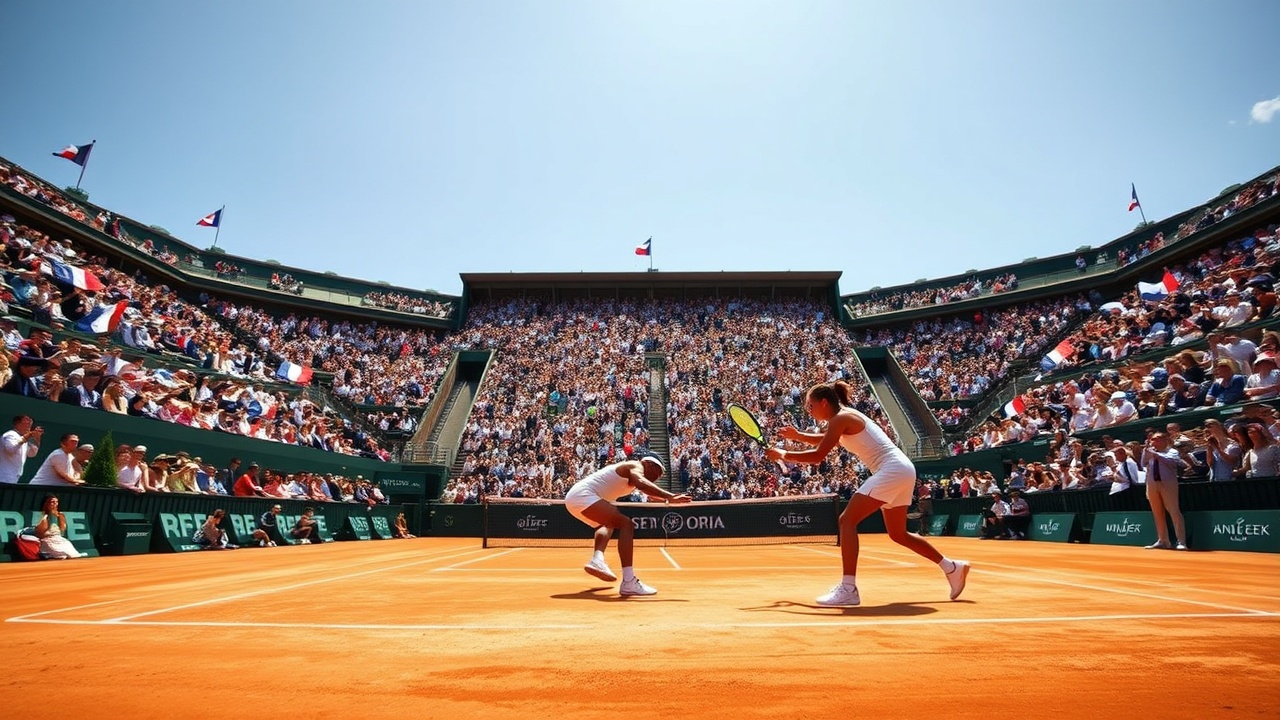
Amelie Mauresmo Defends Use of Human Line Judges
In a statement made on Monday, Amelie Mauresmo, the director of the French Open, defended the use of human line judges over electronic line-calling technology, citing reliability concerns on clay courts. This announcement comes in the wake of a disputed call during the fourth-round match between Casper Ruud and Joao Fonseca, where Ruud, a two-time finalist in Paris, was edged out with scores of 7-5, 7-6 (8), 5-7, 6-2.
Controversial Call During Match
The pivotal incident occurred during the second-set tiebreak, when Ruud was leading 8-7. A fan shouted that Fonseca’s forehand shot landed out, prompting the chair umpire to inspect the mark. The umpire ruled that the ball was in play, awarding the point to Fonseca, even though later replays indicated it had, in fact, been out.
Mauresmo’s Perspective on Officiating
Mauresmo emphasized her preference for traditional officiating methods, stating, “What we’ve seen in clay-court tournaments leading up to Roland Garros is that this system is not completely reliable. We feel more confident in our human officials for now.”
This perspective keeps the French Open as the lone Grand Slam event still relying solely on line judges, with both Wimbledon and the U.S. Open opting for electronic line-calling in recent years.
Ongoing Discussions and Future Considerations
While the ATP and WTA have begun using such technology for events held on red clay, Grand Slam tournaments have the authority to set their own policies. Mauresmo acknowledged the ongoing discussions surrounding mark disputes at Roland Garros but noted that many players share her belief in the limitations of electronic decision-making on the ever-changing clay surface, which can be influenced by weather conditions.
Looking Ahead
Mauresmo concluded by stating that there has been no significant push from players for a shift to electronic guidance, mentioning that after the current tournament, the decision to reassess this direction will be made. “Our focus right now is on supporting human officiating, a choice we plan to maintain through 2026. For 2027, we are open to new technologies as they emerge,” she remarked.
The director also observed Ruud’s composed reaction to the controversial call, indicating that he seemed prepared for the outcome.