

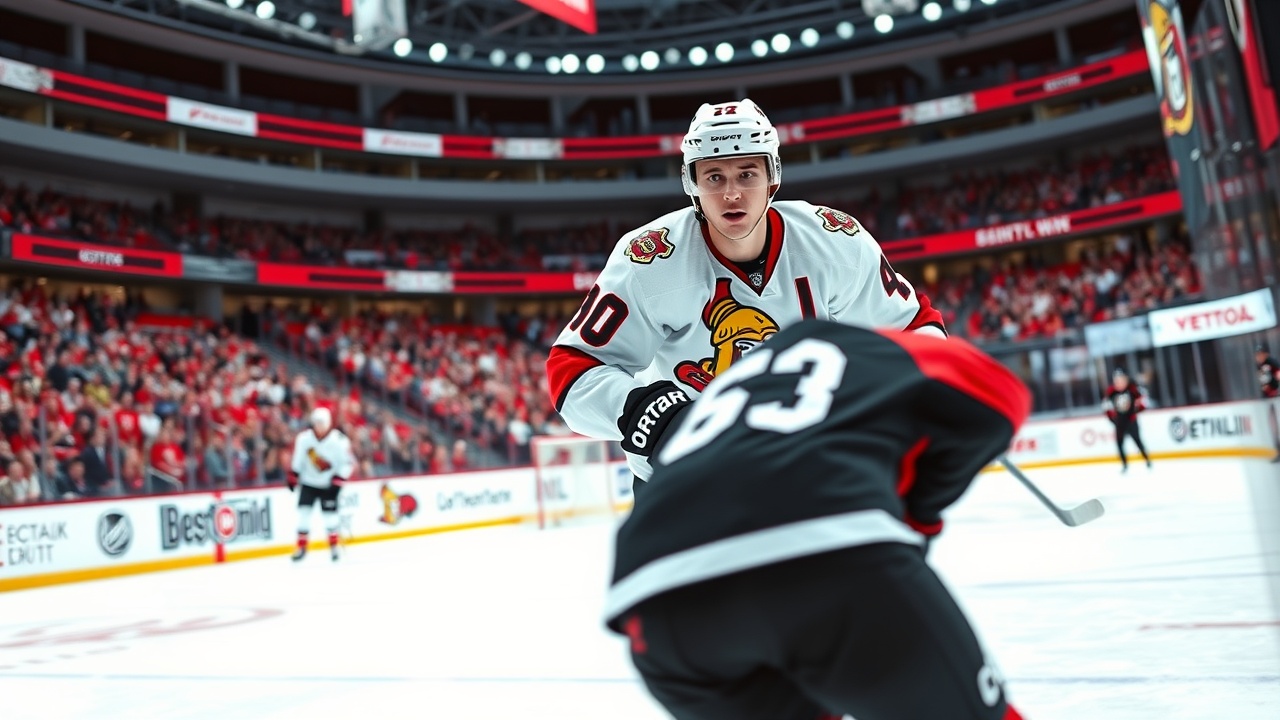
The Ottawa Senators’ Prospect Dilemma
The Ottawa Senators are currently grappling with a notable lack of prospects within their organization, a situation exacerbated by trades that diminished their high-end talent pool in recent drafts. The 2022 and 2023 seasons saw the team part with valuable picks, but now, amidst these challenges, they find a sliver of hope in Carter Yakemchuk, the 7th overall selection in the upcoming 2024 NHL Entry Draft. Yakemchuk has emerged as a potential standout offensive defenseman, albeit with the caveat that his development is crucial for the team’s future success.
Yakemchuk’s Development and Current Status
At 20 years old, Yakemchuk is seen by many as needing further time in the American Hockey League (AHL) with the Belleville Senators to refine his defensive skills. Just recently returning from a 13-game injury absence, Yakemchuk could actually benefit from a quicker transition to the NHL. His presence at the highest level could significantly aid his development since the Senators are grappling with a depth shortage on defense.
Management Decisions and Expectations
The pressure is mounting on General Manager Steve Staios, who has been tasked with making strategic decisions about Yakemchuk’s progression. As the franchise’s first draft pick under Staios’ regime, Yakemchuk’s success is pivotal. The Senators historically lean towards a patient development approach, which has led Staios to earn the nickname “Steady Steve.” However, considering the organization’s limited influx of top-tier talent, the option of integrating Yakemchuk into the NHL sooner raises compelling questions.
Performance Metrics and Context
Currently, Yakemchuk’s statistics seem concerning, having a plus/minus rating of -24 with 19 points in 31 games played. Such figures are alarming for a rookie defenseman and tend to provoke scrutiny regarding his defensive capabilities. Of particular relevance is the underwhelming defensive performance of the Belleville Senators—last in the AHL in goals against—which might not provide a conducive environment for Yakemchuk to make the necessary improvements.
Yet, it is essential to contextualize the plus/minus stat since it can often misrepresent a player’s true impact. Jake Sanderson, for instance, faced similar scrutiny last season despite later proving himself to be an integral part of the Senators’ defense. There’s a reminder that Yakemchuk was chosen for his offensive prowess, a trait that could benefit the Senators’ struggling power play, which currently ranks 31st in the NHL.
Potential Impact and Future Outlook
With potential not fully realized yet, there is a case to be made for harnessing Yakemchuk’s talents sooner rather than later. The current power play deficiencies could benefit enormously from Yakemchuk’s skill set. The Senators have already seen glimpses of success on the AHL power play, where Yakemchuk ranks among the top rookie assist providers despite his injury.
In the NHL, he could have the advantage of partnering with seasoned players like Artem Zub and Jordan Spence, allowing him to gradually acclimate and hone his skills in a supportive environment. Being a top draft pick also carries expectations that should not be overlooked; historically, players selected as high as Yakemchuk are often able to contribute sooner in their careers.
Conclusion
During a media session in December, Staios indicated that Yakemchuk might have been called up already had he not been sidelined. This suggests that the organization is actively considering his readiness—and that we may see him donning a Senators jersey sooner than anticipated.
Ultimately, given the impending decisions the Senators face regarding their defensive lineup, particularly in light of any potential upgrades on veteran Nick Jensen, assessing Yakemchuk at the NHL level could offer a more immediate solution to their depth concerns.