
Excitement at the Milan Cortina Olympics
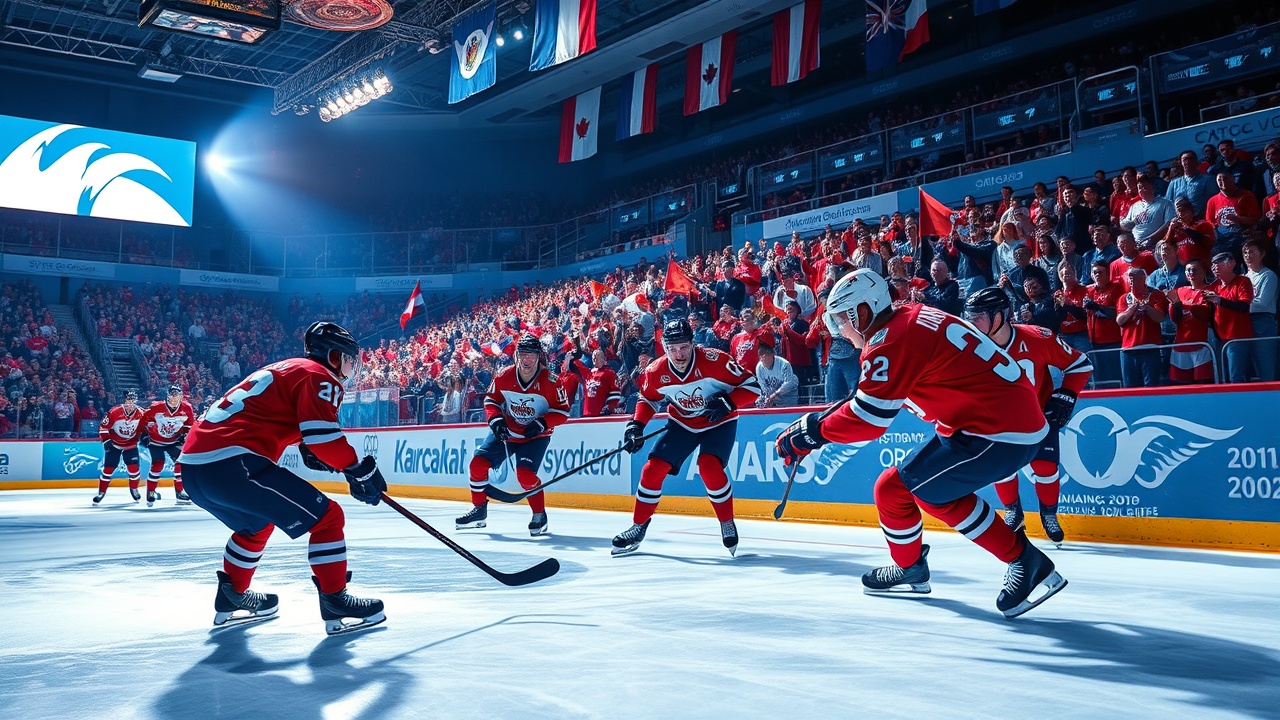
MILAN (AP) — The excitement surrounding the world’s elite hockey players competing at the Milan Cortina Olympics was palpable, especially with the return of NHL players after a 12-year absence from the Games. Out of the seven knockout round matches, four extended into overtime, culminating in the dramatic victory of the U.S. over Canada in a thrilling gold medal showdown that kept fans on the edge of their seats. This return of top-tier talent showcased the sport’s allure on an international scale, reigniting enthusiasm among players and fans alike.
Players’ Reactions and Future Plans
Vincent Trocheck, a forward for Team U.S., expressed his delight at the tournament’s intensity, stating,
“This is as good as it gets. They’ve got to keep doing it.”
Plans are already in motion for future international competitions; the NHL, the Players’ Association (NHLPA), and the International Ice Hockey Federation (IIHF) are collaborating on a framework to participate in the next Olympic Games set for 2030 in the French Alps, contingent on final negotiations with the International Olympic Committee.
In the interim, another opportunity for country versus country rivalry awaits with the World Cup of Hockey slated for February 2028. The NHL and NHLPA are unified in their goal of establishing a recurring international tournament calendar every two years, a vision that has the support of the IIHF.
Significance of Cooperation
NHL Commissioner Gary Bettman remarked on the significance of this cooperation, saying,
“The hockey world from an NHL/NHLPA standpoint is in a better place when The Players’ Association and the league are collaborating. This opens avenues to promote the sport in regions where its presence is less dominant, such as parts of Europe.”
Historic Achievements and Reflections
This was the sixth Olympic appearance for NHL players since their debut in 1998 at Nagano, with the absence from the 2018 Games and the COVID-19 disruption in 2022 amplifying the anticipation in Milan.
“It’s been so long since the last one. Wish it had never happened this way, but here it is,”
commented Canada’s Drew Doughty, reflecting on the long wait for this high-stakes competition.
In a historic achievement, the U.S. secured gold in men’s hockey at an NHL Olympics for the first time, breaking Canada’s streak of winning the previous two tournaments and three of the last four. The victory marked the first for Team U.S. since the legendary “Miracle on Ice” in 1980. Central to this win was goaltender Connor Hellebuyck, whose performance is being hailed as one of the greatest in the annals of international hockey. Jack Hughes, who scored the game-winning goal in overtime, noted,
“He was our best player by a mile,”
despite having lost a couple of teeth to a stick earlier in the match.
Overtime Format Controversy
Hughes’ decisive goal came shortly into the overtime period, raising questions about the viability of the 3-on-3 format used to determine the winner. Canada’s head coach Jon Cooper criticized the overtime system, suggesting that it undermines the spirit of the game.
“Playing 3 on 3 instead of 5 on 5 is not hockey anymore,”
he noted, emphasizing that the quick resolution is largely driven by television needs. This highlighted a divergence in approaches between Olympic rules and NHL playoff regulations.
Although the discussions may continue regarding overtime formats, players on the victorious U.S. side shared no grievances in the moment of celebration. Forward Brock Nelson declared,
“Right now, I think it’s great.”
As the confetti settled and the festivities continued, the prospects of future international hockey were bright.
AP Winter Olympics