
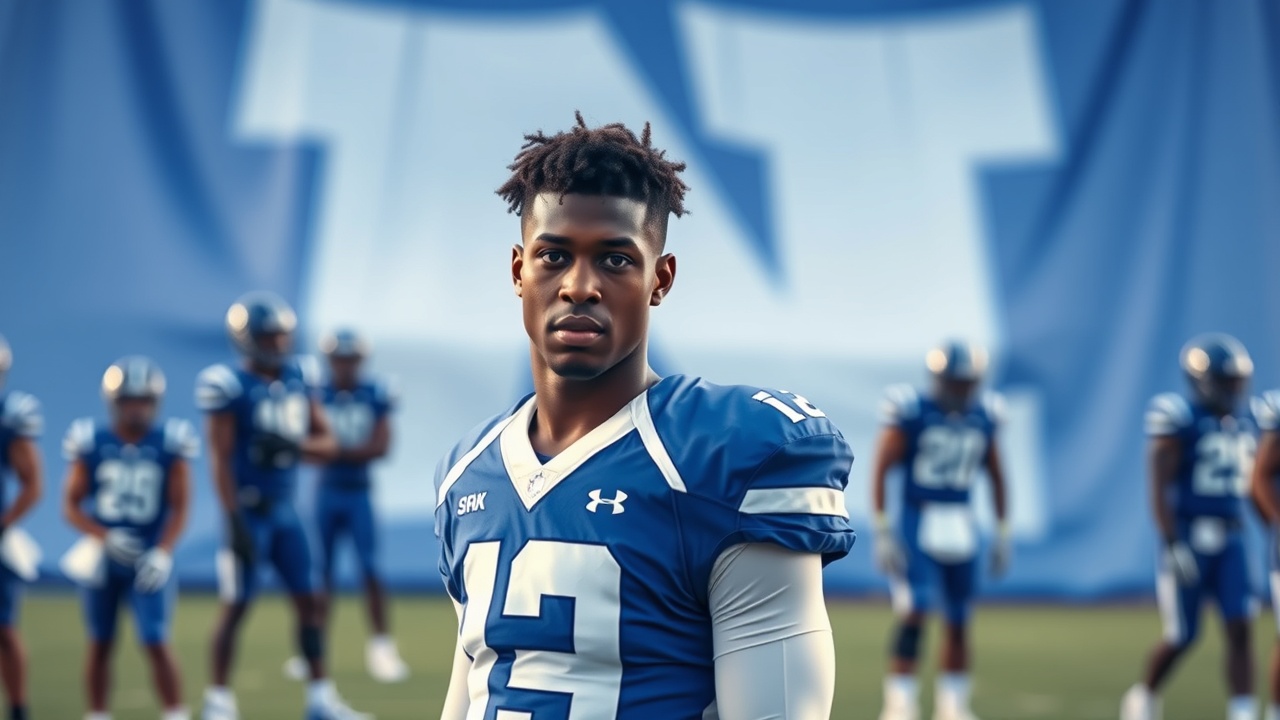
Duke University Takes Legal Action Against Quarterback Darian Mensah
In a significant development within college athletics, Duke University is taking legal action against Darian Mensah, the quarterback who recently decided against returning to the team following a standout season that culminated in an Atlantic Coast Conference championship. The lawsuit was filed in Durham County Superior Court on a Monday, just days after Mensah changed his earlier announcement regarding his commitment to the Blue Devils for the next season.
Details of the Legal Dispute
Central to this legal dispute is the two-year agreement that Mensah signed back in July 2025, which runs through 2026. This contract grants Duke the rights to commercialize Mensah’s name, image, and likeness (NIL) related to his college football participation. The university is seeking a temporary restraining order to prevent Mensah from entering the transfer portal and negotiating with other schools, asserting that the contract stipulates that all disputes must be resolved through arbitration first.
This case arises out of the decision of a star quarterback in the increasingly complex world of college athletics. But at its core, this is a simple case that involves the integrity of contracts.
Mensah’s Performance and Broader Trends
Mensah, previously with Tulane, had an impressive season with the Blue Devils, amassing 3,973 passing yards and ranking second in the Bowl Subdivision for throwing touchdowns with 34.
This situation mirrors a growing trend in collegiate sports regarding conflicts over NIL contracts and player transfers. For instance, earlier in the month, Washington quarterback Demond Williams Jr. initially announced a temporary transfer before reverting his decision amidst reports of potential legal action from the university to uphold his NIL agreement. Additionally, in December, Missouri’s Damon Wilson II filed a lawsuit against Georgia’s athletic department, alleging unfair treatment for his decision to enter the transfer portal.
Conclusion
As the landscape of college football continues to evolve following the implementation of revenue-sharing agreements, legal disputes such as this may become more commonplace, highlighting the ongoing tension between athlete mobility and institutional contracts.