

Cortina d’Ampezzo: A Historical Overview
CORTINA D’AMPEZZO, Italy (AP) — In the picturesque Italian town of Cortina d’Ampezzo, a striking memory of the past lingers over the current landscape preparing for the upcoming Milan Cortina Winter Olympics. Where the curling venue now exists, a colossal image of Benito Mussolini once loomed large, and the current site of the Athletes’ Village previously served as the military shooting range for World War II events linked to the biathlon.
Olympic History and Propaganda
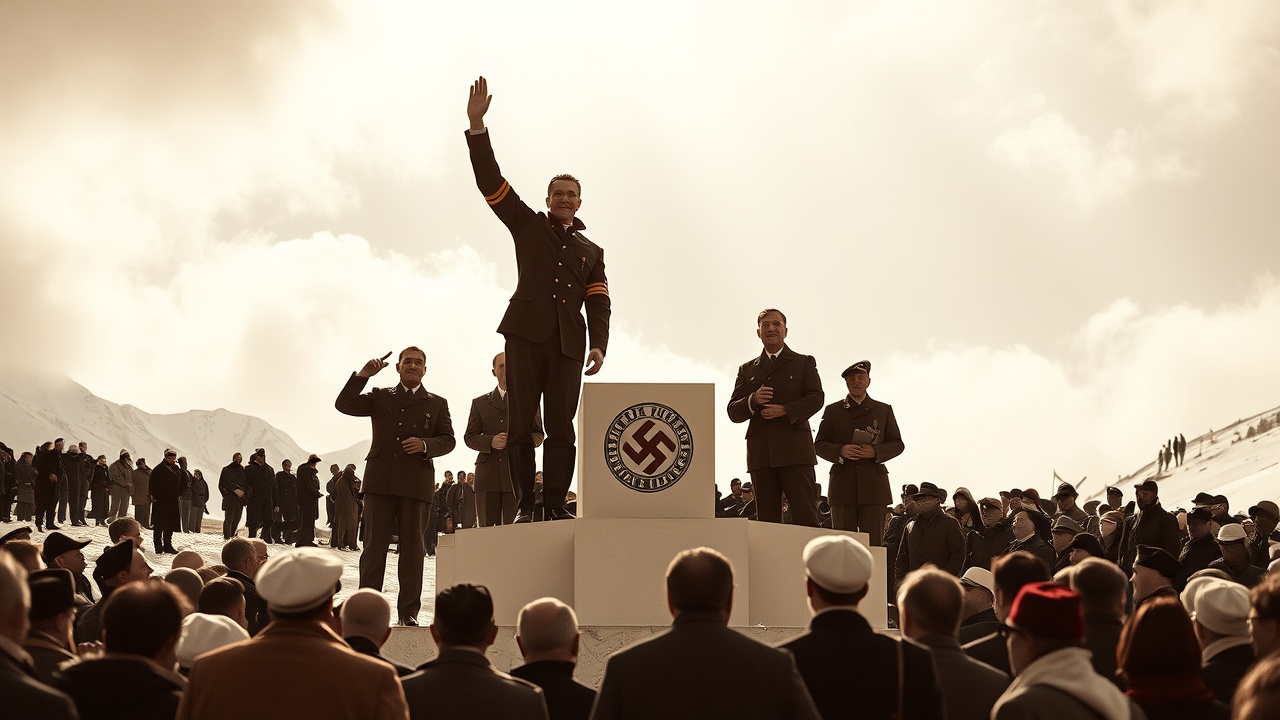
Cortina has a rich Olympic history; it previously hosted the Winter Games in 1956. However, few are aware that the town was also the stage for a skiing world championship in 1941, which was manipulated for propaganda purposes under the fascist regimes of Italy and Nazi Germany. During this event, competitors from Germany—competing under the Nazi flag—and Mussolini’s Italy dominated the Alpine events, while competitors from Allied countries were notably absent.
News footage from the 1941 championships depicts athletes performing fascist salutes on the podium, with Nazi flags displayed prominently around the town and a major military presence that underscored the event’s political undertones.
Nicola Sbetti, a sports historian from the University of Bologna, emphasizes the significance of this event in shaping perceptions of World War II sports. He notes, “In many respects, it’s as though it never occurred,” highlighting the collective amnesia regarding the championships, which the International Skiing Federation (FIS) erased from records post-war.
The Axis Strategy and Sporting Competitions
Sbetti elaborates that this event was part of a broader Axis strategy aimed at sustaining the illusion of normalcy in international relations through sporting competitions during a devastating global conflict. He pointed out that while there were indeed competitors present from neutral nations, many were not in full force, and traditional powerhouses like the United States and the United Kingdom were excluded entirely from participating. The participating teams mainly consisted of Axis nations and their affiliated puppet states.
Initially set to host the Winter Olympics in 1944, the war forced Italy into uncertainty. Nevertheless, Mussolini was undeterred, and the 1941 championships became a platform for demonstrating national strength amidst ongoing military strife. This competition transcended traditional skiing with Nordic events also featured, showcasing Italy’s resolve during tumultuous times.
Legacy of the 1941 Championships
Max Vergani, from the Italian Winter Sports Federation, described the 1941 championships as a ‘mini-Olympics’ designed to convey that Italy could successfully hold such large-scale sports events in spite of the war. The backdrop included horrific realities; as the championships played out, Nazi Germany was intensifying its crackdowns on persecuted populations, and Italian forces were facing setbacks in Africa.
The medals themselves symbolized the heavy influence of the regime; during the event, notable performances, such as Christl Cranz’s domination in Alpine racing, became tainted by Nazi salutes on the podium. While certain athletes like Cranz gained historical fame as top competitors, many who participated met tragic fates in subsequent wartime actions.
Post-War Reckoning
The aftermath of the war brought a reckoning for the 1941 championships; the FIS convened in August 1946 to formally cancel the event, a move supported by several nations, thus rendering the results null and void. Meanwhile, Italy rebuilt its post-war identity, culminating in a more recognized and celebrated Winter Olympics in 1956, marking a pivotal moment in the nation’s transition toward democratic values following a long period of authoritarian rule.
Commemoration and Reflection
Today, while the glory of the 1941 championships is often overlooked, items commemorating the event can still be found in souvenir shops around Cortina. Sbetti reminds us, “History is history, whether we remember it or not—it needs to be acknowledged within its proper context.”
As the city prepares for the incoming games, the shadows of its past continue to greet visitors and residents alike, alongside aspirations for a more inclusive future in the realm of international sports.