
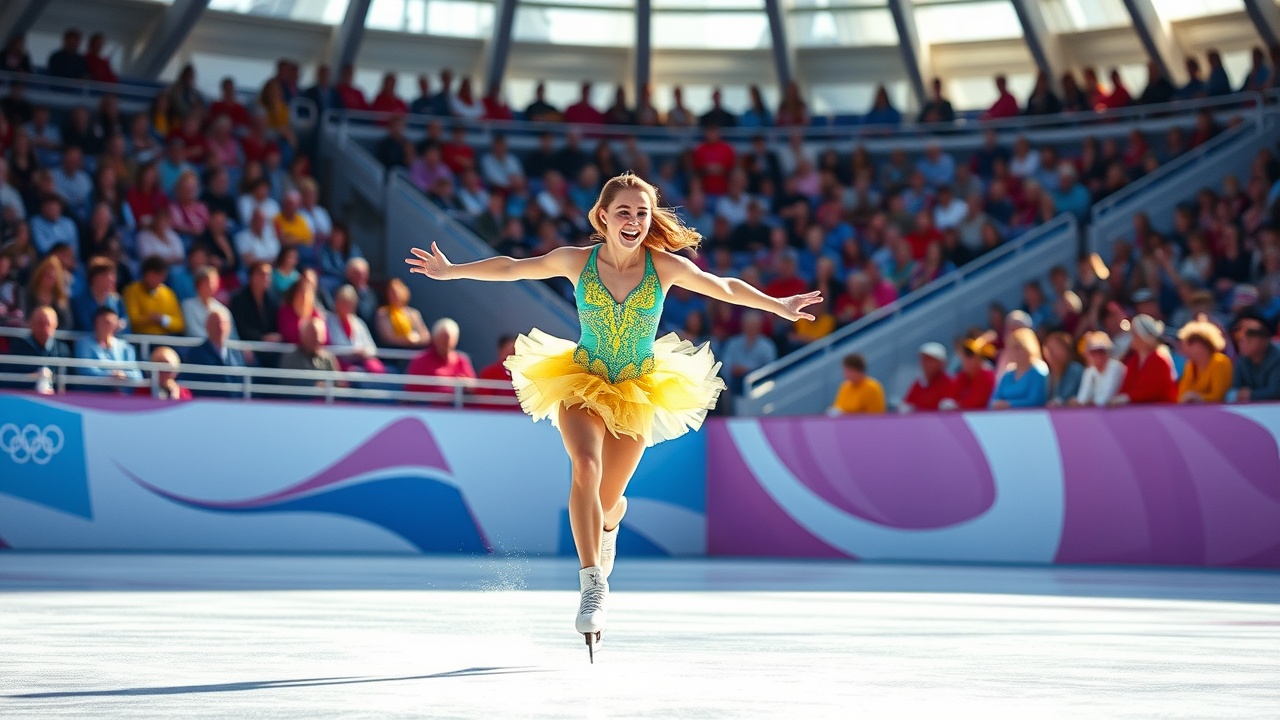
Copyright Complications for Figure Skater Tomas-Llorenc Guarino Sabate
In a development that underscores ongoing issues within the world of figure skating, Spanish athlete Tomas-Llorenc Guarino Sabate has recently disclosed that he is forbidden from using his beloved Minions-themed routine at the upcoming Milano Cortina Olympics due to copyright complications. Just a few days prior to the Olympic opening ceremony, Sabate shared the disappointing news, stating:
“I was informed that I am no longer permitted to use this program due to copyright clearance issues. I will face this challenge head-on and do everything I can to make the best of the situation.”
Challenges of Last-Minute Changes
Although Sabate may not be considered a likely medal winner in the men’s competition, his performance, which intricately involved dressing as one of the animated film’s iconic characters, captivated audiences throughout the season. Now, at the last minute, he must revert to one of his previous programs for the short skate scheduled for next Tuesday at the Milano Ice Skating Arena. This transition is complicated further by the fact that his previous short program, which featured music by the Bee Gees, also served as his free skate music for this season. As a result, he faces the unusual predicament of competing twice with the same soundtrack.
Historical Context of Copyright in Figure Skating
Historically, figure skaters were predominantly free from copyright troubles, particularly until 2014, when the International Skating Union (ISU) relaxed restrictions on using music with lyrics. Previously, skaters relied mainly on classical music, widely regarded as part of the public domain, without requiring permission. However, as modern music began to dominate skating routines, copyright issues have increasingly arisen, as evidenced during the 2022 Beijing Games when U.S. pairs skaters Alexa Knierim and Brandon Frazier faced legal action for using a song without clearance.
Efforts to Streamline Music Clearance
In light of these ongoing challenges, national federations, including U.S. Figure Skating, have endeavored to streamline the music clearance process. They are working alongside organizations such as ASCAP and BMI to facilitate better access to approvals for skaters. Despite these efforts, the onus ultimately falls on the individual athletes to ensure their music is appropriately cleared—an obligation that many find overwhelming, detracting from their focus on performance and training.
Reflections from Fellow Skaters
World champion Alysa Liu reflects on the essential nature of music in figure skating, having managed to cultivate a favorable relationship with her preferred artist, Laufey. Liu explained:
“Without music, we’re not really our sport.”
Conversely, fellow skater Amber Glenn described her experiences in securing music approvals as “pure chaos,” criticizing the convoluted system that skaters must navigate.
Conclusion
As Sabate prepares for his Olympic debut, the situation highlights the broader challenges that skaters face in balancing their artistic expression with the complexities of copyright law. The realities of copyright rights can feel more like a cash grab from corporations than a genuine protection of artistic work, lamenting how such issues detract from the athletes’ ability to showcase their talents on the world stage.
With only days until the Opening Ceremony, Sabate’s predicament serves as a reminder of the intricate relationship between music and sports, one that is often fraught with complications that can hinder performances on the biggest stage.