
Cleveland Cavaliers’ Defensive Challenges
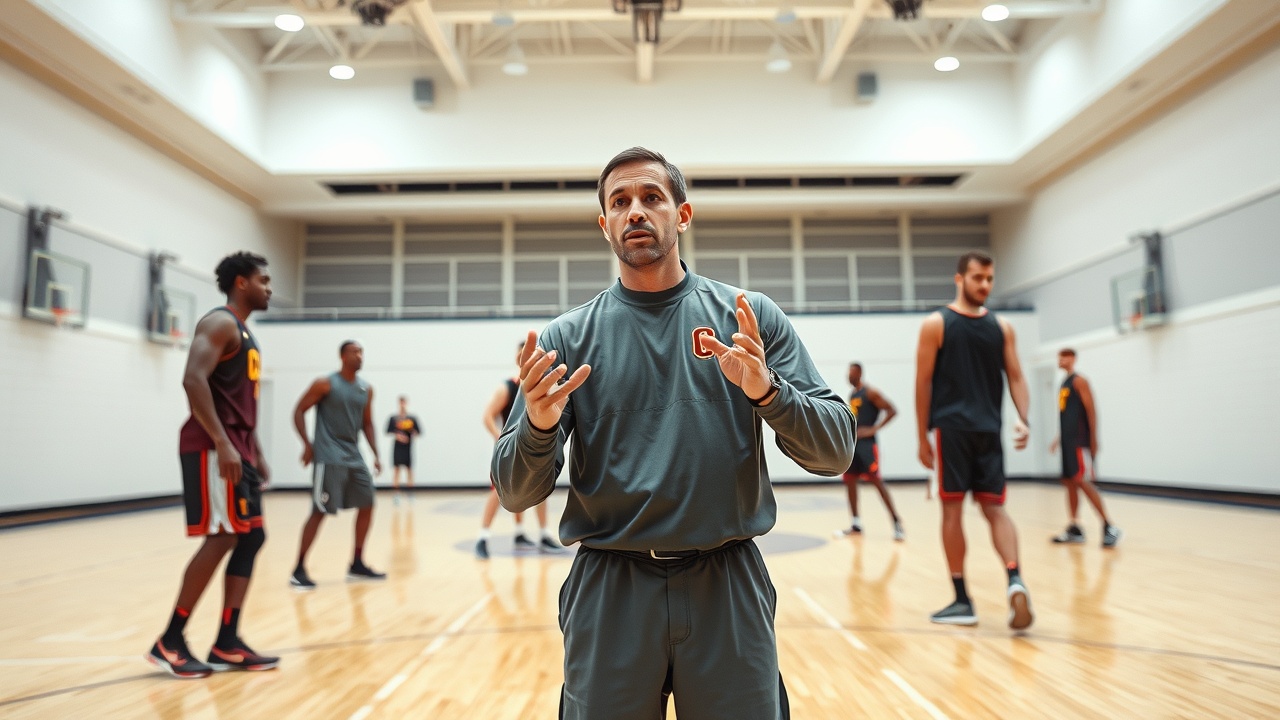
The Cleveland Cavaliers are currently facing challenges with their defensive consistency, particularly regarding how they handle opponents’ three-point shooting. As they prepared for their matchup against the Sacramento Kings, head coach Kenny Atkinson highlighted the need to improve in this area.
Defensive Performance Overview
Despite being highly effective at defending the rim—ranked first in limiting shots at the basket over the past 15 games—Atkinson believes the team must lower the percentage of three-pointers their opponents make.
“We have elite shot blockers, but we need to mitigate their three-point shooting effectiveness,”
he explained. He jokingly added,
“I’m open to suggestions on how to achieve that.”
This season, the Cavaliers find themselves at the bottom of the league in opponent three-point shooting percentage, conceding a troubling 38.2% from beyond the arc. Atkinson noted that they are analyzing various aspects that might contribute to this issue, such as evaluating shot quality, increasing contest efforts, and improving defensive spacing.
Recent Game Insights
A recent game against the Charlotte Hornets illustrated the complexities of three-point defense. Although the Cavs secured a win, the Hornets had a woeful shooting night, converting only 17% of their 47 attempts from deep. Out of these, 30 were taken with no one closely defending, yet Charlotte still struggled to score on those attempts. For context, the Hornets are currently among the league leaders in connecting on open three-pointers, making the game a statistical anomaly rather than a benchmark for Cavaliers’ defense.
Factors Affecting Three-Point Defense
The Kings’ head coach, Doug Christie, emphasized that strong three-point defense depends on several interlinked factors. One significant issue for Cleveland has been defending against dribble penetration, which allows opposing teams to open up better looks from three-point range. With Isaac Okoro sidelined, the Cavs have lacked a suitable defender to manage high-scoring guards. Furthermore, Darius Garland has displayed limited mobility, compounding the struggles of the backcourt.
Christie also pointed out the importance of closing out on shooters effectively. The Cavaliers have allowed more three-point attempts than in previous seasons, indicating a need for improved communication and effort on rotations. Atkinson acknowledged that while the team can control shot attempts more actively, they need to focus on enhancing their perimeter defense to limit the number of open three-point shots.
Balancing Defensive Strategies
Lastly, teams often face a dilemma between prioritizing rim protection and defending the three-point line. Cleveland excels at defending the paint with the second-best opponent field-goal percentage near the rim; however, Atkinson noted that optimal defense balances both aspects, aiming to curb both easy inside baskets and open triples.
Looking Ahead
The Cavaliers have the time to address these defensive challenges, and Atkinson remains optimistic, stating,
“We’re dedicated to improving our defense and reducing those percentages. Our defensive capabilities will evolve as we focus on these details.”
This multifaceted approach to correcting their three-point defense could significantly shape the Cavaliers’ performance as the season progresses.