
Cleveland Cavaliers’ Recent Struggles
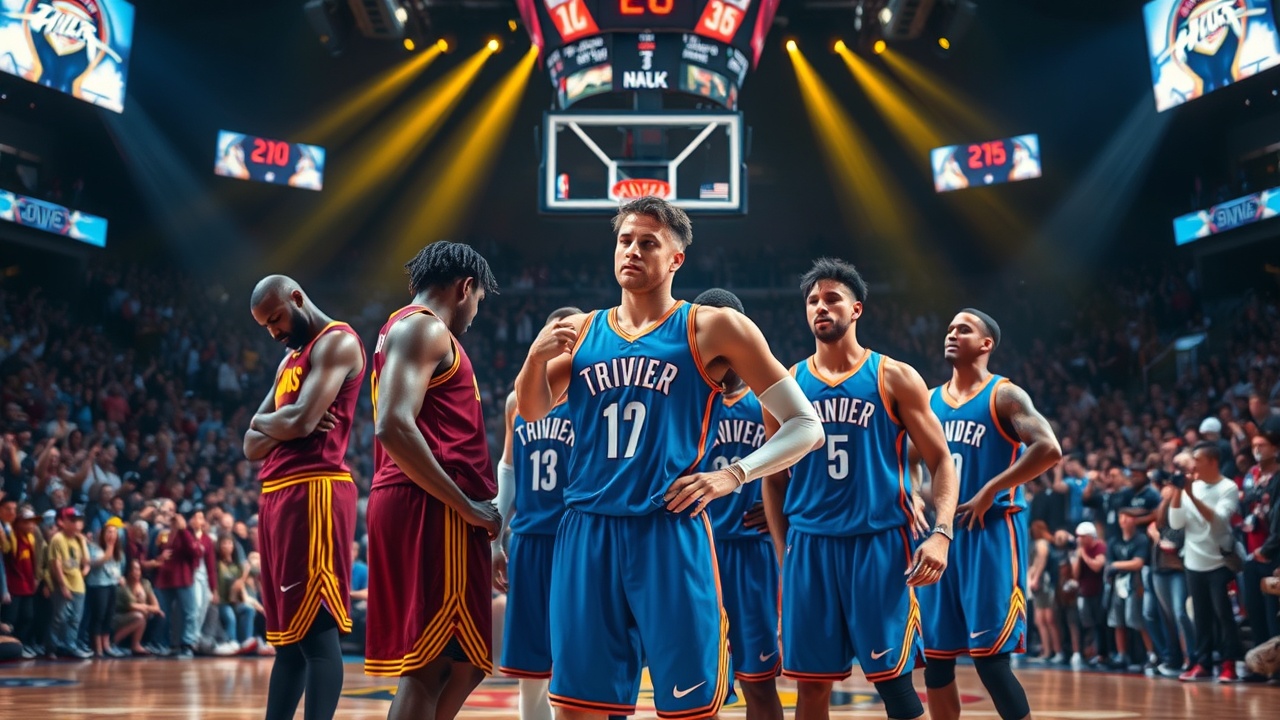
CLEVELAND — A year ago, the Cleveland Cavaliers appeared poised for a bright future when they defeated the Oklahoma City Thunder, sparking excitement about a new chapter in their franchise. However, after suffering a devastating 32-point defeat to the same team on Monday, many observers are left questioning whether that early victory was actually a high point for the Cavs rather than a sign of sustainable success.
Disparity in Talent
The disparity in talent was glaring during the recent matchup. Cleveland’s lineup struggled to penetrate Oklahoma City’s defense, managing only one player who could effectively create his own shot. Consequently, the Thunder took advantage by daring the Cavaliers’ front court, led by Evan Mobley and Jarrett Allen, to score inside—a challenge they failed to consistently meet. Meanwhile, Oklahoma City showcased an impressive defensive strategy, actively intercepting passes and making it extremely challenging for Cleveland to convert close-range attempts. In stark contrast, the Cavs had to compromise their defensive efforts by leaving one of the Thunder’s weaker shooters open, resulting in the Thunder hitting nearly half of their three-pointers.
Lack of Cohesion
For the Thunder, their success stems from a defined style of play honed over time, built around specific player traits cultivated within the organization. In contrast, the Cavaliers have assembled their core unit—Darius Garland, Donovan Mitchell, Evan Mobley, and Jarrett Allen—through opportunistic acquisitions without a clear plan or coherent style that binds them. While accumulating talented individuals is crucial, creating a unified team identity remains a significant issue for Cleveland.
Defensive and Offensive Challenges
Previously, the Cavaliers committed heavily to a defensive approach, leveraging their size and the coaching of J.B. Bickerstaff. However, deficiencies in their offense were exposed during their 2023 playoff elimination at the hands of the New York Knicks. To address this, they sought to enhance their shooting capabilities, bringing in players like Max Strus and Georges Niang. Later, under head coach Kenny Atkinson, the team transitioned to a three-point-centric offensive strategy, achieving initial success before faltering in a playoff exit against the Indiana Pacers.
This shift led the franchise to explore acquiring versatile players like Lonzo Ball and Larry Nance Jr., but those signings have also struggled this season, amplifying the inconsistency within the roster. It is evident that the Cavaliers lack a cohesive identity, struggling to balance their defensive roots and offensive aspirations while failing to define the traits that characterize a Cavalier player. Today’s iteration of the team finds itself in limbo, lacking the defensive prowess they once had and the shooting efficiency that made them formidable last season.
Potential for Rebound
Despite these challenges, there’s still potential for the Cavs to rebound with their skilled lineup willing to adapt. However, time is limited to establish their identity and regain the playoff form that seemed attainable at the season’s outset. The recent loss serves as a stark reminder of how far they have fallen since last January—contrasting with the Thunder’s clear and effective strategy.
Systemic Issues
While a single defeat might be dismissed as an off night for Cleveland, especially given their poor shooting performance, it highlights broader, systemic issues within the franchise.
The Thunder, even without two starters, executed their game plan with purpose and clarity—traits the Cavs sorely lacked. Finding solutions to their problems won’t be easy; there is no quick fix or single transaction that can solve their identity crisis. The gap between the apparent contenders and the current status of the Cavaliers has widened significantly, leaving the team with a pressing challenge to close that distance before the season concludes.