
Jayson Tatum’s Recovery Journey
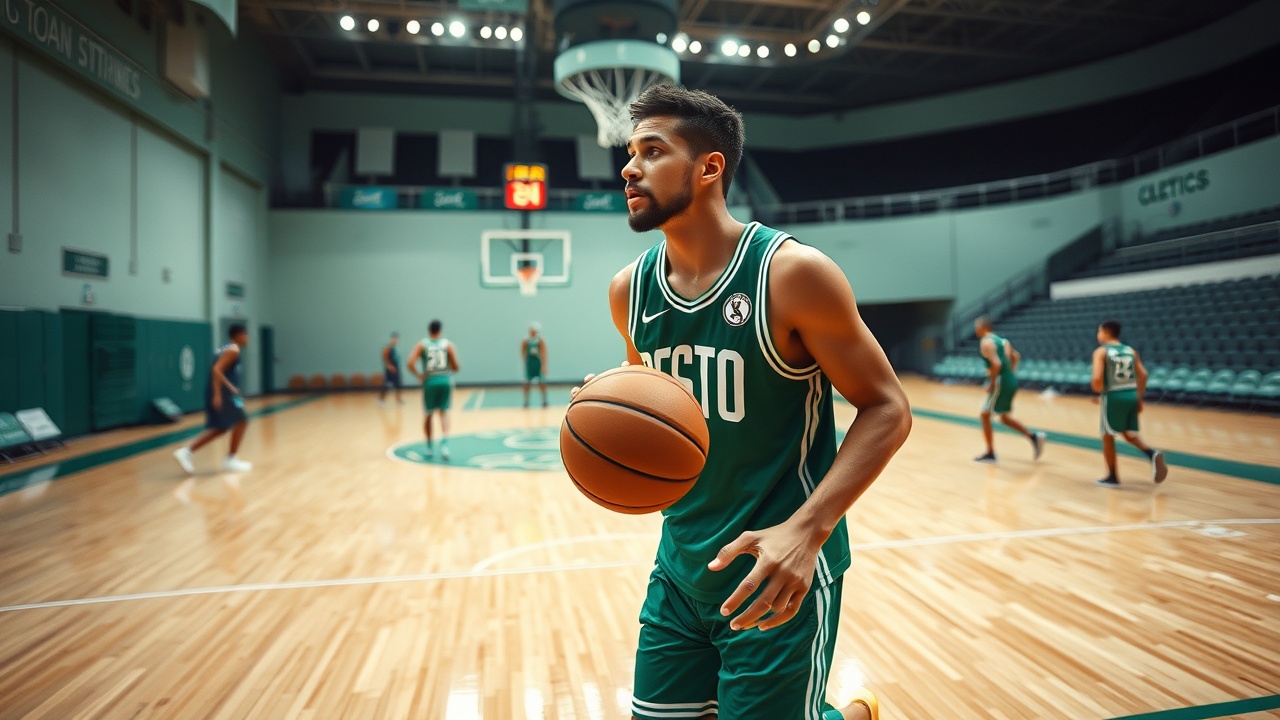
In the locker room at TD Garden, aspiring Boston Celtics star Jayson Tatum expressed his struggles during an arduous 300-day recovery from a torn Achilles. Following a recent defeat against the Minnesota Timberwolves, Tatum shared his raw emotions with the media, stating:
“I didn’t know what to expect from this process. It’s been tough; you just want to be yourself again, to be Jayson Tatum. I’m human, and it’s clear that recovery will take some time.”
Return to the Court
Tatum, who missed the initial 62 games of the season, made a celebrated return on March 6, greeted by a warm standing ovation from Celtics fans. In his debut against the Dallas Mavericks, he showcased glimpses of his All-NBA prowess, posting a commendable 15 points along with 12 rebounds in just 27 minutes of play. Since then, he has consistently scored in double digits across the eight games he has played, surpassing the 20-point mark five times and achieving four double-doubles.
Celtics’ Season Outlook
The Celtics began the season with a revamped roster, leading many to believe that they were entering a transition year. However, surprisingly, they currently stand second in the Eastern Conference, leveraging their underdog status in a memorable season. Their betting odds to reach the Finals have improved, especially with a forthcoming match against the defending champion Oklahoma City Thunder, who currently holds better title odds.
Challenges Ahead
A Western Conference scout noted:
“The question is whether they have sufficient time to reintegrate Tatum efficiently. Eleven regular-season games don’t offer much leeway.”
With significant offseason changes, including the departures of key players such as Jrue Holiday and Kristaps Porzingis, Tatum’s anticipated return has sparked renewed hope for the Celtics’ championship ambitions.
Coaching Insights
Tatum’s surgery took place shortly after the Celtics’ playoff exit last season, carried out with the intent to fast-track his recovery. Celtics head coach Joe Mazzulla acknowledged Tatum’s dedication to the rehab process, highlighting both the physical and mental strides required for a successful return. Mazzulla remarked:
“I knew he’d commit fully to the rehabilitation.”
Performance Analysis
Initially, once Tatum returned, he approached his recovery with a day-by-day focus, admitting:
“I want to be back to my best self immediately. The reality is that recovering from such a serious injury isn’t something that can be rushed.”
While Tatum’s commitment to regain his elite form is commendable, his first eight games post-return illustrate both triumph and tribulation. He exhibits a substantial usage rate of 30.8%, a number that may indicate either reinvigoration or a pressing need to perform. This figure has raised eyebrows, as relying heavily on three-pointers—making 75 of his 139 attempts from beyond the arc—might reflect an underlying hesitation to attack the rim post-injury.
An Eastern Conference assistant coach remarked on Tatum’s shot selection, stating:
“He seems to be hunting his jumper more, perhaps due to a lack of confidence in his leg.”
This sentiment was echoed by another scout, who expressed concern over Tatum’s high usage, suggesting he may need to transition to a secondary role, especially as MVP contender Jaylen Brown takes the lead offensively.
Looking Forward
Notably, Tatum’s output has been more measured, with an overall shooting percentage of 38.8% and 29.3% from three-point range. Critics assert that these figures don’t capture his overall contribution on the court—his rebound average of 8.9 is a career high and pivotal for the Celtics, who are particularly undersized after offseason roster changes. Even as he exhibits less explosiveness, he continues to succeed defensively, averaging 1.1 steals.
As Tatum navigates this complex journey of regaining his rhythm, it stands to reason that his long-term impact on the Celtics is very much on the collective radar. The challenge remains for Tatum to find his role as the playoffs approach, with the Celtics needing to strike a balance between fostering his return to stardom and maintaining the effective offensive flow that has propelled them thus far. Tatum’s adaptation may mirror Michael Jordan’s return midway through the 1994-95 season, as he sought to regain his form while managing the intricacies of high-stakes basketball.
Ultimately, Boston must continue to support Tatum as he gets acclimated, ensuring they remain a formidable contender as the postseason draws near, allowing time for Tatum and the team to find their optimal chemistry.