

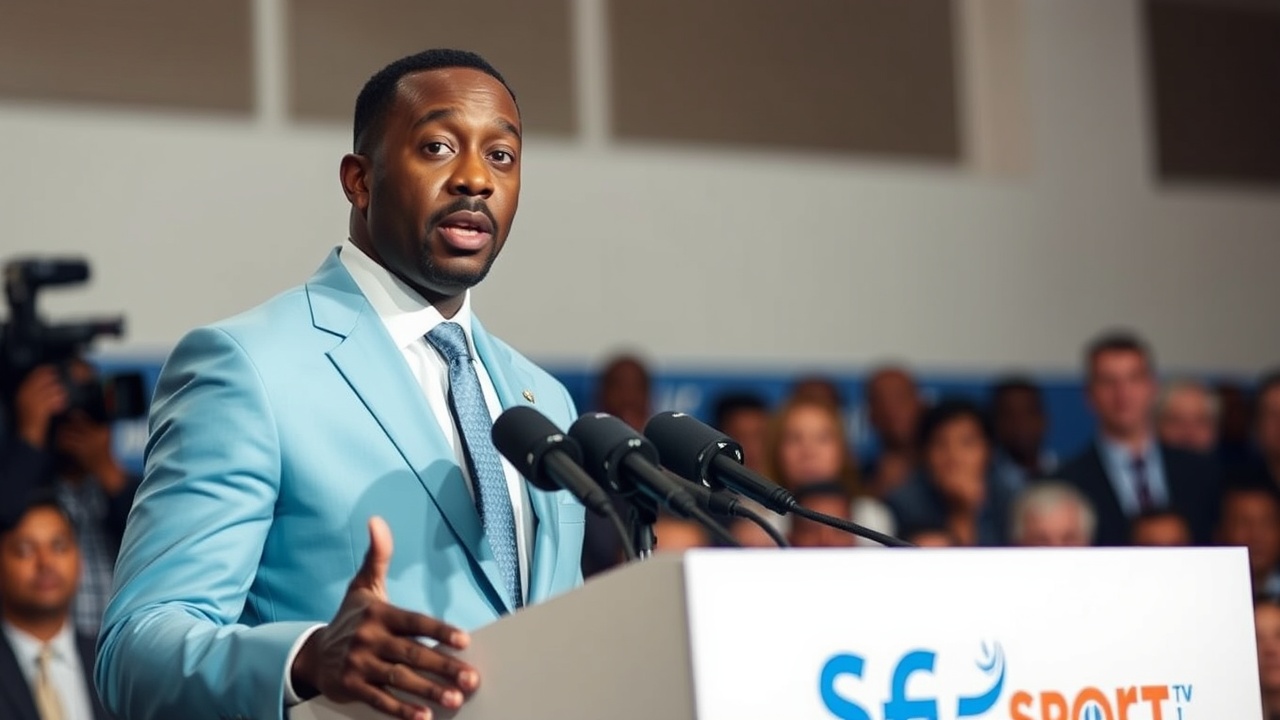
Leadership Change at the U.S. Center for SafeSport
In a significant shift for the U.S. Center for SafeSport, Benita Fitzgerald Mosley has officially taken the helm as CEO, aiming to address longstanding issues related to sexual abuse in Olympic sports. As she embarks on this challenging role, Fitzgerald Mosley, who previously enjoyed Olympic fame as the first Black woman to win a gold medal in the 100-meter hurdles at the 1984 Los Angeles Games, recognizes the enormity of her task.
Embracing the Challenge
Speaking to The Associated Press during her recent visit to the agency’s headquarters in Denver, Fitzgerald Mosley acknowledged the daunting nature of the position.
“This job is undeniably hard, and on the surface, it might terrify the average person,”
she confessed. Yet, the center’s mission resonates deeply with her personal aspirations, prompting her to embrace the role as a calling.
“As I progressed in the interview process, it became evident that this was meant for me,”
she stated.
Background and Challenges
Equipped with a degree in industrial engineering from the University of Tennessee, Fitzgerald Mosley’s background is particularly pertinent as she steps into an organization that has struggled since its inception. The SafeSport Center was established to address the rampant sex abuse scandals affecting the U.S. Olympic and Paralympic Committee and its associated sports, yet it has faced challenges managing complaints from a vast network of athletes—spanning grassroots participants to Olympic hopefuls.
Last year alone, over 8,000 cases were reported to SafeSport, generating criticism over the center’s efficacy in tackling these serious allegations, including concerns over hiring practices and the length of investigation processes.
Support from the Olympic Community
Edwin Moses, an Olympic hurdles champion and former chair of the U.S. Anti-Doping Agency, described Fitzgerald Mosley’s new responsibilities as “the hardest job in sports.” He recognizes that her engineering training will be valuable.
“She’ll systematically analyze every aspect of the organization to identify shortcomings and propose improvements,”
he remarked, recalling his own Olympic experiences alongside her.
Future Strategies and Community Focus
Although Fitzgerald Mosley has yet to implement significant changes, she indicated that a potential restructuring of responsibility towards local or regional entities might help alleviate the backlog of cases at SafeSport.
“Acknowledging that many complaints arise from grassroots programs is critical. If we genuinely wish to shift the paradigm of safety and well-being in American sports, we must focus our efforts from the community level upward,”
she emphasized.
In pursuit of this goal, the center intends to rely on a third-party agency to gather feedback from SafeSport staff and those impacted by its policies, aiming to gather insights that will inform future strategies.
“We will thank participants and inform them of our findings and corresponding actions,”
Fitzgerald Mosley explained.
Strategic Planning and Organizational Assessment
Drawing on experiences from her time at USA Track and Field and the U.S. Olympic Committee, where she notably led a medal increase for American athletes from 23 in 2008 to 29 in 2012, Fitzgerald Mosley aims to formulate a strategic plan that addresses the complexities of the organization while balancing the needs of both abuse survivors and the accused.
Moreover, she faces the intricate challenge of navigating the government-imposed structure of the center, which relies on funding from the same bodies it monitors. She reflected,
“In this position, I’ll be able to assess our progress within the next six to nine months, determining how effectively we can shift this organization within a reasonable timeframe. It’s imperative that we act swiftly, as lingering for 18 years is not an option.”