

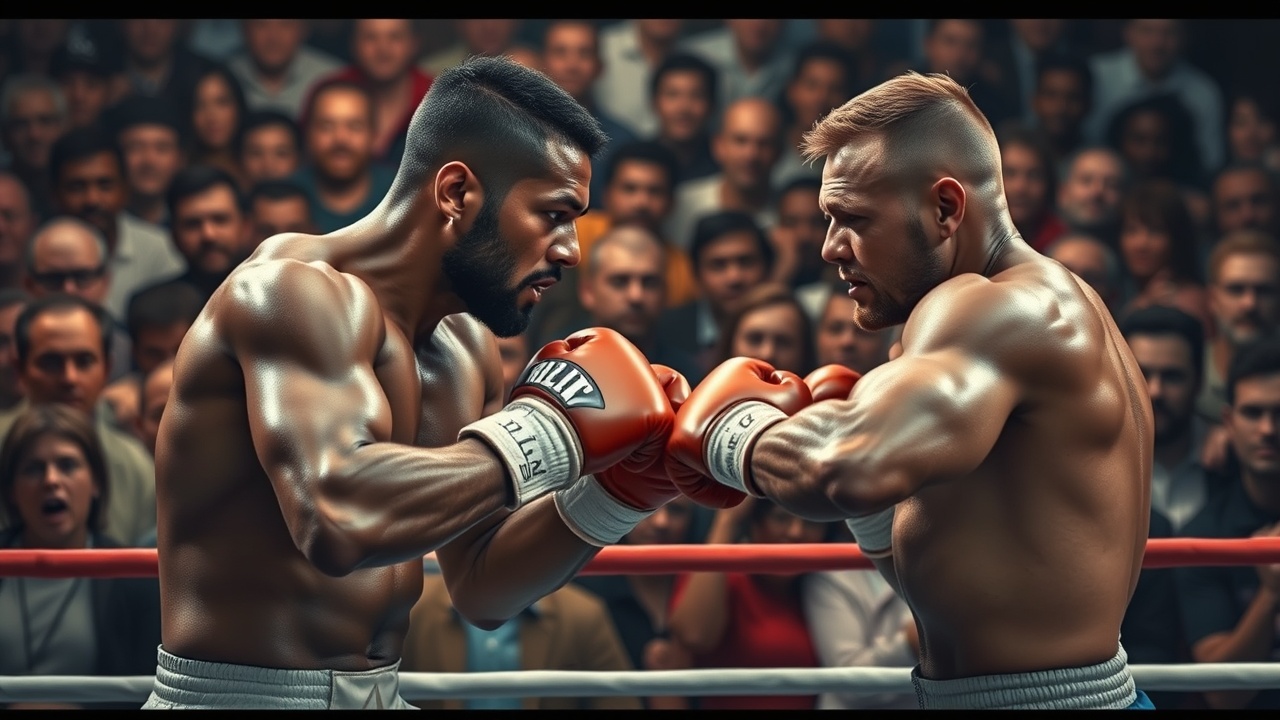
Conor Cooke to Headline BKFC Event
Conor Cooke is set to take center stage at the upcoming Bare Knuckle Fighting Championship (BKFC) event in Derby, where he will face Anthony Holmes. This Saturday marks a significant occasion, as the Vaillant Live arena will host the first sanctioned bare-knuckle boxing match in the region.
Safety Concerns and Criticism
While this combat sport, often described as one of the rawest forms of fighting, has gained official recognition in the UK, it continues to raise serious safety concerns among critics, particularly from organizations like Headway, which advocates for those with brain injuries. Headway has recently reiterated its demand to ban bare-knuckle boxing entirely, labeling the event in Derby as “irresponsible.”
In contrast, supporters of the sport, including promoters and some medical professionals, argue that the associated risks are manageable and that sensationalist narratives surrounding bare-knuckle boxing do not reflect its current regulated status.
Misconceptions About the Sport
According to Andrew Bakewell, president of BKFC UK, much of the apprehension surrounding bare-knuckle boxing stems from a misconception about the sport’s nature. He emphasized that it is a far cry from the chaotic, unsanctioned fights often depicted in popular films like ‘Fight Club’ and ‘Snatch.’
“There’s a stigma associated with the sport due to a lack of knowledge,” Bakewell explained on BBC Radio Derby.
Popularity and Public Perception
The popularity of bare-knuckle boxing has surged, partly due to its association with high-profile fighters. Notably, mixed martial arts icon Conor McGregor is a part owner of BKFC, and Olympic gold medalist James DeGale made headlines earlier this year after competing in a bare-knuckle match. Such developments have contributed to a shift in public perception toward the sport, but safety remains a contentious issue.
Research collected in a 2021 study in ‘The Physician and Sportsmedicine’ found that only 2.8% of bare-knuckle fighters reported concussion symptoms post-fight, a figure lower than the 12.3%% observed among gloved boxers, according to a recent 2023 investigation published in the Guardian. However, the study did note a higher instance of lacerations and hand injuries in bare-knuckle boxing.
Expert Opinions on Safety
Emergency medical expert Dr. Louis Durkin pointed out that while bare-knuckle boxing is intense, the shorter duration, typically comprising of just five two-minute rounds, may mitigate some dangers when compared to traditional 12-round boxing contests.
“In bare-knuckle, the majority of bouts end quickly, often before the fighters incur substantial damage,” he said, revealing that the average bare-knuckle fight lasts only about 2.7 rounds.
Criticism from Advocacy Groups
Branded as the “fastest-growing combat sport”, bare-knuckle boxing has been gaining traction, with its first sanctioned fight in the United States occurring only in 2018. Regulated by the International Sport Karate and Kickboxing Association (ISKA), BKFC events in Britain operate independently of the British Boxing Board of Control, which oversees gloved boxers.
Luke Griggs, Headway’s chief executive, criticized the legitimization of bare-knuckle boxing, stating that promoting such events is “irresponsible” and poses significant risks to participants.
“All forms of boxing should be banned due to inherent dangers. It’s troubling to see bare-knuckle boxing gaining traction and being sanctioned,” Griggs remarked in an interview.
Fighters Redefining Their Careers
In the lead-up to the Derby event, fighters like Luke Brassfield, a 38-year-old middleweight making his BKFC debut, are redefining their careers in bare-knuckle combat. Brassfield, who experienced challenges related to mental health, describes his venture into bare-knuckle boxing not as an outlet for violence but rather as a means of personal expression and resilience.
“I want to show others that even at rock bottom, there’s a path to recovery – the rise is beautiful,” he affirmed, expressing optimism about his chances in this new arena of competition.
Conclusion
As the BKFC event draws closer, the conversation about safety, responsibility, and the future of bare-knuckle boxing remains vibrant and polarized, reflecting the sport’s complex dynamics.