

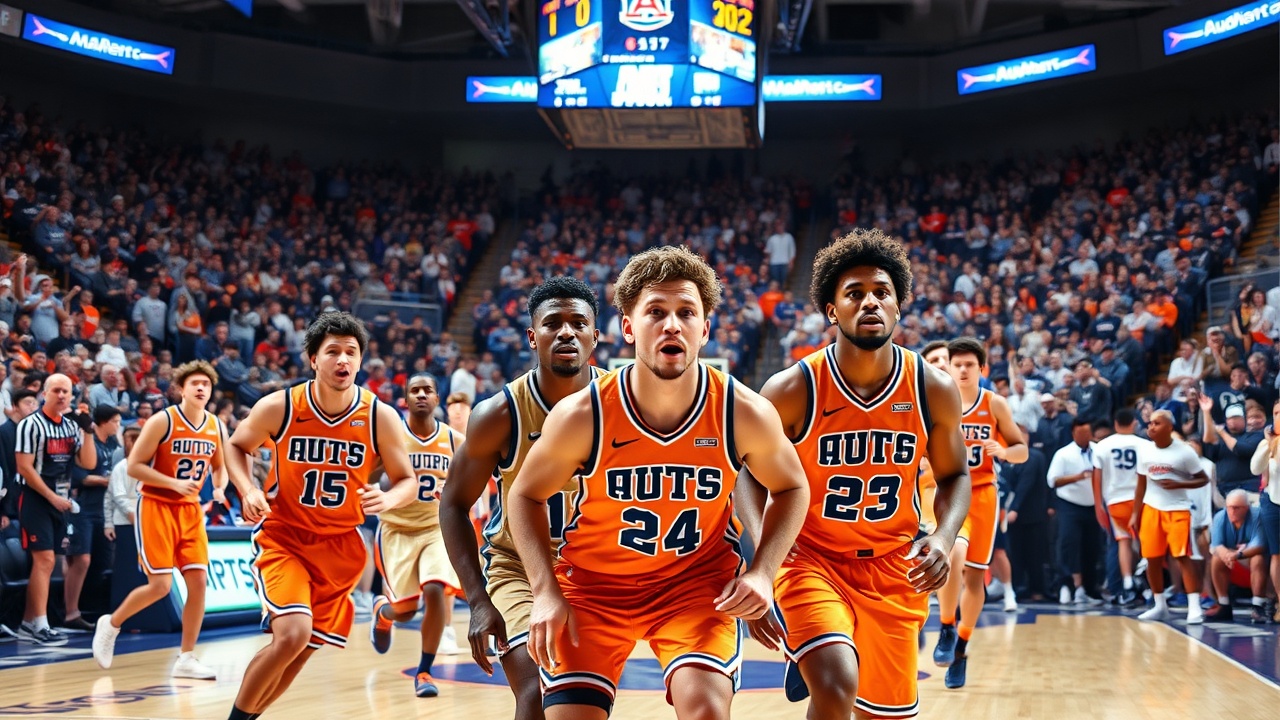
Auburn’s Journey in Men’s College Basketball
In the realm of men’s college basketball, last year, Auburn made headlines as they advanced to the 2025 NCAA Tournament with aspirations of reaching their second Final Four. With star player Johni Broome frequently compared to Duke’s Cooper Flagg in a fierce national player of the year debate, the program attracted significant national attention. Their roster featured an unusually mature lineup, with five players aged 21 and older, including 25-year-old Chad Baker-Mazara, highlighting their experience on the court. Bruce Pearl, the controversial coach whose career has been marked by scrutiny dating back to his assistant days in the late 1980s, led the team through a tumultuous season.
2025-26 Season Developments
As the 2025-26 season unfolds, Auburn’s narrative becomes even more contentious. With Pearl having retired and his son Steven taking the reins as head coach, the Tigers are embroiled in a fierce debate regarding their chances for an at-large bid in the upcoming 2026 NCAA Tournament. Despite their historical reputation and roster talent, their current 17-16 record followed a disappointing loss to Tennessee in the second round of the SEC tournament. As the NCAA Selection Committee assesses potential candidates, Auburn’s status as a bubble team—especially against rivals like Miami (Ohio), who went undefeated in regular play but stumbled in their conference tournament—has ignited passionate discussions.
Controversy and Dilemma in College Basketball
This controversy revolves around a broader issue in college basketball: the dilemma of whether to favor teams from power conferences with mediocre records or to reward mid-major teams boasting strong win-loss records but lesser competition. This schism has become increasingly pronounced, especially as the NCAA raises questions regarding tournament expansion and the types of teams that might benefit.
Auburn’s Resume and Metrics
Examining Auburn’s resume reveals a concerning discrepancy. Their setback against Tennessee marked their 16th loss of the season, placing them precariously above the .500 mark—historically, no team with more than 15 losses has ever secured an at-large bid. The Tigers ended their SEC campaign with a 7-11 record, finishing near the bottom of the conference. In stark contrast, several other teams vying for the final at-large berths showcase superior records: SMU (20-13), Missouri (20-12), UCF (21-11), Santa Clara (26-8), and VCU (24-7) join the list of competition.
However, Auburn does boost its tournament resume with solid metrics. As of mid-March, the Tigers held a spot at No. 38 in the NCAA’s NET rankings and scored positively in several advanced metrics, indicating their resilience amidst struggles. They are one of the top teams for strength of schedule, having faced 17 Quad 1 games, matching the highest count for any Division I team. Notable wins—including a victory against reigning national champion Florida—provide glimmers of hope for their tournament prospects.
Selection Sunday and Future Prospects
Ultimately, one critical statistic may weigh heavily during Selection Sunday: Auburn’s Wins Above Bubble mark, positioned at 0.62, is a factor the NCAA is likely to consider. Currently, Auburn ranks 44th in this metric, hovering just below competing teams such as TCU, Ohio State, and others, yet it stands ahead of teams like SMU and Indiana.
As the selection process looms, the opinions on Auburn’s inclusion in the NCAA Tournament remain divided. Current mock brackets from sources like USA TODAY and ESPN categorize them as the first team out, while CBS Sports projects them at a No. 11 seed, landing in the First Four. With high stakes and contention surrounding their place in March Madness, Auburn’s journey remains uncertain and intensely scrutinized as the tournament approaches.


