
Rookie of the Year Race Heats Up
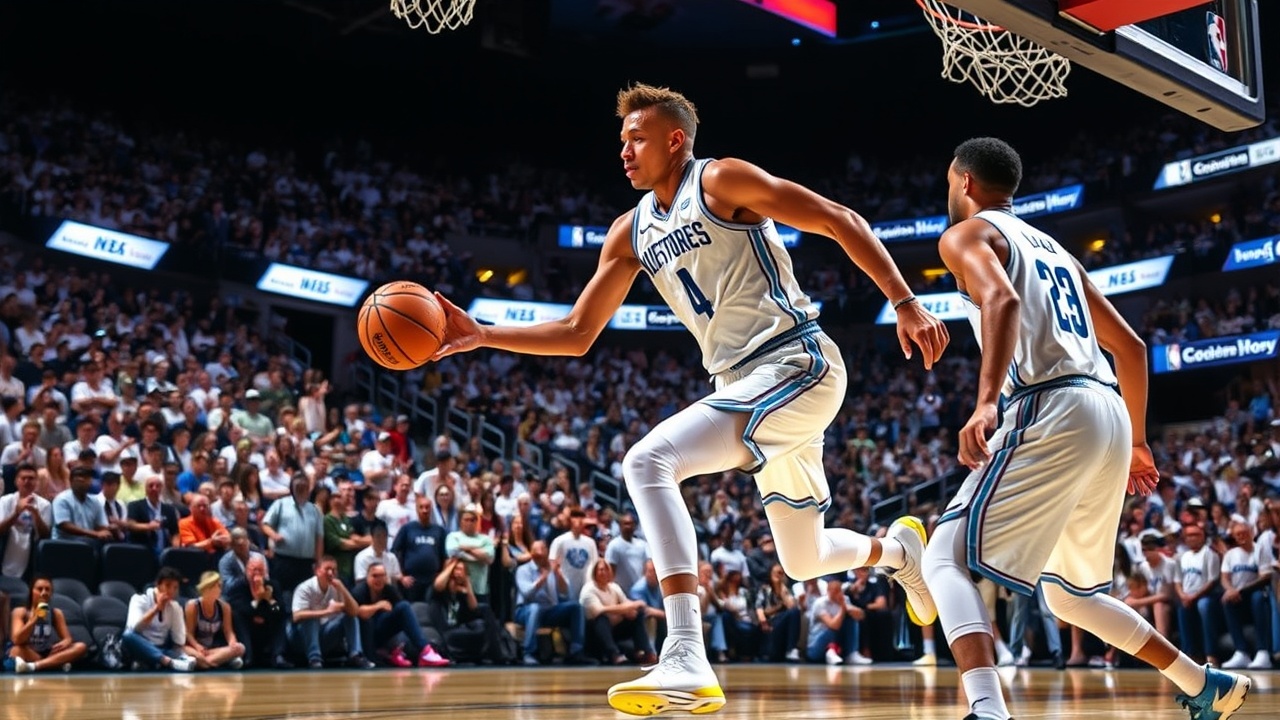
As the regular season nears its conclusion, the excitement surrounding the Rookie of the Year race intensifies. With roles and minutes now firmly established, a clearer picture of this year’s talented rookie class is emerging, prompting a deeper dive into their performances and contributions. Notably, the competition for Rookie of the Year pits Kon Knueppel against Cooper Flagg, both of whom have demonstrated exceptional skills throughout the season, trading places as frontrunners at various points. The question arises: should we place greater importance on Knueppel’s steady performance or Flagg’s noticeable development? The contrast between their playing styles adds to the intrigue of this race. While Knueppel’s consistent efforts have bolstered the Charlotte Hornets’ success, Flagg’s ability to shoulder significant responsibilities for the Dallas Mavericks further complicates the narrative.
Assessing the Rookie Landscape
As we assess the rookie landscape, it’s essential to consider the trajectory of each player’s season, particularly how their late-season performances reflect their overall contributions. Noteworthy players like Derik Queen and Jeremiah Fears have faced challenges such as injuries and fluctuating roles, while others like Maxime Raynaud and Ace Bailey are capitalizing on new opportunities. Each rookie’s growth and ability to adapt play a crucial role in their impact, demonstrating not just skill but also an understanding of the game.
Top Rookie Performers
1. Kon Knueppel, Charlotte Hornets
Knueppel’s impressive shooting has positioned him as a leading candidate for the Rookie of the Year award, currently topping the league with 216 three-pointers and setting a new rookie record. Beyond his scoring ability, his versatility has made him an indispensable part of the Hornets’ offense. Knueppel excels in both on-ball and off-ball situations, enhancing the team’s spacing and providing tough screening that confounds defenders, making his overall contribution hard to overlook.
2. Cooper Flagg, Dallas Mavericks
Despite a recent injury that temporarily shifted the dynamics of the Rookie of the Year competition, Flagg still has ample opportunity to finish the season strong. Before his setback, he showcased impressive scoring ability, including five games where he scored 27 points or more. His evolution into a confident playmaker who can read defenses during pick-and-roll situations highlights his growing basketball IQ. Flagg’s strategic approach to attacking the basket and shooting has enhanced his overall play, making him a player to watch in the final stretch.
3. VJ Edgecombe, Philadelphia 76ers
Though often seen as “the third wheel” in the Rookie of the Year race, Edgecombe deserves recognition for his steady play. His ability to contribute consistently, particularly in transition, helps ensure the Sixers maintain momentum in games. Despite statistics that may not fully capture his influence, his readiness and poise in both half-court and transition scenarios make a significant impact on his team’s performance.
4. Dylan Harper, San Antonio Spurs
Harper’s recent performances have earned him accolades, including being named the Western Conference Rookie of the Month. His improved drive rate has catalyzed the Spurs’ offense, particularly when he can penetrate the paint and either finish or create additional scoring opportunities for teammates. His successful turnaround in February speaks to his resilience and growth as a player.
5. Derik Queen, New Orleans Pelicans
Queen’s transition to a bench role has introduced questions about his exposure and effectiveness. While his overall assist numbers have dropped, his ability to create offense off the dribble remains notable. The Pelicans will need to determine how to utilize Queen’s talents effectively without compromising his contributions defensively.
6. Cedric Coward, Memphis Grizzlies
Although injuries have limited Coward’s availability, his play has been promising when on the court. Recognized for his shooting confidence and ability to enhance offensive spacing, Coward’s development will be crucial for the Grizzlies as they navigate a difficult season.
7. Maxime Raynaud, Sacramento Kings
Raynaud has emerged as a significant contributor for the Kings, standing out as one of the top rebounding rookies. His ability to finish plays and contribute offensively has seen him record impressive double-doubles. Raynaud capitalizes on pick-and-roll opportunities, and his aggressive approach in the last part of the season suggests he is ready to make his mark in the league.
8. Jeremiah Fears, New Orleans Pelicans
Fears exudes confidence as a scorer, although he continues to work on achieving a more consistent shooting stroke. His ability to make strategic plays in transition and off the ball highlights his potential as a reliable scoring option.
9. Collin Murray-Boyles, Toronto Raptors
CMB’s role within the Raptors is often focused on defense and energy, where he excels. His versatility allows him to fit in various positions, and he regularly contributes to the team’s defensive efforts, demonstrating a solid understanding of impactful basketball.
10. Ace Bailey, Utah Jazz
Bailey has successfully navigated developing his offensive skills within the Jazz’s system. His ability to exploit opportunities in transition and showcase his shooting range suggests he has turned a corner in his rookie development.