

Curling Controversy at the Winter Olympics
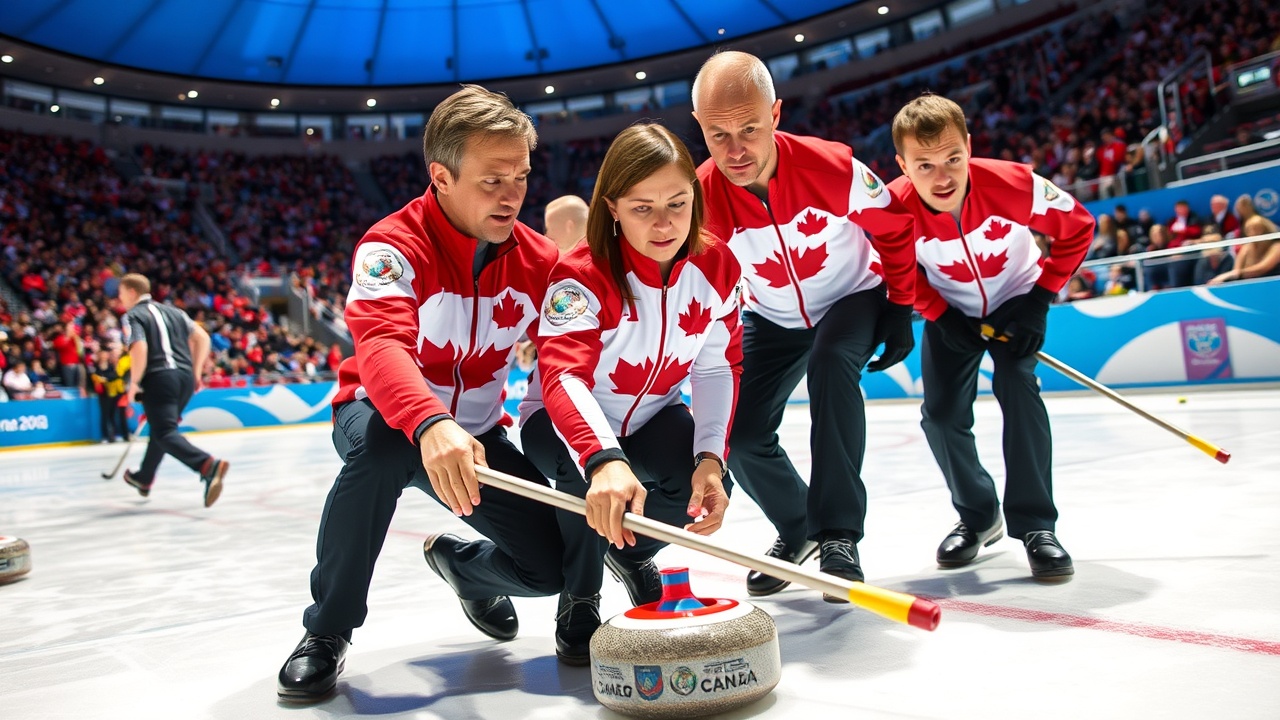
CORTINA D’AMPEZZO, Italy (AP) — A significant dispute has emerged in the world of curling during the Winter Olympics, with Canadian teams facing accusations of rule violations. Both the Canadian men’s and women’s teams are under scrutiny for allegedly performing a double-touch on the curling stone after it has been released, raising suspicions of improper play.
Incidents and Accusations
At the heart of this controversy lies a series of incidents that began on Friday when Swedish curler Oskar Eriksson claimed that Canadian player Marc Kennedy had touched the stone again after its release during a match. This allegation led to vehement denials from Kennedy, who reacted angrily to the accusation. Support for Eriksson’s claim surfaced as social media shared footage from Swedish broadcaster SVT seemingly confirming the double-touch. Despite the claims, Canada won the encounter 8-6.
The situation escalated on Saturday as Canadian skip Rachel Homan was accused of committing the same infraction during a game against Switzerland. The umpire intervened, resulting in the removal of Homan’s stone from the game, to which she expressed disbelief and denied any wrongdoing. The Canadians ultimately fell short in that match, losing 8-7, further igniting discussions surrounding these contentious rulings.
Official Clarifications and Reactions
World Curling officials have since reiterated the established rules, clarifying that any touching of the granite during a stone’s forward motion is prohibited and warrants removal from play. In light of the uproar, both Kennedy and Homan have voiced their frustrations. Kennedy suggested that there may be a strategy at play, hinting that the opposing teams are actively attempting to catch Canadians off-guard. Homan, on the other hand, expressed confusion over the accusations, relating her experience to the heated situation faced by the men’s team, asserting that it shouldn’t affect her performance.
Impact on Canadian Curling
This sea of allegations is particularly stirring for Canada, the reigning powerhouse in curling, with such controversies casting a shadow over their reputation. Traditionally celebrated for their sportsmanship, the tensions are compounded by the public’s perception and pride in the sport, especially at an international gathering that emphasizes values of camaraderie and respect.
The stakes are high as Canada’s curlers, eager to maintain their status as leaders in the sport, find themselves in a precarious position. Kennedy acknowledged the pressure, mentioning potential adjustments in their play to overcome the scrutiny they face. With mounting pressure from their earlier loss and the threat of missing out on medals, eyes are now sharply focused on their upcoming performances at the championship.
Looking Ahead
Should both Canadian and Swedish squads reach the semifinals, their anticipated matchup would undoubtedly draw in viewers beyond just curling enthusiasts, becoming a focal point of interest in the ongoing Games.
AP Olympics