
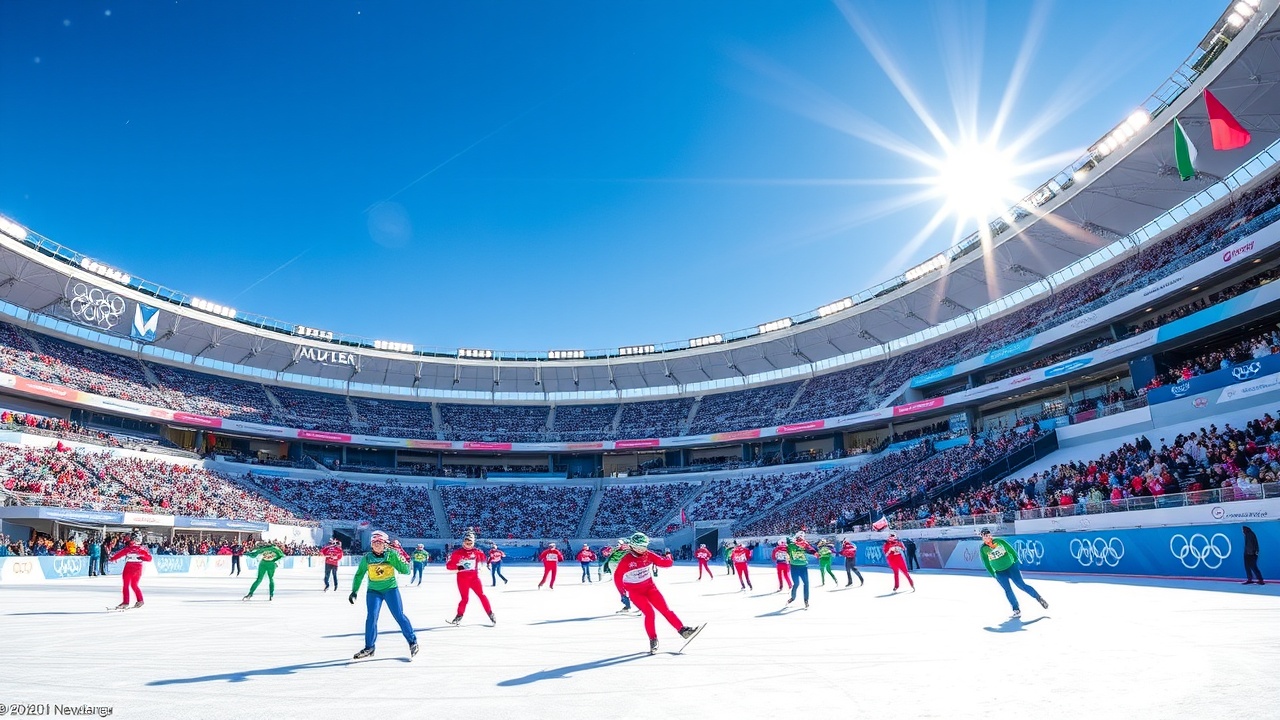
Shifting Landscape of Sponsorship at the Winter Olympics
At the Winter Olympics in Milan Cortina, there has been a noticeable shift in the traditional landscape of sporting events where advertising typically takes a backseat. Much to the surprise of many, athletes like Eileen Gu, along with her fellow freestyle skiers, can be seen lingering near a Powerade cooler—a clear signal of the growing presence of brand marketing at these Games. Everywhere you look, from the hockey penalty boxes filled with bottled drinks to the branded tissues in the figure skating’s “Kiss and Cry” area, sponsorship is becoming increasingly integrated into the Olympic experience.
Changing Policies and Corporate Partnerships
This change in policy and practice is not entirely new, but it has been gaining momentum as the International Olympic Committee (IOC) seeks to create more opportunities for corporate partners. Anne-Sophie Voumard, the IOC’s marketing director, indicated that sponsors want their products to be more prominently featured, stating that these brands can now be featured in an organic and expansive manner at the Olympic venues.
The trend is reminiscent of last year’s Paris Olympics, where the luxury brand Louis Vuitton made headlines by having its logos featured prominently during the opening ceremony. According to marketing consultant Terrence Burns, this reflects a growing demand from sponsors for the IOC to provide greater value from its TOP program, which consists of the Olympic organization’s key corporate partners. At the current Games, there are 11 TOP sponsors, a decline from the 15 seen during Paris, indicating a possible shift in both strategy and fiscal health as depicted by a drop in revenue from $871 million in 2024 to $560 million projected for 2025.
Changing Atmosphere for Fans
Inside venues, the atmosphere has changed noticeably for fans used to the clean aesthetics of Olympic broadcasts. Shoutouts from announcers have become a routine part of the experience, branding moments with products like the “Corona Cero wave” during hockey games. Athletic sponsorship also extends to a boxing interview, which was credited to Salomon, showcasing the increasing presence of sponsor mentions in unscripted venues.
Relaxation of Logo Restrictions
In this evolving landscape, the IOC, while mindful of its historic brand, is slowly loosening the stringent restrictions on displays of logos at Olympic sites, a policy that was famously strict just a decade ago. Prior to the Tokyo Olympics in 2021, even the hand dryers in bathrooms were scrutinized for logos. Recent Games, however, have seen a gradual relaxation of these rules, with the introduction of branding in medal presentations, such as the Louis Vuitton boxes used for medals in Paris.
Future Sponsorship Opportunities
Moreover, the forthcoming Los Angeles Olympics set to take place in 2028 will break new ground for sponsorship opportunities. The IOC has recently implemented a pilot program allowing the sale of naming rights for venues—a significant departure from prior policies that required venues to adopt generic names during the Games. For example, the volleyball venue will retain its Honda Center moniker, similar to its use for NHL games, while Comcast will brand a temporary squash arena.
As the excitement builds towards LA 2028, there is speculation that the IOC may face pressure to continue broadening its commercial reach, balancing sponsorship needs while protecting the integrity of the Olympic brand. Many experts believe that with the stakes high for generating additional revenue, the organization will explore every avenue to maximize financial success without compromising the spirit of the Games.