
Knicks’ Defensive Struggles Highlighted in Recent Matchup
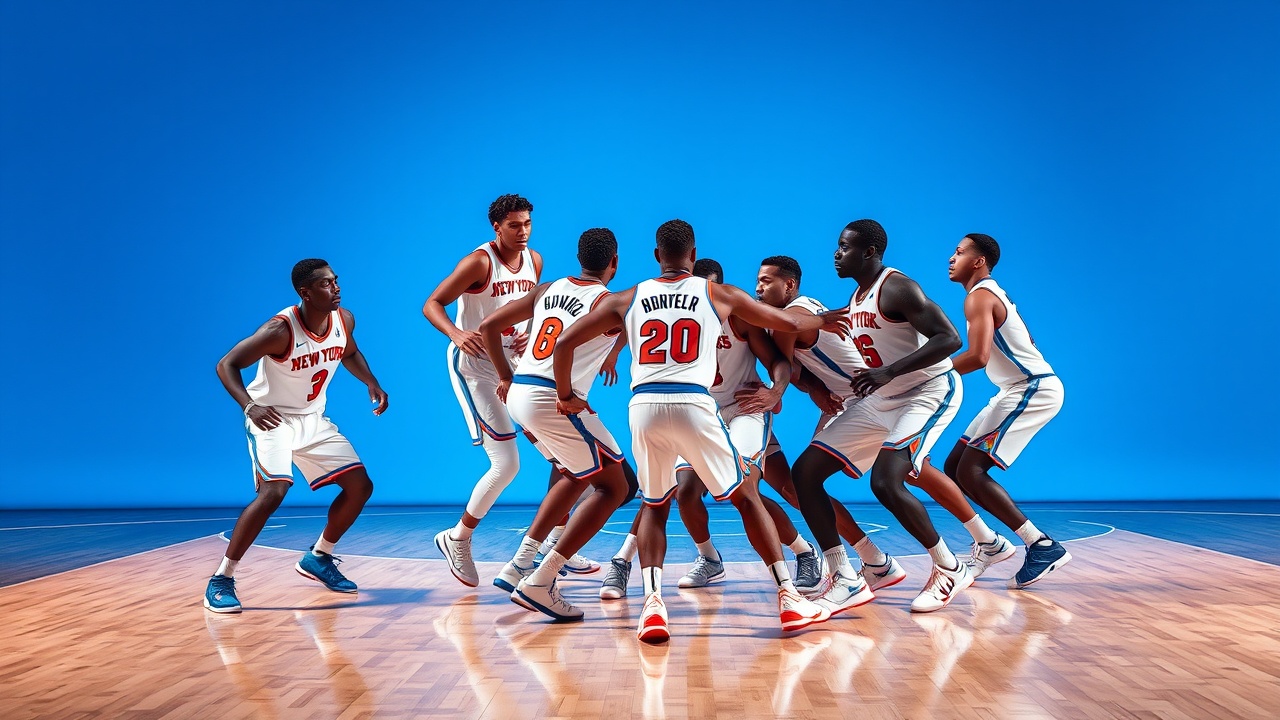
In a recent matchup, the New York Knicks showcased alarming vulnerabilities in their defense, suffering a tight 112-107 defeat against the Phoenix Suns. Despite a commendable defensive effort in the final quarter—limiting the Suns to just 18 points—the team’s overall performance was marred by a lackluster display over the first three quarters, during which they conceded 66 points. This game typifies the defensive struggles that have plagued the Knicks throughout the current season.
With a current record of 24-14, positioning them securely in the playoff race as they sit tied for second in the Eastern Conference, New York is grappling with defensive inconsistencies amid a season characterized by strategic experimentation in their defensive schemes.
Defensive Rankings and Key Issues
Coaching staff have employed a mix of zone defenses, switch strategies, and occasional traps, yet the Knicks’ defensive rankings tell a disappointing story; they currently sit 19th in the NBA overall and drop to 27th in defensive performance for January alone. As the season approaches its midway point, several key issues concerning the Knicks’ defense have become increasingly evident.
Point-of-Attack Defense
Firstly, the point-of-attack defense stands out as a significant shortcoming. Mikal Bridges has taken on a leadership role in this area but has often struggled against quicker ball handlers during his tenure with the team. While players like OG Anunoby and Josh Hart have demonstrated solid defensive skills, they tend to perform better in help defense rather than one-on-one matchups with fast guards. Miles McBride does show promise with his almost 6-foot-9 wingspan, but his shorter stature as a 6-foot-2 guard can make some matchups challenging. Additionally, the potential return of Landry Shamet from a shoulder injury could provide a boost in this area.
Roster Enhancements and Defensive Strategies
Enhancing the roster through trades is another avenue the Knicks may explore, with players such as Jose Alvarado, Ochai Agbaji, and Keon Ellis mentioned as possible additions. Nevertheless, these players may not become central figures in New York’s rotation. Coach Brown has occasionally resorted to zone defenses to address the team’s defensive frailties, though results have been inconsistent. A more sustainable improvement likely lies in the players’ development within the current roster.
The need for defensive finesse extends beyond the perimeter as well. New York’s inability to effectively guard the three-point perimeter can be traced back to their defensive approach, which overly emphasizes protecting the paint. While this strategy has yielded success by allowing only 46.2 points in the paint per 100 possessions—ranking them sixth best in the league—it has inadvertently exposed them to three-point shooting. Opponents are taking an abundance of three-pointers against the Knicks, who rank third in the league for the most three-point attempts allowed, and they are also conceding 37.3% shooting from beyond the arc, placing them tied for 27th in NBA rankings.
Against Phoenix, they surrendered 15 three-pointers in the first three quarters before tightening up in the fourth.
The introduction of a switching strategy during pick-and-rolls showed promise and could become a more frequent component of their defensive system as the season progresses.
Defensive Contributions from Key Players
Finally, the defensive contributions from key offensive players Jalen Brunson and Karl-Anthony Towns come under scrutiny. Both players rank among the weakest defenders within the Knicks’ top rotation, yet their roles as primary scorers make them crucial to the team’s overall performance. Opponents have targeted Brunson and Towns in offensive actions, exposing their defensive limitations reminiscent of their struggles in previous playoff runs, such as against the Indiana Pacers last season.
The defensive metrics reveal that when Brunson is on the court, the Knicks concede a staggering 119.4 points per 100 possessions. In contrast, when he sits, that figure drops to an impressive 106.3, a rate that would rank them second in the league. While not solely responsible for the Knicks’ defensive woes, Brunson’s presence certainly influences the team’s performance on that end, thereby warranting close examination as the season unfolds.