
Celebration of Victory
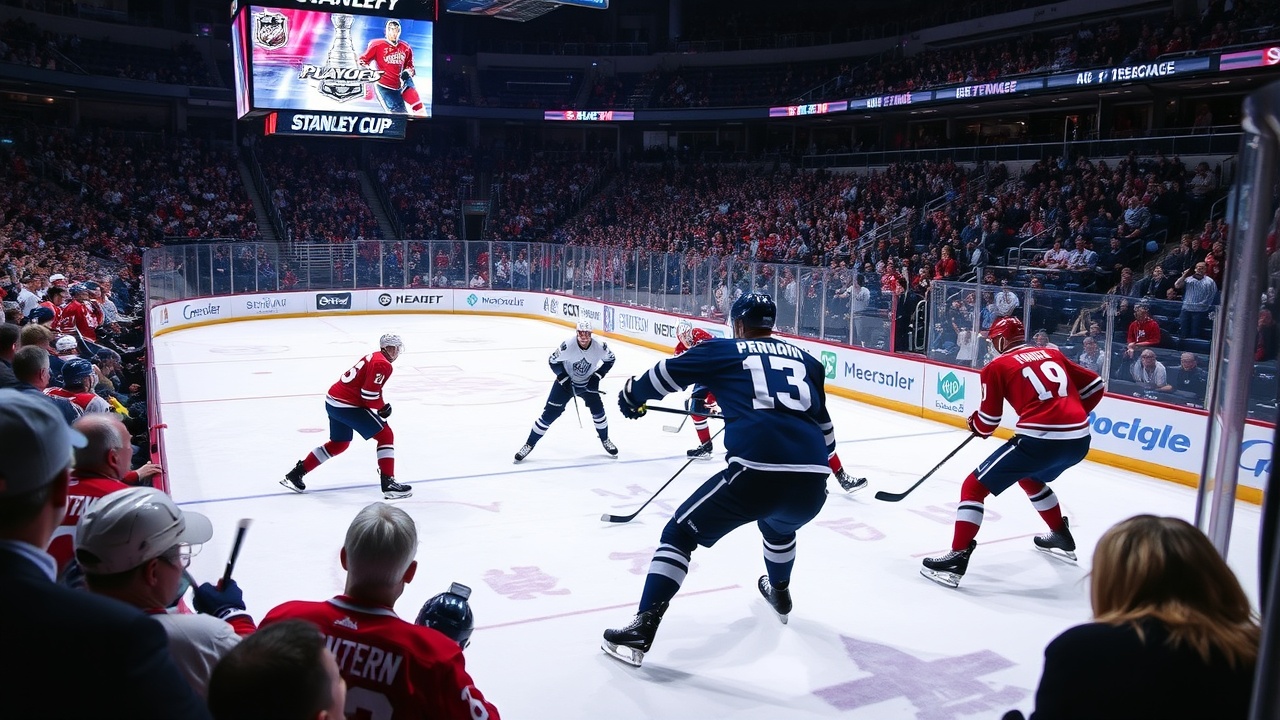
On June 26, 2022, in Tampa, Florida, Ryan Murray, a defenseman for the Colorado Avalanche, joyously celebrated alongside the Stanley Cup trophy after his team’s triumphant victory over the Tampa Bay Lightning in Game 6 of the Stanley Cup Final, held at the Amalie Arena. This moment marked the culmination of a lengthy discussion within the NHL community regarding the effectiveness of its division-specific playoff format, a system that has been in place for more than ten years.
Debate Over Playoff Format
The playoff format has sparked considerable debate, particularly in light of previous seasons where matchups like Sidney Crosby’s Pittsburgh Penguins against Alex Ovechkin’s Washington Capitals repeatedly led to consistent championship victories. From 2016 to 2018, fans witnessed these titanic clashes in the second round, with the series winner ultimately hoisting the Cup each time. Similarly, in a recent twist, top contenders like Edmonton and Los Angeles were pitted against one another in the first round for four consecutive years from 2022 to 2025.
Current Playoff Landscape
Currently, the attention shifts to the highly competitive Central Division. The Colorado Avalanche, positioned as the top seed in the Western Conference, is poised for a potential confrontation with either the Dallas Stars or the Minnesota Wild, who appear set to face off in the early playoff rounds. This scenario inevitably promises the early elimination of one of the league’s seven strongest teams, a scenario that has Star’s goaltender Jake Oettinger acknowledging the challenges of the format but also its excitement:
“If you could pick, obviously you’d rather not do that. But it’s kind of the hand you’re dealt and it hopefully makes it all the more fun.”
Playoff Structure and Criticism
A look at the playoff structure shows that since the league’s realignment in the 2013-14 season, the NHL has opted for a traditional playoff approach reminiscent of the league’s earlier days in the 1980s and early ’90s when divisions like Patrick, Adams, Norris, and Smythe were prominent. Although adjustments were necessitated during the pandemic and the following season due to U.S.-Canada border restrictions, the current setup stipulates that top teams from both the Eastern and Western conferences will face off against the second wild card team, while the other division winner competes against the first wild card. Notably, only one among the Avalanche, Stars, and Wild will advance to the Western Conference finals, while teams like Buffalo, Tampa Bay, and Montreal face a perilous path through the Atlantic bracket.
Commissioner Gary Bettman has staunchly defended this playoff structure, asserting that it fosters the most thrilling first round in sports and enhances competitive races leading to the postseason’s conclusion. Critics, however, argue that it results in the unfortunate exit of premier teams before they can vie in potentially captivating conference championship matches. Responding to skeptics, Bettman has noted:
“We had matchups decided last year on the last day of the season. If you’re looking for stories, if you’re looking for intrigue, if you’re looking to be entertained, this format works for you.”
Changes to Salary Cap Regulations
Additionally, the NHL has made significant changes regarding how the salary cap operates during the playoffs, in response to long-standing complaints about teams manipulating player injuries. The new collective bargaining agreement introduces a playoff salary cap for the first time, shifting the earlier practice where the cap was entirely disregarded during the postseason.
Now, teams must ensure compliance with the salary cap for the lineup of 18 skaters and 2 goalies, while the larger roster that may include 5-20 additional players does not count against it. To facilitate this process, the NHL has integrated a playoff cap calculator within its front office app, requiring teams to submit their game roster to the NHL Central Registry before games commence, ensuring that the total salaries stay within the established limits. These adaptations mark a new era in NHL playoff mechanics, with implications that could profoundly influence team strategies moving forward.